
Hippodrome demolition marks end of 125 years of entertainment on Castle Hill
The demolition of the Dudley Hippodrome marks the end of an era for a site which has been the home to a theatre since the 19th century.


The building demolished this monthdates back to 1938, but its predecessor, the Dudley Opera House had stood in Castle Hill since 1898.
Not that this was the first theatre in Dudley, mind. That accolade went to the Colosseum, which opened just round the corner in Porter's Field, off Trindle Road, in 1889. This was more or less the site of Dudley Council's other major redevelopment programme, where the Cavendish House block recently stood.
But Maurice Clement, the ambitious concert promoter who built the Colosseum, only ever saw it as a stepping stone towards his dream of providing Dudley with a modern entertainment venue. Before founding the 'Col', Clement had worked for 23 years in the Earl of Dudley's office, and this connection would prove crucial to making it big in the entertainment world.
The Earl provided Clement with a plot of land in the shadow of Dudley Castle, and the Mayor of Dudley George Dunn laid the foundation stone on June 27, 1898. The ceremony was accompanied by some considerable pageantry, with a performance by the Colosseum band, and was followed by lavish reception at the Station Hotel across the road. The stone was inscribed with the words from Hamlet 'The play's the thing'.
Clement told his assembled guests: "I predict for you a beautiful theatre, a safe theatre, a theatre which will run on popular lines at popular prices.
"If you come in your thousands, if my fellow townsmen, and the working classes in particular, give me the support in the future that they have given me in the past, the success of the Dudley Opera House is assured."
While the Col had been a pretty modest wooden building, the Opera House would be an altogether more lavish affair. A budget of £16,000 was set aside for its construction, and architect Abraham Ramsell designed an elaborate terracotta frontage in the Italian Renaissance style. It had a capacity of 2,000, and a very large stage which lent itself to elaborate scenery.
"The domed ceiling is a work of art," reported the Dudley Herald.
"Few such buildings are decorated with better taste, and in none is there better workmanship."
Maurice Clement had promised the people of Dudley an up-to-the -minute theatre, and that is exactly what they go.
"The whole building will be lit with electric light," said the Herald. "The whole building will be lit with electric light. Even the lavatories can be recommended and are provided for every class of customer."
The D'Oyly Carte Opera Company was in residence for the opening week, presenting a different Gilbert & Sullivan production on each night of the week. The Earl and Countess of Dudley, mayor George Dunn and Brooke Robinson MP were among the distinguished guests on the opening night production of The Mikado.
The Herald reported that the event was quite a spectacle:
"It has been many years since the leading residents of the town and district assembled with such elegant profusion – a huge line of carriages extended down Castle Hill. The theatre was filled in every part."
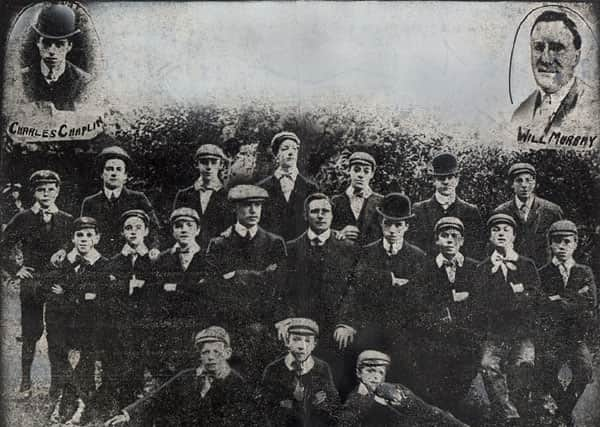
Charlie Chaplin appeared in May, 1906 as part of Will Murray's Casey's Court, in what was likely one of his first appearances in the show.
In 1907-08, the Opera House hosted a pantomime production of The Sleeping Beauty, featuring an 18-year-old actor named Arthur Stanley Jefferson. The young actor returned again two years later, for a production of the House That Jack Built. While he scarcely stole the show in either of these productions, he received far more attention when he returned to Dudley some 40 years later with a comedy partner and using a different stage name name – Stan Laurel. But more of that later.
Clements was working at the Opera House when he was taken ill with bronchitis early in 1912. His symptoms worsened as a heart infection took hold, and he died in 1912, aged 71.
Following Clements' death, the theatre was bought by auctioneer Ernest Davies, and his associate Edward Baring, who formed the Dudley Opera House Company, and kept the theatre for the next eight years.
A new dawn beckoned in October 1920, when the Opera House was acquired by theatre tycoon Ben Kennedy. Kennedy, born Benjamin Bernhard in 1866, was thought to be the son of German parents, who reputedly ran away from home at the age of 13 to join a travelling waxworks. According to Ned Williams, author of the book Black Country Theatres, he may have worked as a comedian in the 1890s, but details are a little sketchy.
What we do know is that at the height of his career, Kennedy owned 19 places of entertainment, and his acquisition of the Opera House marked the start of the transformation of Dudley's Castle Hill into a buzzing centre for entertainment. Ten years later, he acquired the Scala cinema next door – which also appears to have been owned by Ernest Davies – which he quickly demolished, and replaced with a modern Art Deco building designed by Archibald Hurley Robinson, which he relaunched as the Plaza in 1936. The following year, the Earl of Dudley opened a zoo in the moat of the castle, and suddenly the Opera House found itself at the centre of a buzzing, vibrant centre for entertainment.
But while Kennedy's entertainment empire was booming, the founder was now in poor health, and he left the management of his theatre to his sons Bob and Maurice.
In the autumn of 1936, Ben Kennedy went to Weston-super-Mare for a period of convalescence, but he didn't get much by way of rest. On the evening of October 31, Bob Kennedy was in charge of the theatre, for the closing night of a show called Pleasures of the Night. At 2.30am he took a last look around the building to ensure everything was in order, and then locked up to go home.
At 5.30am a passer by noticed smoke rising from the building, and contacted the fire brigade, based in Priory Street. By the time the fire crews made the half-mile journey, the theatre was already well alight. Ben and Maurice Kennedy were called to the scene, but it quickly became clear that the Opera House was not going to survive.
According to historian Ned Williams, the fire appeared to be centred in the auditorium, which made it difficult to reach. Access to the building was made difficult by the danger of falling debris, and the height of the building was also causing problems in the days before hydraulic ladders. The Kennedy's opened the Plaza so that firemen could direct their hoses from the cinema roof, but it was to know avail. By 7.30am, the Opera House was a smouldering wreck, and Maurice Kennedy had the task of driving down to Somerset to break the news to his ailing father. Bob Kennedy announced that the Opera House would be rebuilt, even if it cost £50,000 to do so.

The actual cost of the rebuild was a staggering £70,000 – about £4.1 million at today's prices – with no expense spared on the new theatre.
Plans were submitted to Dudley Council in May, 1937, and the early plans proposed that the name Dudley Opera House would be emblazoned across the top of the frontage. Archibald Hurley Robinson was given the brief of constructing one of the largest and most modern theatres in the Midlands.
Work began on August 23, 1937. Most of the bricks were sourced from the Baggeridge works in Sedgley, but Leicestershire Golden Russet bricks were used to dress the frontage. A steeply raked circle and balcony was built to give an intimate atmosphere, and the stage was one of the largest in the Midlands. Everything was up-to-the-minute, from the lighting and scenery-shifting equipment, to the heating and air conditioning. The orchestra pit was surrounded with glass bricks, which allowed it to be illuminated with concealed lighting. Generous foyers and spacious bars made it a relaxing place for a night out.
The new theatre, now renamed Dudley Hippodrome, opened on a bitterly cold evening on December 19, 1938.
Ben Kennedy attended, but he was clearly in poor health, and it was his son Bob who was in charge. Wimbledon winner Dorothy Round was among the local luminaries who watched Dudley Joel MP receive a golden key to declare the theatre officially open.
The opening show was a performance by the Jack Hylton band, and there was a moment of drama when a heavy counter weight, used as a balance in flying ballet, fell from its wire, and crashed to the ground within inches of the conductor. The audience gasped in horror; Jack Hylton remained unfazed. The show must go on, and all that.
And for the next 15 years the Hippodrome was at the beating heart of the Black Country entertainment scene, conveniently situated next to the railway station, nicely complementing the two cinemas in Castle Hill, and the booming new zoo. It was reputedly the first British theatre to host American superstars Bob Hope and Laurel and Hardy – the latter some 40 years after Laurel had appeared at the Opera House as 18-year-old Stanley Jefferson. Chico Marx was another global star who played the theatre, as did a number of celebrated British artists, including George Formby, Vera Lynn, Tommy Handley and Jack Buchanan. But equally important were the young rising stars who would go on to achieve great things: Ken Dodd, Tony Hancock, Tommy Cooper, Beryl Reid, Morecambe & Wise and Bruce Forsyth are among the many showbiz legends who cut their teeth on the Hippodrome's vast stage.
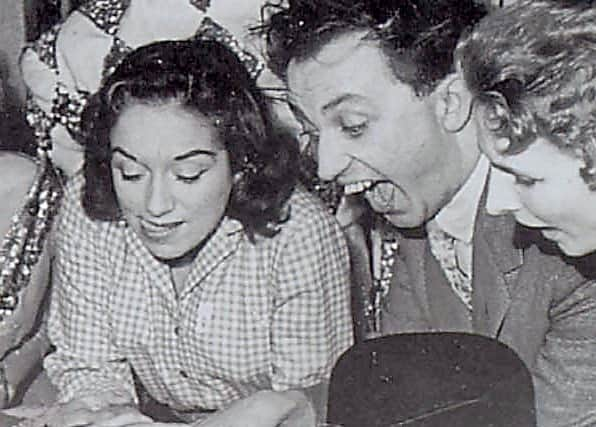
Ben Kennedy would see none of this, though. He died on April 10, 1939, less than four months after the new theatre opened its doors for the first time. His sons Bob and Maurice took over the running of the venue, and initially brought a more youthful vigour and fresh impetus to a fast-changing entertainment scene. In 1953, Jack and the Beanstalk, starring Harry Secombe, became the first British pantomime to be shown live on television.
Sadly, though, it was television – coupled with the Hippodrome's huge capacity – that would prove its downfall. While punters would queue round the block to see the big names in the late 1940s or early 50s, the arrival of television meant an increasing number of people could now watch in the comfort of their own homes. It also proved a more lucrative medium for the performers themselves, who could now draw in audiences of millions, meaning that theatres had to match TV wages if they were to survive.
The other problem for the Kennedy brothers was that they did not actually own the theatre themselves, but had to lease it off their father's estate under the terms of his will. This meant they had to generate a revenue of £3,250 a year to break even, before even the fees and running costs were taken into consideration. A lavish variety show, starring Ken Dodd, Beryl Reid and Charlie Cairoli, was held in November 1957, but made a massive loss. It was followed by a poor pantomime season at Christmas. For the Kennedy brothers, this was the final straw, and on March 17, 1958, they called a press conference in Birmingham to announce they were throwing in the towel.
"We are broke," Bob told awaiting newsmen, saying they had lost £15,000 over the previous three years.
His brother Maurice added: "If people will not come to a pantomime, they will not come to anything."
Maurice said the theatre would still have been viable had it been able to get one good show a month. But he added that the exorbitant fees the stars were now demanding meant it was just not viable, and also meant that there was less money to pay the supporting cast. He hit out at the big name acts who would rather perform in cinemas than theatres such as the Hippodrome. Maurice said financial backers had offered to step in to help, but the brothers had had enough.
"We are looking for something more secure," he said.
After a period when it seemed to be closed as often as it was open, the Hippodrome was taken over by Jerry Jeary, who believed he could revive the theatre by hosting wrestling matches on Saturday nights, and variety theatre the rest of the week. He managed to secure the services of a repertory company to provide a steady flow of week-night productions, and he did manage to secure a few big-name stars to appear at the theatre, with a growing reliance on pop stars such as Cliff Richard and Frankie Vaughan. But as times got tougher, Jeary resorted to increasingly desperate measures to pull the punters in. By the early 1960s, the Hippodrome appeared to be increasingly dependant on striptease acts, on occasion bringing Jeary into conflict with the authorities. The Jerry Jeary experiment came to an end in February, 1964, when new owner Vic Kendrick reinvented it as a 'cabaret casino', combining bingo and gambling activities with late-night comedy and music acts. This formula enjoyed some success, and the theatre was eventually taken over by Ladbrokes.
Presumably in an attempt to bring a touch of Las Vegas to Dudley, it was renamed Cesar's Palace in November, 1973, and performers included Tommy Steele, Des O'Connor, Mike & Bernie Winters and, inevitably, Ken Dodd.
The following year, Tommy Cooper returned, 20 years after he had appeared in pantomime, and old favourites Bob Monkhouse, Frankie Vaughan, Frank Ifield and Gene Pitney all returned. But while the Hippodrome finally appeared to have found a winning formula, this posed a new problem for live theatre – the bingo was proving to be far more lucrative. With punters seemingly more interested in Two Fat Ladies than the acts that followed, it was perhaps inevitable that the hard-nosed bosses at Ladbrokes would choose to focus on the bingo.
Roy Orbison was the last artist to perform on the stage, on August 16, 1974, and thereafter the bingo would rule the roost. The Midlands' premier theatre had become little more than a rather grandiose Penny Arcade.
Comment Guidelines
Iconic Media encourages reader discussion on our stories. User feedback, insights and back-and-forth exchanges add a rich layer of context to reporting. Please review our Community Guidelines before commenting.