
The foiling of an IRA plot to cause terror on the M6
Chilling calls to two West Midland hotels were the smoke that signalled a firestorm of chaos instigated, orchestrated and executed by the Provisional IRA.


Those coded messages – traced to a public phone box in Manzoni Gardens, Birmingham city centre – revealed the terror group had returned to wage war in our region.
April 3, 1997, was a black day for our region. Yet from those brief 8am calls emerged a story of determination and incredible courage. Emergency services showed they were ready and able to quell the threat on our doorstep.
As former police chief superintendent Mike Layton said: “Police officers and members of the armed forces put their lives at risk searching for, and disabling, a viable high-explosive device.”
Those brief calls were the start of a terrorist war on Britain’s motorways. In our patch, two bombs had been placed under the M6 at Junction 9, the Wednesbury Interchange. On the same day, two fake UXBs were discovered by the M1, Northamptonshire.
Just 22 days later, the IRA would strike again, with two bombs detonating – one a controlled explosion – near Junction 10 of the M6.
It is near miraculous that large-scale loss of life was avoided that day. The terrorists intended to topple a 100ft, 132,000 volt electricity pylon.
April 3, however, had primed police and military for a second wave. They were ready. In its immediate aftermath, John Grieve, anti-terrorism national co-ordinator, met with specialist officers from the Midlands and Met Force to draw-up a battle plan against further transport attacks.
To an extent, the IRA had achieved what they had set out to do – create mass economic disruption with the May 1 general election only weeks away. The journeys of one million motorists had been halted. That one stretch of the M6 accommodated 77,000 HGV lorries each day alone.
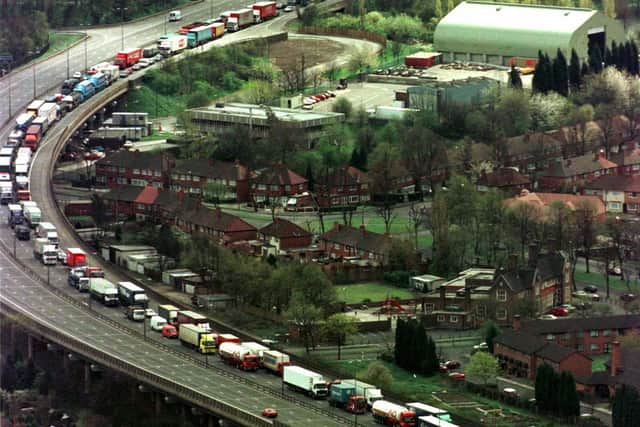
The rush hour scene on April 3 was described as “utter chaos” with the motorway closed for 30 miles and a neighbouring rail line also shut down. The M6 remained a no-go area for 30 hours. Veins of trapped vehicles stretched into Walsall, Cannock and Stafford, past the junction for the M54 link into Shropshire.
The AA dubbed the grid-lock as “the worst incidence of traffic congestion seen in this country”.
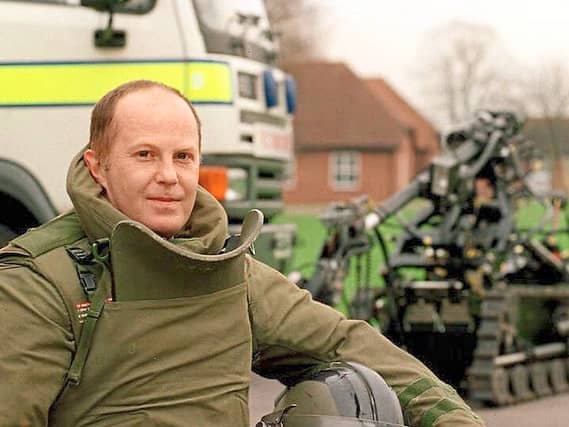
The hero of the day was Warrant Officer Aminul “Alan” Islam, an army bomb disposal expert. He risked his life to make the deadly devices safe and received the George Medal for his heroism.
One detonator actually went off as the area was being searched, but, luckily, explosives packed inside the bomb failed to explode. It remained, smouldering and clamped to concrete, in a highly unstable state.
Islam knew he had only seconds to act. He took off his heavy, protective suit and helmet and climbed scaffolding placed under the elevated section of the M6 to reach the devices, crammed with five pounds of commercial high explosives.
One slip, one fumble would have meant death for the UXB expert and colleagues below. It took 12 agonising, sweat-soaked hours to defuse the bombs.
Islam later recalled: “To get to the high explosives I had to climb scaffolding. As I approached it, I said, ‘please God, let me get this right. Climbing the scaffolding, I thought, if I fall now I’m going to look pretty stupid.
“I felt the police officers searching the carriageways and bridge for other bombs were braver because they had no training. I will never see myself as particularly brave.”
Lives had been saved, yet the financial loss was astronomical. Every hour the motorways remained sealed cost our country a staggering £2.5 million.
Geoff Dossetter, of the Freight Traffic Association, estimated, in total, 100,000 HGV deliveries had been stalled or scuppered.
He explained: “A large lorry costs £1 a mile to run, so if you have to make a 100-mile detour and get stuck on jams on unsuitable roads, then the cost will escalate horribly. Modern life is delivered on the back of a lorry, so this has been mind-numbingly horrendous. This is the crossroads and the most important link of Britain’s motorway network."
Tony Bradley, policy director at Birmingham Chamber of Commerce, told the Independent newspaper. “I’m a little surprised this hasn’t happened earlier.”
The IKEA store at neighbouring Junction 9 certainly felt the hurt. It had anticipated 10,000 visitors that day, but was advised to close by police to ease traffic disruption.
John Major – on the election campaign – was quick to condemn the terror attacks. He said: “I think most people know what the IRA are and see them for what they are. Yet again, they have shown the nature of the people they are.”
Mo Mowlam, the Shadow Northern Ireland Secretary, joined the condemnation. She said: “The IRA and Sinn Fein must understand that a new Labour government would oppose tooth and nail the use of violence and terrorist methods for political gain.”
The terrorists were not done with our patch. And the second strike on April 25 had the potential to create more bloodshed. It brought the IRA’s inland campaign to Walsall, which sits alongside the M6.
During the drama, some residents from the Beechdale Estate were moved to TP Riley School, in Bloxwich – a building that had been previously designated as north west Walsall’s ‘evacuation centre’ should a highly unlikely attack take place. The school was placed on ‘stand-by’ at 10am and around 60 people were given refuge there. They would not return home until late afternoon – long after a 12.30pm controlled explosion disabled the second bomb.
Of the incident, the Irish Times reported the following day: “The IRA admitted responsibility yesterday for bombing the M6, causing chaos on motorways in central England.
“In a phone call to [Irish national TV] RTE, an IRA spokesman said members had planted the bomb under an electricity pylon near the motorway, but offered no elaboration on the current IRA strategy.
“The bombing was the latest in a series of attacks designed to cause maximum disruption to Britain’s transport network.”
In that dark month, the IRA did not confine itself to our motorway networks.
Just two days after the April 3 Junction 9 operation it targeted one of our most treasured sporting events – the Grand National.
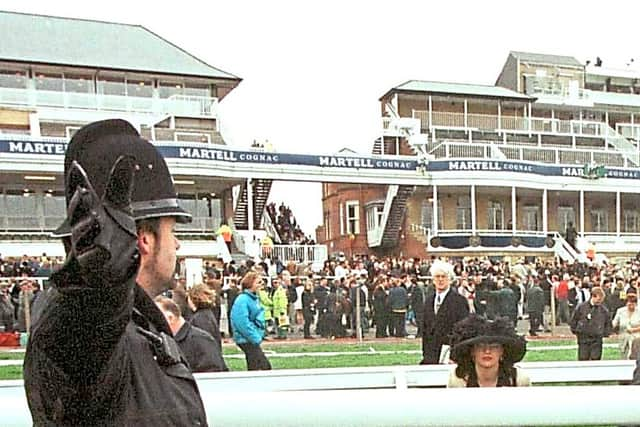
Two calls – one to Aintree University Hospital, the other to Bootle police station – warned of a bomb on the course.
In all, 60,000 people were evacuated from Aintree: they were initially moved from stands onto the course itself. Twenty thousand were left totally stranded as their vehicles remained parked on the grounds. Jockeys, still in their silks, joined spectators as they were moved away from the scene to ensure their safety.
Two controlled explosions were carried out at 4.14pm and the great race took place two days later.
The public and press faced the incident with typical defiance, one tabloid running the front page headline: “We will fight them on the Becher’s.”
April, 1997, was the month the IRA again bared its teeth.
And the West Midlands showed we were ready for them.