
The saga of Charles the 'meddling monarch'
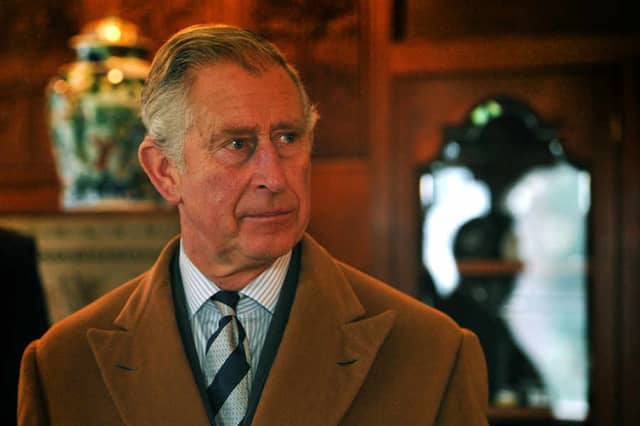

The 'meddling monarch'. That's what some dub the Prince of Wales, who has made no secret of his opinions in letters to ministers.
Except they were a secret. Or rather, they were meant to have been private.
The 'black spider' letters, so-called because of his unique scrawl, were the subject of a long-winded court battle launched by a Guardian journalist to get them into the public domain.
Their publication sheds light on the sort of King that Charles would be when he eventually inherits the throne.
Of course, we already knew that His Royal Highness was never backwards at coming forwards.
The Prince willingly admits he is an 'inveterate interferer and meddler' and has been perfectly happy to air his views in the past.
Everything from the environment to farming, countryside and genetically modified crops have been topics of debate for the green fingered future king as he served the longest-ever stint as the heir apparent.
His former aide Mark Bolland even claimed in 2006 that the Prince saw himself as a 'dissident' working against current political opinion.
A glimpse into Charles's correspondence with ministers came in 2006 when it was reported that he had lobbied against the Human Rights Act in a series of letters.
He was said to have written the word 'rubbish' on a response he received in 2001 from Lord Irvine of Lairg, then the Lord Chancellor, who defended the Act.
It was reported that the Prince wrote to Lord Irvine and warned him there would be an increase in cases that would drag the military and the police before the courts as a result of the Act, introduced by Labour and brought into effect in 2000.
In 2002, a leaked letter to then-prime minister Tony Blair ahead of a large pro-fox hunting march in London showed that the Prince had relayed a Cumbrian farmer's view that the campaigners were being treated worse than other minorities.
''If we, as a group, were black or gay we would not be victimised or picked on,'' was the reported comment.
His letter-writing led to him being dubbed 'Angry of Windsor' and the 'Prince of Wails' by some newspapers.
In 2004, in an open letter to delegates attending the Association of Colleges' annual conference in Birmingham, he launched a scathing attack on education experts who he claimed focused on the economic benefits of teaching rather than the joy of learning. "I simply do not believe that passion for subject or skill, combined with inspiring teaching, can be replaced by computer-driven modules, which seem to occupy a disproportionate amount of current practice,'' Charles said.
In 2005, he warned it was wrong to knock down old buildings when they could be restored more economically – a comment that came amid plans by John Prescott, the then-deputy prime minister, to demolish up to 400,000 homes in the Midlands and the North.
But Lord Prescott defended the Prince for having done so and last year went public with two letters from him that were not connected to the current court case.
He claimed the notes proved 'the measure of the man'.
Lord Prescott said: "They show he has nothing to hide and he shouldn't be worried about publication."
The first letter was a typed invitation to a meeting of Regional Development Agency leaders in 1999. Charles said it would be 'splendid' to see Lord Prescott. The second was more personal and was written in 2003.
In it Charles expressed sadness at the death of Lord Prescott's mother but began by joking that he had 'been overdoing the quota' of letters to the Deputy Prime Minister.
Charles's views on architecture have often been a source of controversy.
Speaking in 1984 about the proposed National Gallery extension, he said: "What is proposed is like a monstrous carbuncle on the face of a much-loved and elegant friend.''
Following his comment, the plan was changed.
In May 2009, he became embroiled in a row concerning a development at Chelsea Barracks.
The Prince contacted representatives of the Qatari royal family, who own the London site, suggesting that Richard Rogers's designs for a £1 billion housing scheme on the site of the former barracks were 'unsympathetic' and 'unsuitable'.
In his private letter to Sheikh Hamad bin Jassim, he said his 'heart sank' when he saw the design.
He was criticised by architects for threatening the democratic process and using his privileged position to have his say on the design.
In the end, Charles, who later met the Emir of Qatar, won the battle when the developers withdrew their planning application.
During the foot-and-mouth disease crisis of 2001, the Prince attempted to prevent the cull of cattle.
The then-National Farmers Union leader Sir Ben Gill revealed it was Charles who was behind the biggest push for vaccination.
In 2008, the Prince declared frankly, referring to his involvement in a restoration project in Bradford: "Being an inveterate interferer and meddler, I couldn't possibly stand back and do nothing.''
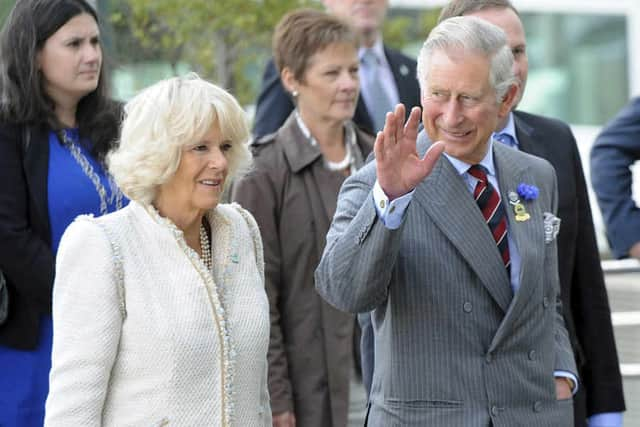
Charles, who visited Wolverhampton's Wightwick Manor last year before going to The Royal School with Camilla, Duchess of Cornwall, often refers to his so-called meddling in his speeches.
He has frequently faced criticism over his contact with the government.
Questions have been raised as to how his outspoken opinions will feature when he becomes king.
Sources close to Charles have suggested he will break with tradition and make ''heartfelt interventions'' in national life when he becomes monarch.
The Guardian reported in November that Charles would not follow his mother's discretion on public affairs, but instead speak his mind on issues such as the environment.
One source told the newspaper: "Rather than a complete reinvention to become a monarch in the mould of his mother, the strategy will be to try and continue with his heartfelt interventions, albeit checking each for tone and content to ensure it does not damage the monarchy.
"Speeches will have to pass the following test: would it seem odd because the Queen wouldn't have said it, or would it seem dangerous?''
A new unauthorised biography of Charles by editor-at-large of Time magazine Catherine Mayer said the Prince was planning to introduce a 'potential new model of kingship' but that the Queen was concerned about the potential style of the monarchy under her son.
But the Prince's senior aide, principal private secretary William Nye, came to his defence, saying the heir to the throne understood 'the necessary and proper limitations' on the role of a constitutional monarch.
He, of all the Royals, would understand.
His namesake predecessors hardly had the easiest of times. Charles I was executed and Charles II had to hide up a tree at Boscobel House on the Shropshire and Staffordshire border.
If that does not focus the mind of the eventual Charles III on constitutional monarchy, nothing