
Vance tries to distance himself from Iran war after party’s losses in election
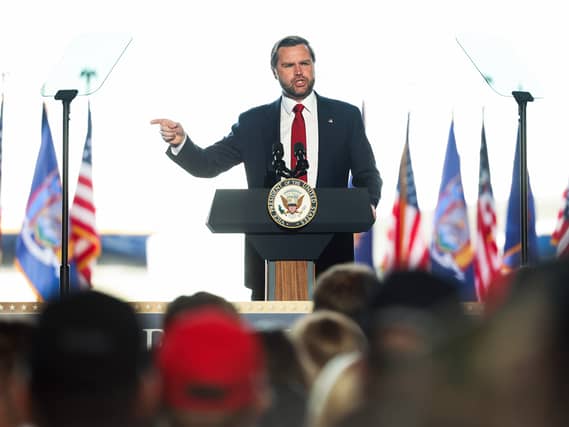

Donald Trump said he ‘knew the war was going to impact’ the midterm elections but defended his actions.
US vice president JD Vance publicly broke from Donald Trump’s defence of the Iran war after the Republican Party’s deep losses in the midterm elections, attempting to distance himself from a clear rebuke of the president by voters.
Mr Vance, who has said he would decide after the election whether to run for president in 2028, issued a lengthy social media post blaming the unpopular conflict with Iran for the party’s drubbing.
He posted on social media: “If you’d like to argue it was worth it, that losing the Senate for the next 6 years was worth it, then do so.”
But arguing that the war was worth it is what Mr Trump repeatedly did on the campaign trail, continued to do in interviews as election results came in and did again on Wednesday.
As he led reporters on an impromptu visit to the ballroom he is constructing at the White House, MrTrump said: “The Iran thing, we had to do and we continue to do it.”
Mr Trump said he spoke to Mr Vance on Wednesday morning and, when asked about the vice president’s post, he called it “good” and said, “I know how he feels about it”, and “I think it was fine”.
The president also said he “knew the war was going to impact” the midterm elections but again defended his actions.
Mr Vance, who had long advocated for restraint in US military intervention overseas, was lukewarm in his defence of the conflict after Mr Trump launched it and even became the face of an unsuccessful attempt to end the fighting.
“If Vance has felt this way all along, why didn’t he speak out forcefully?” Democratic National Committee spokeswoman Rosemary Boeglin said in a statement. “Why didn’t he resign? And most importantly, why didn’t he stand up for Americans?”
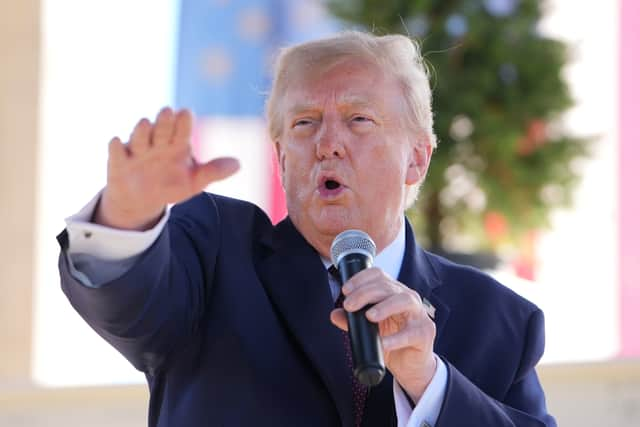
The vice president, she said, “will always do what’s most politically convenient for him in the moment — even if it means throwing Americans under the bus. Vance owns this administration’s failures”.
Democrats swept control of both the House and the Senate on Tuesday, defeating Republican candidates even in deep-red areas that Mr Trump carried by wide margins two years ago.
“There’s no doubt this is a repudiation of the last two years,” said Marc Short, who was chief of staff to former vice president Mike Pence and worked in Mr Trump’s White House in his first term.
He said Mr Vance will still have a big microphone as the sitting vice president, and the election results do not mean he will not be the the party’s nominee for president in two years.
But, Mr Short said: “It certainly doesn’t help his case, that’s for sure. I would argue it does hurt.”
When Mr Pence was in the role, he intentionally tried not to distance himself from Mr Trump and shared his opinions privately, Mr Short said. But Mr Vance’s post on Wednesday seemed to be “an intentional separation” from the president despite being inherently linked to him.
“You made that bargain when you agreed to be vice president,” he said.
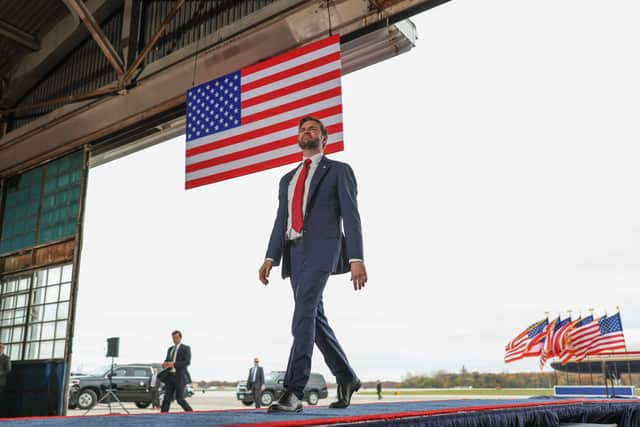
Mr Vance, in his post, said that Republican voters cast their ballots for Democrats because of the war, the cost of living, America not being prioritised and the US relationship with Israel — a dynamic where he has also sounded a different note than Mr Trump.
“The real reason we lost is obvious to almost everyone,” he wrote.
Unlike the president, Mr Vance declined to endorse Israeli Prime Minister Benjamin Netanyahu for re-election and this summer publicly chastised members of Israel’s government for opposing Mr Trump’s efforts to resolve the war with Iran.
Mr Vance, who has been a staunch defender of the administration’s immigration policies, also appeared to be seeking some distance from the immigration crackdown that drew a backlash.
“I’m open to the idea that we should change enforcement — by focusing more on businesses that hire illegal labour, for instance,” he wrote.
But he said he rejected any politicians who might propose amnesty for people living in the country illegally.
About six in 10 voters said the US made the “wrong decision” in taking military action against Iran, according to the AP Voter Poll, a survey of more than 100,000 voters in the United States.
Most of those voters dissatisfied with the Iran war backed the Democratic candidate in their US House race, but the survey suggested the Iran war was not the leading issue for most voters.
Only about one third of voters said the war in Iran was “crucial” to their vote for Congress, well below the roughly half who said that about the cost of living or government corruption.
Nearly all voters who backed the Democratic candidate in their US House race said going to war with Iran was the “wrong decision”, while roughly eight in 10 voters who backed the Republican candidate said it was the “right decision”.