
‘Largest ever’ attack on Moscow as Ukraine fires hundreds of drones at Russia
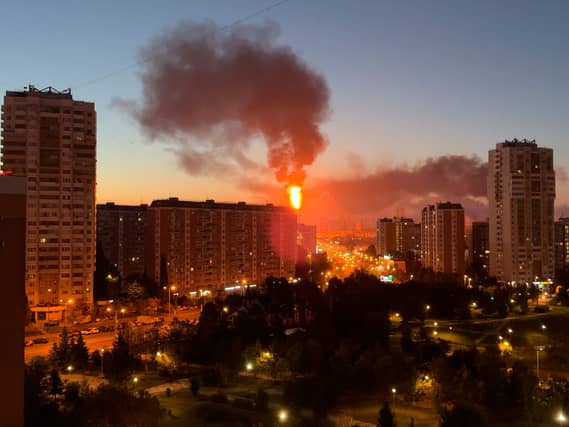

The major attack comes on the third and final day of voting in Russia’s first wartime parliamentary election.
Ukrainian forces have fired more than 1,000 drones at Russia overnight, including hundreds launched towards Moscow, officials said, as the Kremlin was wrapping up the third and last day of its parliamentary elections.
Moscow’s mayor described the wave of drones as the “largest ever” attack on the Russian capital and said there had been damage to a Moscow oil refinery and a residential building.
Across the wider Moscow region, the attack killed two people and injured 20 others, local governor Andrei Vorobyov said.
The dead were a 74-year-old man and a 44-year-old woman, he said.
Writing on social media, Ukrainian President Volodymyr Zelensky said that Kyiv had used a range of missiles and drones in the attack — including Ukraine’s domestically made Flamingo and Pelican missiles — to hit oil and logistics facilities.
“These are billions of dollars that sustain the war machine,” Mr Zelensky said, referring to the financial pressure that Kyiv hopes to put on Russia’s economy.
Ukraine also continued to fend off Russian attacks, Mr Zelensky said. A Russian drone strike hit a monastery in Ukraine’s Kherson region on Saturday, killing a member of the clergy and wounding four people, he said.
A Russian attack on the Ukrainian capital also killed two children and their mother on Saturday evening, said Tymur Tkachenko, head of the Kyiv regional state administration. He later said that another child wounded in the same attack had died in hospital on Sunday.
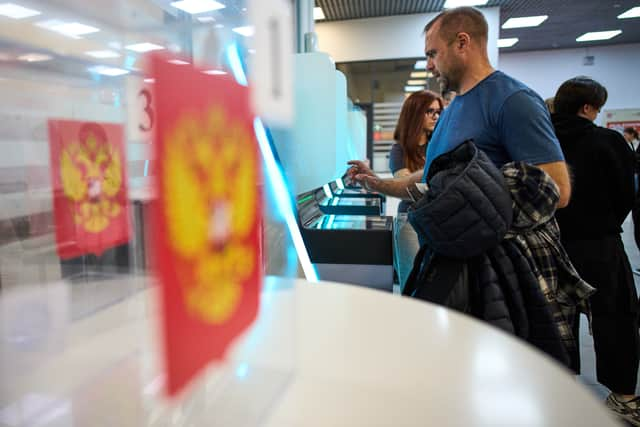
The attack took place on the final day of Russia’s first wartime parliamentary election – a ballot that was virtually devoid of opposition to President Vladimir Putin’s policies and is all but certain to cement the Kremlin’s dominance.
Russia also held voting in four Ukrainian regions that Moscow illegally annexed after the war began but still does not fully control, and in Crimea, the Black Sea peninsula that was illegally annexed by Russia in 2014. Kyiv has denounced the action as illegal.
In a Russian-occupied area of Ukraine’s Kherson region, a Ukrainian attack killed a member of the local electoral committee, Russia’s Central Election Commission said in a statement.
Russia’s Ministry of Defence said that its forces shot down 1,110 Ukrainian drones across the country, as well as over the annexed Ukrainian peninsula of Crimea and the waters of the Black Sea.
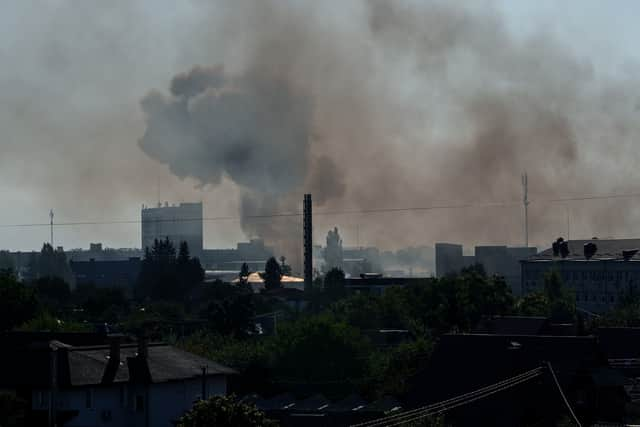
Moscow mayor Sergei Sobyanin said that 450 drones had been destroyed en route to the Russian capital.
He said the “unprecedented attack” on the capital was an attempt to disrupt the elections.
“The enemy failed in this regard,” he said.
Since Russia’s invasion more than four years ago, Ukraine has become a global leader in military drone technology, deploying domestically produced long-range drones alongside missiles for strikes deep inside Russia. Its drone technology has impressed governments and defence manufacturers around the world.
Kyiv is aiming to make the Russian public feel the war’s consequences and pressure Mr Putin into negotiating a peace settlement. Mr Putin has so far shown no signs he intends to stop the invasion.
Instead, Moscow and Kyiv have been drawn into an escalating duel of long-range aerial strikes as fighting along the roughly 780-mile front line in eastern and southern Ukraine has slowed, restricted by large numbers of drones and ground robots threatening troop movements.