
'Green' electricity station next to £83 million Wolverhampton regeneration site is blocked by council

Council rejects mini battery farm next to £83 million Smithgate development in Wolverhampton city centre
Plans to install a ‘micro battery farm’ on a grass verge next to an £83 million regeneration scheme in Wolverhampton city centre have been blocked by the council.
Wolverhampton planners have rejected proposals for an electricity storage system on a grass verge off Ring Road St Marks.
AMP Clean Energy had said the 258 sq ft development would have saved about 157 tons of carbon a year, helping the Government to meet its net zero targets.
But planning officer Sukwant Grewal rejected the application.
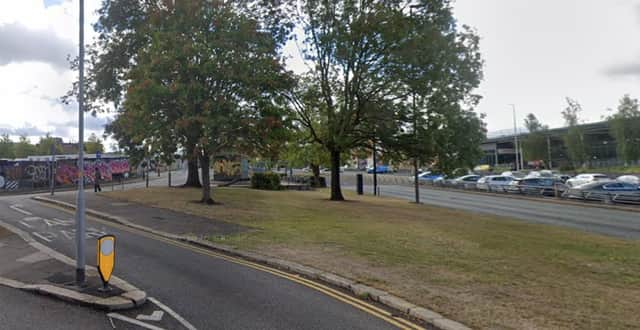

The development had been proposed for a grass verge off the ring road, at the junction with Peel Street and Salop Street.
The site is next to the Smithgate redevelopment area, which will see the construction of up to 1,000 new homes and 20,000 sq ft of retail and commercial space on a mixed-use 12-acre site between Salop Street and Darlington Street.
Ashleigh Boyce, senior development manager at AMP Clean Energy, said the UK electricity supply was increasingly reliant on intermittent ‘renewable’ energy sources such as solar and wind power.

“Renewable power generation does not always match when the demand for electricity is highest,” she said.
“To overcome this, we need a more flexible energy system that allows us to shift renewable energy to the periods of the day when the demand for power is at its greatest.
“Electricity storage systems allow this ‘excess’ renewable electricity to be stored and used later when low carbon sources are unable to generate enough electricity, ie when it isn’t windy and sunny.
“By doing so electricity storage systems can prevent the need to turn on fossil fuel power stations and allow the UK to maximise the use of renewable power and to facilitate the UK’s transition to net-zero.”
Miss Boyce said the proposed battery pound would have taken up space equivalent to two car-parking bays, and would have had minimal impact on the surroundings.
Comment Guidelines
Iconic Media encourages reader discussion on our stories. User feedback, insights and back-and-forth exchanges add a rich layer of context to reporting. Please review our Community Guidelines before commenting.