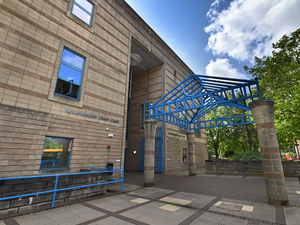
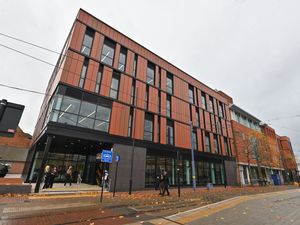
Man who oversaw construction of Wolverhampton School of Art speaks of his joy after it is saved from bulldozers
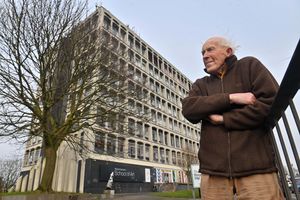
The man who oversaw construction of Wolverhampton's landmark School of Art has spoken of his delight that the building has been saved from the bulldozers after being granted listed status.
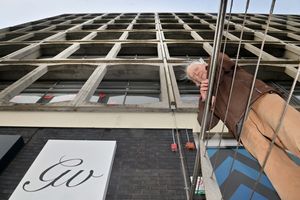
Wolverhampton University had planned to demolish the Brutalist nine-storey building, with a distinctive exoskeleton, as part of a redevelopment scheme.
Get the latest headlines delivered straight to your inbox with the Express & Star’s free newsletter
But this week the Department for Culture, Media and Sport announced it would be granted listed status, meaning that the demolition is now unlikely to go ahead.
The university said it would recognise the decision, but would still press ahead with its plans to relocate the School of Art to a new building.
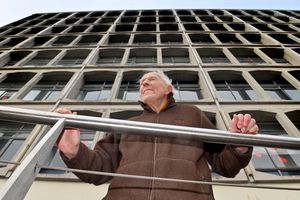
Brian Jones, who oversaw the construction of the building in the late 1960s, said he was thrilled the building had been saved.
"I'm absolutely delighted," said Mr Jones, who lives in Bridgnorth. "It's brilliant, I'm very pleased, it's an iconic building that should be preserved, and it's going to be preserved. I'm absolutely thrilled to bits it has been saved for future generations."
The decision came after The 21st Century Society contacted Historic England asking for the building to be protected. More than 6,500 people signed a petition calling for it to be saved.
Deborah Williams, regional director for Historic England, said: "Wolverhampton School of Art is a bold building that holds a prominent place in the centre of the city, and in the hearts of many locals.
"The striking brutalist design, combined with the important social history of the British black art movement, mean the building meets the high bar for post-war listing and I’m pleased the Department for Media, Culture and Sport agreed with our recommendation to recognise the significance of this distinctive piece of 20th-century history."
Mr Jones, aged 85, said he was 'horrified' when he read about the plans and warned that demolition would take up to two years and cost millions of pounds because of its location and robust design.
Work began on the building in 1967, and it was opened in 1970 by former celebrated sculptor and former student Sir Charles Wheeler. It was later named the George Wallis Building, in honour of a Wolverhampton -born artist.
A University of Wolverhampton spokesperson said: "The University of Wolverhampton acknowledges the decision to provide Grade II listed status to the George Wallis Building.
A spokesman for the university, who declined to be named, said: "The university remains committed to its vision of delivering sustainable campuses that modernise facilities, reduces environmental impact, optimises space for teaching and research, and enhances the student experience.
"As part of this vision, we continue with the exciting opportunity to create a new, modern School of Creative Industries facility in the Housman Building in 2027, including the relocation of the School of Arts from the George Wallis Building.
" This will be a dynamic hub for creativity and innovation that empowers students to excel in art, design and media."
The university shake-up will also see the closure of the Telford campus next year, and also the sports hall in Deanery Row, Wolverhampton, which will be converted into a new medical school.
There are also longer-term proposals to sink the Wolverhampton ring road, which at the moment splits the campus in two, into a tunnel beneath a garden area linking the Molineux Hotel with Deanery Place, St Peter's Square and Wulfruna Street.