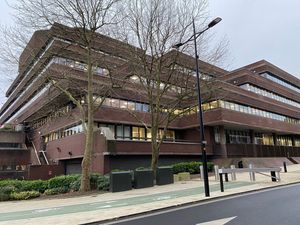
Permission granted for decommissioning of Wolverhampton bank
Plans for the decommissioning of a city centre bank have been given the go-ahead by council planners.
The Express & Star revealed last week that the branch in Queen Square is to close in November this year, after 146 years.
It will be replaced by a smaller branch in the Mander Centre.
Authorised planning officer Haley Johnston has granted permission for the removal of all the bank's cashpoints, branding, and the steps to the nightsafe. The nightsafe itself and the letter plate will be retained, but disabled internally.
Get the latest headlines delivered straight to your inbox with the Express & Star’s free newsletter
The windows will be obscured up to the height of 3ft 4in.
A statement issued on behalf of Lloyds Banking Group said changes to the building would be kept to a minimum.
"The works to the exterior of the building are intended where practically possible to return the building back to its natural state, keeping all original features intact and remain unaffected by the proposed works," it said.
"It aims to sympathetically repair the external elevation following the removal of the existing branding and signage and to seamlessly return the building unit, ready for new occupancy."
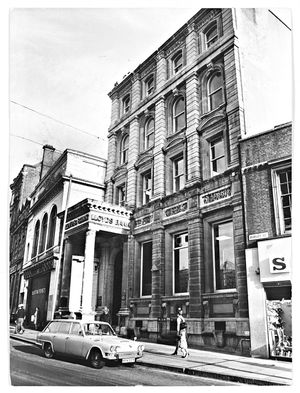
The listed building was constructed in 1879 and designed by the architect J A Chatwin in the Italianate style, with the top storey added later during the 19th century. It replaced an earlier branch elsewhere in the town.
The building, with its Italianate facade, was built on the site of the former Swan Inn at the eastern end of Queen Square where John Wesley preached in 1761. In 1981 a modern, four-storey extension in a similar style was added next door on the site of the old Queens Cinema and Ballroom. Above the first floor windows are relief panels depicting coal mining, farming and engineering, the main industries in the area at the time.
It is one of a number of imposing bank buildings constructed around Queen Square at the time, although historians have described it as 'more architecturally correct' than the others.