
Historic Staffordshire roof tile reveals 200-year-old employment message
A handwritten message discovered on the underside of a reclaimed tile appears to record a worker's dismissal from his job around two centuries ago
A 200-year-old Staffordshire Blue roof tile discovered at Cawarden Reclaim in Rugeley has revealed a handwritten message believed to record a worker's dismissal.
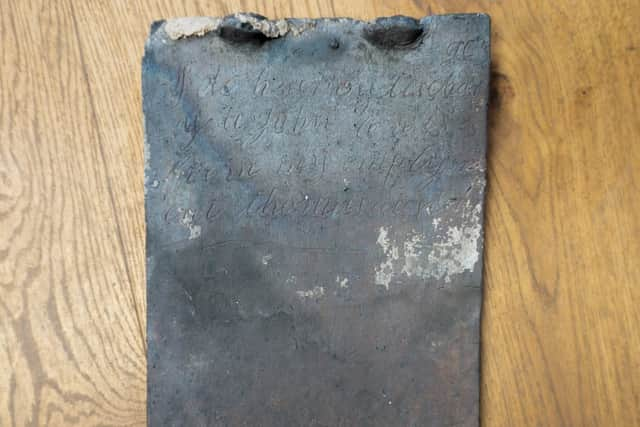

While the handmade clay tile appeared to be a piece of ordinary architectural salvage, an inscription on its underside revealed a glimpse into a worker's life in the early 19th century.
Written in elaborate handwriting are the words: "I do hereby discharge you John Lewis from my employment, Thomas Austin."
The message appears to show Thomas Austin formally ending the employment of John Lewis, with the tile effectively serving as an early version of a P45.
The inscription was written into the soft clay before the tile was fired, meaning it has survived for around two centuries while hidden from view on a roof.

Further research by Cawarden Reclaim has identified a Thomas Austin Brick and Tile Makers at Clay Hills, Stoke-on-Trent, in 1820.
It is not known whether this was the same Thomas Austin who wrote the message, although the name, location and period suggest a possible connection.
If confirmed, the discovery could offer a link between the person who made the building materials and the people whose working lives they once touched.
Cawarden Reclaim said the tile was among a number of unusual historical finds kept aside by the company.
The business plans to display the items in a collection called a 'Wall of Interest' in its reception area, where visitors will be able to see them.