
Israel’s president takes first steps on building new government after election
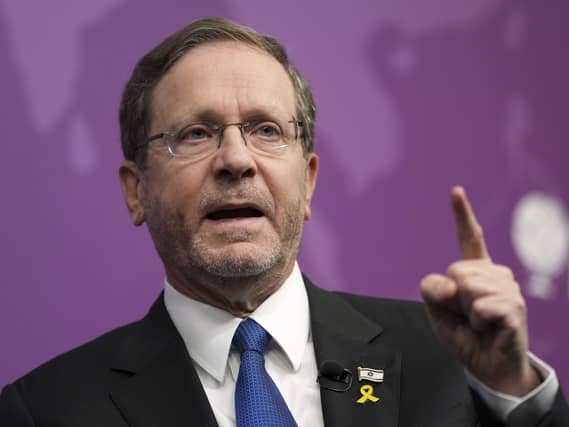

Isaac Herzog began consultations with party leaders on Wednesday night.
Israeli President Isaac Herzog has accepted the certified results of last week’s parliamentary elections as legally binding and began consultations with party representatives on forming a new government.
The move dealt a blow to Prime Minister Benjamin Netanyahu’s efforts to discredit the vote, in which he and his allies lost their majority in parliament, known as the Knesset, while Arab-led parties made historic gains.
“The elections are over. Now is the time to face reality,” Mr Herzog said.
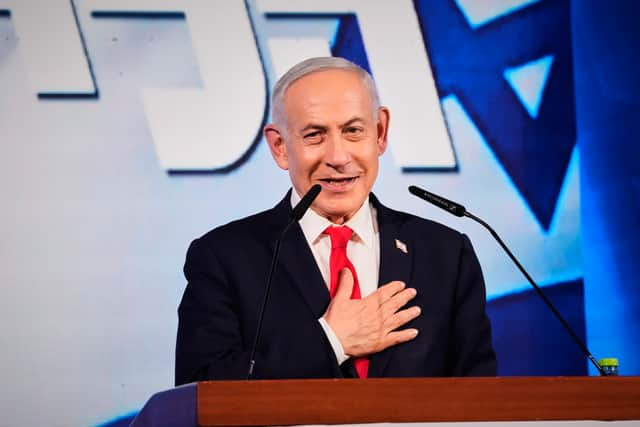
Mr Netanyahu and his supporters repeatedly made unsubstantiated claims that Arab-led parties had “stolen” the election, possibly with foreign assistance.
Mr Herzog began consultations with party leaders on Wednesday night to determine who to designate to form a government — a process that could bring Mr Netanyahu’s opponents to power.
Israel’s elections commission said earlier on Wednesday that after a thorough investigation of all parties’ claims of fraud, it had found “no evidence of irregularities that compromised the integrity of the election or affected its results”.
A separate investigation by the Shin Bet intelligence service, headed by David Zini, a Netanyahu appointee and loyalist, into allegations of foreign interference in the election is continuing.
In a private meeting on Wednesday of the elections committee’s members, its head, Supreme Court Justice Noam Sohlberg, read out an intelligence assessment from Shin Bet saying the agency believed there had been a “widespread phenomenon involving the influx of substantial funds into Israel from foreign states”, including countries hostile towards Israel.
Shin Bet provided no evidence to explain its assertion.
The committee had previously said that while claims about foreign actors seeking to influence the election were serious and under investigation, it did not believe any such interference affected the results, even if it had happened.
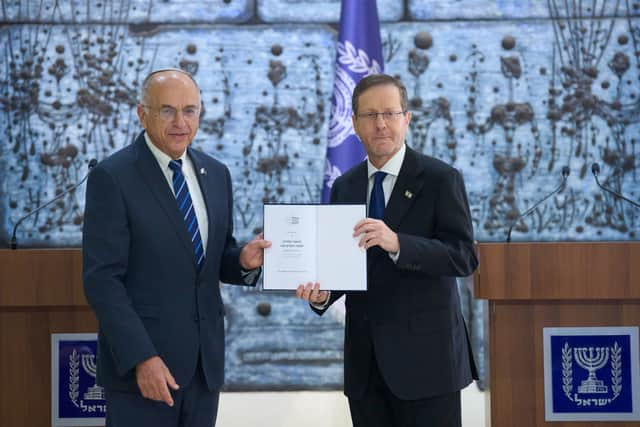
Mr Sohlberg reiterated that stance on Wednesday. “At this stage, these are merely suspicions, and even if they are substantiated, the scope of their potential impact is limited,” he said during a ceremony to present the certified election results to Mr Herzog.
The judge added that it is dangerous to cast doubt on the results and said they are legally binding.
Public trust in the electoral process is “easy to destroy, yet very difficult to repair”, he warned.
In the October 27 vote, neither Mr Netanyahu’s bloc nor the bloc of allies of his chief rival, opposition leader Gadi Eisenkot, secured a parliamentary majority needed to form a new government, raising the possibility of an alliance between the two rivals or an alliance between Mr Eisenkot and Arab-led parties.
Three factions — all aligned with Mr Netanyahu’s religious-nationalist base — recommended he be given a chance to form a coalition government, while a fourth — led by a former Netanyahu ally turned rival — recommended Mr Eisenkot.
Eight more parties, including the two Arab-led factions, are scheduled to meet Mr Herzog on Thursday, with Mr Eisenkot’s Yashar and Mr Netanyahu’s Likud speaking last.
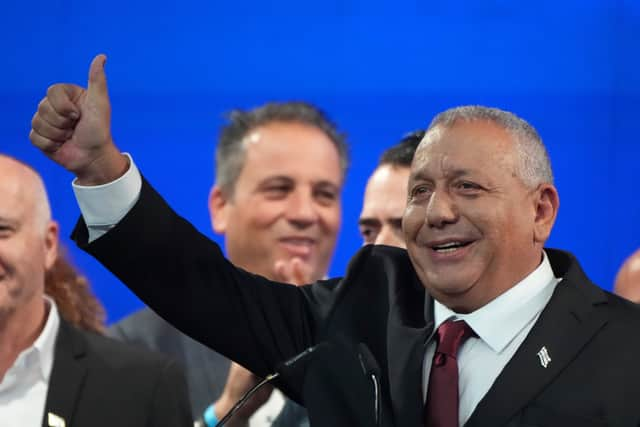
After the consultations, Mr Herzog will choose the candidate — most likely Mr Netanyahu or Mr Eisenkot — who he believes is most likely to be able to form a coalition government. He has several days to announce his decision, which will set the stage for weeks of negotiations.
If neither man can put together a government, the country would hold a new election early next year.
Shin Bet sought approval from Israel’s attorney general on Tuesday to interrogate several elected officials as part of its separate investigation, including Ra’am party leader Mansour Abbas and other senior Arab legislators, Israeli media reported.
In a statement rejecting the request, Attorney General Gali Baharav-Miara said: “It is not permissible to interrogate citizens or elected officials without evidence to justify such action.”
The Joint List of Arab parties condemned the request, calling it a “campaign of incitement” by Mr Netanyahu and his allies designed to delegitimise the Arab vote.
National security minister Itamar Ben-Gvir, a far-right ally of Mr Netanyahu, called on Shin Bet, over which he has no authority, to “arrest all the leaders of the Arab political parties” and interrogate them in “basement interrogation cells until these suspicions are fully clarified”.
Mr Herzog said on Wednesday that Shin Bet’s investigation into possible foreign interference should proceed, but cautioned that Arab Israeli voters “must not be smeared”.
“I condemn the coarseness and racist expressions that we have heard recently,” he added.