
Matt Maher: What hope for West Midlands speedway as engines fall silent?
These are grim times to be a speedway fan in the West Midlands.
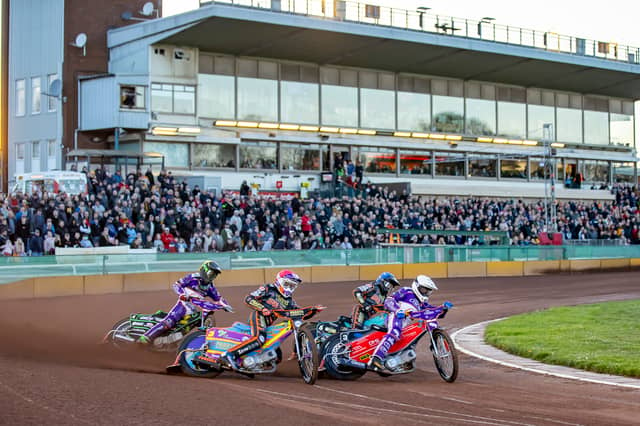


The closure of the Birmingham Brummies, who this week raced for the last time at Perry Barr before it becomes the latest iconic venue to be transformed into housing, means a region once recognised as the hotbed of the sport is now without a single team or track.
Before Perry Barr, it was Monmore and before then, Brandon and Dudley Wood. There remains hope Coventry might one day return to Brandon but the fight remains a long one.
“It’s pretty frightening,” says Chris Van Straaten. “To think where we were just a few years ago, to where we are now. I am saddened and upset at the loss of Midlands speedway.”
For Van Straaten, the sport’s longest-serving promoter who was in charge of Wolves from 1986 through to their enforced exit from Monmore in 2023, the past couple of years have brought home the stark reality of just where the sport currently sits.
Despite an exhaustive search, he concedes “little progress” has been made in the search for a new home. No stadium suitable for hosting speedway exists within a 30-mile radius, while efforts to find a location capable of realising his ultimate vision, of a multi motosport venue in which speedway would play just one part, have so far been without success.
“I’m afraid I haven’t got a lot to say which will get people excited,” he says. “But I have to be honest about where things are.
“Any land I have enquired about has been on the proviso of a short-term lease because eventually it might be housing.”
It’s a bleak picture, for now, yet some hope might be found by looking back in history.
After all, this isn’t the first time speedway has disappeared from the Midlands.
Back in the 1950s, the sport was hit by a spate of team closure, with both Cradley Heathens and Wolves disappearing for several years. Coventry were one of only seven clubs left in the whole country.
The renaissance, when it arrived in the early 1960s, began at a much lower level than before.
“It was more or less amateur, or semi-professional,” says Van Straaten, explaining how former Express & Star reporter Tom Johnson - a contact of his when he first entered the sport in the 1970s - would cover meetings for the newspaper while also performing the role of referee.
“It was run at that level, yet the crowds were huge,” he continues. “I hate to say it in many ways but maybe that is what British speedway needs now.”
There is certainly an argument that, at least in the Midlands, the sport needs to go back to the beginning.
In Van Straaten’s eyes, the professionalism which exists at the top level has effectively left the clubs and the venues behind.
The cost of paying the top riders has become increasingly difficult, while a drastically reduced schedule, which saw teams in this season’s Premiership host just 12 meetings each (the number could now drop further with the loss of the Brummies) has further tightened the margins.
Van Straaten, eager to be positive, can only be honest.
“I would still love to bring speedway back to the West Midlands but the state the sport is in now, it would have to be at a much lower level,” he says.
“The costs involved with staging British speedway now, I could not envisage playing at the top level.”
Wolves had to leave Monmore after the site’s owners, gambling behemoth Entain, decided they no longer wanted to host speedway.
“I’ve had plenty of time to reflect,” says Van Straaten. “How things panned out at Monmore felt unpalatable.
“But if you look at it from the business point of view, people sat behind offices making decisions. We had gone from years where we had 32 meetings to less than half of that.
“So from a business point of view, it becomes a bit more understandable. From a human point of view, of course, it remains heartbreaking.”
It is, ultimately, venues which hold the key. Back in the 1960s when the sport experienced its rapid rebirth, the stadiums were still there, ready for racing to return. Now, that is no longer the case.
Finding a location is fiendishly difficult. The Heathens are still searching, now three decades since the demise of Dudley Wood. Van Straaten, at least, has some experience of success, having been part of the group which brought speedway back to Redcar and Middlesbrough after more than a decade away.
It requires patience - and luck. At the same time, speedway is facing the same challenges as everything else in the entertainment industry.
Van Straaten points to the pandemic and lockdown as having marked a key change in customer behaviour. Speedway’s popularity is demonstrated by the huge number who continue to watch the sport’s live streams. Yet those watching at home do not assist the promoter trying to meet the rising cost of staging events. Finding an answer to the problems facing many in the service sector is far from easy.
The biggest reason for optimism is the fanbase remains. Van Straaten was among 2,000 at Perry Barr for the Brummies’ final ride.
“It was a very emotional night,” he says. “There were a lot of youngsters there and that does give you hope.
“Most of my life has been involved in speedway and I have thoroughly enjoyed it. To see where the sport is now makes me sad. I hope we can turn the corner for the supporters.”
Comment Guidelines
Iconic Media encourages reader discussion on our stories. User feedback, insights and back-and-forth exchanges add a rich layer of context to reporting. Please review our Community Guidelines before commenting.