
Why we must never forget the horrors of the Battle of the Somme, 110 years on
Roshan Doug reflects on the importance of remembering victims of battle as individuals thrown into the horror of war
Europe witnessed one of the darkest chapters in human history, 110 years ago this week.
The Battle of the Somme, fought in the summer of 1916, has become synonymous with unimaginable slaughter. Around 60,000 British casualties occurred on the first day alone, of whom nearly 20,000 were killed. By the battle’s end, more than a million men from both the Allied and German armies had been killed, wounded or gone missing.
Yet numbers have a dangerous habit of numbing us. They become so vast that we forget they were once individual human beings. Every figure represented a son, a brother, a husband, a father, a sweetheart or a friend. Every casualty left an empty place at a family table.
It is the human stories that deserve to be remembered.
As a professor of English, I once spent many months studying the war poetry and letters of Ivor Gurney. Born in Gloucestershire, Gurney was not simply writing about war; he was living it. His poems and letters capture the mud, fear, exhaustion and comradeship of the trenches in a way no history book ever could.
In one of his finest poems, To His Love, he expresses the unbearable grief of loss:
"Cover him, cover him soon!
And with thick-set
Masses of memoried flowers –
Hide that red wet thing I must somehow forget.”
Few lines in English literature remind us more powerfully that behind every casualty statistic lay a loved and irreplaceable human being.
Perhaps the most astonishing fact of all is that many of those soldiers were scarcely more than boys. Some were only 16 or 17, having lied about their age to enlist. Others had barely left school before exchanging classrooms for the muddy trenches of northern France.
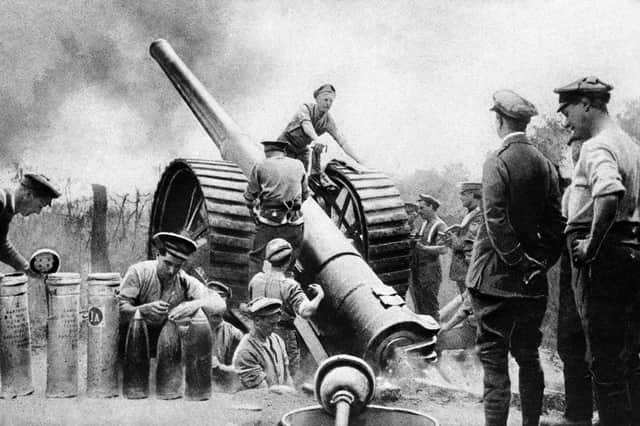

Imagine what they saw: the thunder of artillery, the crack of machine guns, poison gas drifting across no man’s land, friends disappearing in explosions, and the knowledge that every step forward might be their last.
It is almost impossible for us today to comprehend such terror.
Heroism does not mean the absence of fear. True courage is carrying on despite overwhelming fear. Every man climbing out of the trench that July morning knew he might never return. They advanced not because they were fearless, but because duty, loyalty and comradeship demanded it. That is courage in its purest form.
I do not wish to diminish the extraordinary role played by British soldiers, whose courage has rightly become part of our national memory. But they did not fight alone. More than a million Indian soldiers volunteered during the First World War, and many thousands served on the Western Front. Among them were Hindus and Gurkhas who endured the same mud, shellfire and fear of death as their British comrades. They too fought with remarkable courage, many making the ultimate sacrifice on a continent they had never before seen.
Their contribution deserves to be remembered not as a footnote, but as an inseparable part of Britain’s war story.
Acts of bravery unfolded. Officers carried wounded men under heavy fire. Stretcher-bearers rescued strangers at enormous personal risk. Soldiers comforted dying friends when there was nothing else they could do. British and German troops alike displayed astonishing humanity amid unimaginable horror.
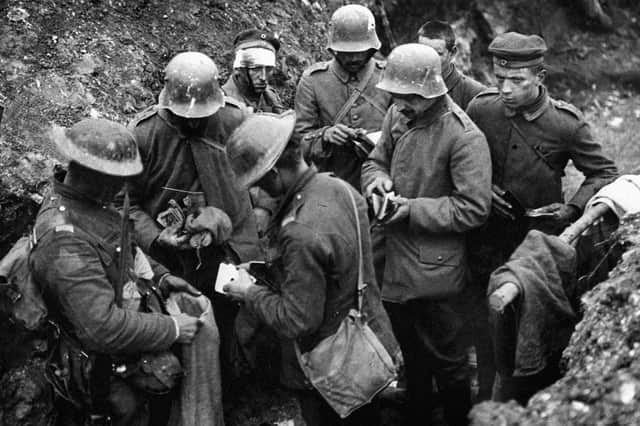
War, perhaps more than anything else, reveals both the very worst and the very best of mankind.
The Somme also reminds us how fragile civilisation really is. Before 1914, Europe regarded itself as the pinnacle of progress and culture. Yet within months, modern industry had become an efficient machine for killing. Railways transported troops to their deaths. Factories produced shells instead of prosperity. Scientific innovation was harnessed to destroy rather than create.
That is a lesson every generation must remember.
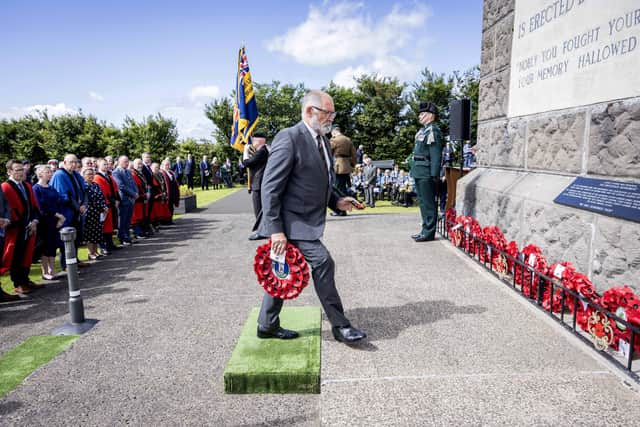
Today we live in another uncertain world. New conflicts erupt with alarming regularity, while public debate often rewards division rather than understanding. It becomes all too easy to forget the terrible cost when diplomacy fails.
Remembrance should never become a celebration of war. Rather, it should be a solemn acknowledgement of the terrible price ordinary people pay whenever nations resort to conflict.
When we stand beside a village memorial or wear a poppy each November, we are not honouring statistics.
We are honouring individuals.
The young miner from Coseley. The schoolteacher from Wolverhampton. The farmer from Shropshire or from rural France. The German apprentice who loved music. Men whose hopes and futures were cut brutally short before life had scarcely begun.
One hundred and ten years later, the trenches have largely disappeared beneath fields of wheat and quiet woodland. Nature has healed the landscape, but the scars carried by families lasted for generations.
As the last veterans have passed into history, responsibility now rests with us. We must continue telling their stories – not to glorify war, but to remind future generations of its terrible human cost.
The Battle of the Somme was not merely one of history's bloodiest battles.
It was a million interrupted lives. And that is something no passage of time should ever allow us to forget.
Roshan Doug is an educationalist and a former Birmingham poet laureate
Comment Guidelines
Iconic Media encourages reader discussion on our stories. User feedback, insights and back-and-forth exchanges add a rich layer of context to reporting. Please review our Community Guidelines before commenting.