
'Centre ground politics is lost - voters are instead drawn to those with something to say'
Centre ground politics is lost, and that allows in those with something to say - Comment from Roshan Doug
There was a time when the political ‘centre ground’ actually meant something. It stood for balance, common sense, and the idea that politics was about steady management rather than constant crisis.
But these days, that centre feels less like a meeting point and more like an empty space nobody really believes in anymore.
As W. B. Yeats once wrote, ‘when things fall apart; the centre cannot hold.’ It used to feel like poetry. Now it feels uncomfortably close to reality. The middle ground is saturated with vacuous rhetoric.
I don’t say this as some distant commentator. I’ve spent years working in the field of arts, education, and public life, trying to talk honestly about issues that affect ordinary people. And what’s become clear is that when you do that, it doesn’t always go down well. More often than not, you get labelled, sidelined, or quietly pushed out of the conversation. Not because you’re extreme – but because you’re not sticking to the approved script.
That’s not just theory either. A couple of decades ago, a former employer describe me as ‘dangerous’ simply because I encouraged young people to question what they were being told – about government, politics, and the stories they’re given. Personally, I thought that was the point of critical thinking. Apparently not everyone agrees.


More recently, I’ve been criticised for speaking out about things like the Covid response, the direction of education policy, and what I see as failures in the asylum system. These aren’t abstract debates – they affect real communities. You can see the strain: social tension, rising suspicion, pressure on resources. Most people can feel it without needing it explained to them. Things are falling apart.
At the same time, there’s a wider sense that control has just drifted away. Politics doesn’t feel like something people really shape anymore. It feels distant, managed, and heavily influenced by systems that sit far above everyday life – global markets, institutions, layers of bureaucracy. And the language of the centre just doesn’t help. It’s full of careful phrases and jargon that sound more like corporate management than real conversation.
A big part of the problem is how dominant economics has become in political thinking. Whether it’s Labour or the Conservatives, or even the Liberal Democrats, the arguments tend to circle the same space: growth, budgets, fiscal responsibility, market confidence. Important things, yes – but when everything is filtered through that lens, politics starts to feel like there’s only ever one possible outcome.
For a lot of people, the differences between the main parties now feel pretty thin. Politics has almost been reduced to the colour of a tie – red, blue, yellow – with not much underneath that feels genuinely distinct anymore.
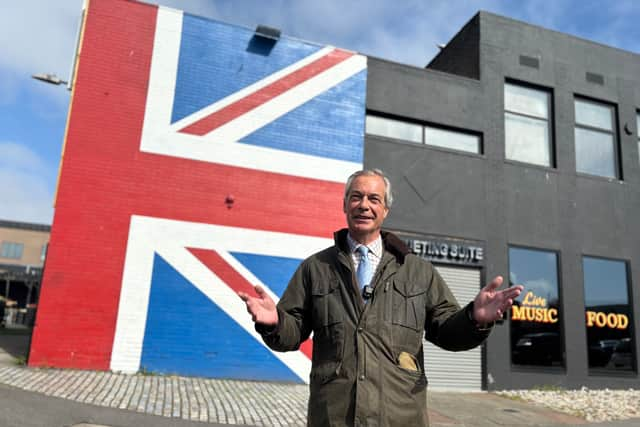
So it’s no surprise that people are switching off. There’s a real sense of disengagement – not just from politicians, but from politics itself. The usual phrases – ‘working people,’ ‘tough choices,’ ‘long-term plan’ – don’t quite resonate as they once did. Now they sound rehearsed. And when language stops feeling real, trust goes with it.
That’s partly why more people are drawn to voices that promise disruption. You don’t have to agree with them, but at least they sound like they believe what they’re saying. They talk about identity, control, belonging – things that feel immediate and human. Compared to that, the centre can feel hesitant and a bit out of touch.
With local elections on May 7, it’s probably worth stopping for a moment and asking a simple question: are any of the main parties actually speaking for you, or just repeating slightly different versions of the same script? Voting shouldn’t just be automatic – it should feel like a real choice.
None of this is to say that moderation or compromise is a bad thing. They matter. They always have. But right now, they don’t really inspire anyone. They don’t connect. And in a country where a lot of people feel unheard – and even nervous about speaking openly – the political centre doesn’t feel like a safe middle anymore.
It feels like somewhere things get watered down. And unless that changes, it risks ending up exactly what Yeats warned us about - the moment ‘when things fall apart; the centre cannot hold.’
Dr Roshan Doug is an educationalist and a former Birmingham poet laureate.
Comment Guidelines
Iconic Media encourages reader discussion on our stories. User feedback, insights and back-and-forth exchanges add a rich layer of context to reporting. Please review our Community Guidelines before commenting.