
Historic West Midlands landmarks added to 'at risk' register as Ironbridge building saved
The Severn Wharf Building in Ironbridge has been removed from the register following a £260,000 repair project
Historic landmarks across the West Midlands are facing an uncertain future after being added to a national register of heritage sites at risk of neglect and decay.
Historic England has revealed that 58 buildings and sites across the Midlands have been added to its Heritage at Risk Register for 2026, although 13 have been saved and removed from the list.
Among those facing significant conservation challenges are Hall's Croft in Stratford-upon-Avon, the former home of William Shakespeare's daughter, and Clifford Castle in Herefordshire.
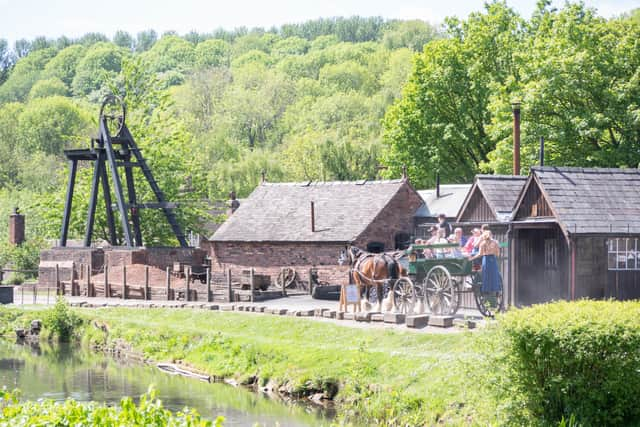

However, there was better news in Shropshire, where the historic Severn Wharf Building in Ironbridge has been removed from the register following a £260,000 repair project.
The Grade II* listed former warehouse, which forms part of the Ironbridge Gorge Museum, suffered extensive flood damage during severe storms in 2020.
Built by the Coalbrookdale Company between 1838 and 1847, the building experienced structural problems and deterioration to its interior, alongside defects to its roof, guttering and chimneys.
It was added to the register in 2021, but repairs funded by Historic England and the National Heritage Memorial Fund were completed in 2024.
The building has since reopened, with only cosmetic internal repairs remaining, and has recently come under the ownership and management of the National Trust.
Elsewhere, Hall's Croft in Stratford-upon-Avon has been added to the register amid concerns over the condition of the 17th-century property.
The Grade I listed timber-framed building, which dates back to 1613, was once home to Shakespeare's daughter Susanna and her husband, Dr John Hall.
It is now undergoing a major conservation project, with repairs needed to its timber frame and damage caused by a vehicle striking the front of the building.
Restoration work has already benefited from a £1 million donation from playwright Ken Ludwig, although further funding is required.
Rachael North, chief executive of the Shakespeare Birthplace Trust, said: "Hall's Croft is a building of exceptional historical importance and its condition demands a serious and sustained response.
"Inclusion on the Heritage at Risk Register is an important and necessary step. It allows us to be transparent about the challenges we face and to begin building the partnerships required to secure the building's future."
Another historic landmark facing an uncertain future is Clifford Castle, near Hay-on-Wye in Herefordshire.
The castle, which dates back to 1070, has been added to the register following a major masonry collapse at Rosamund's Tower.
Heavy rain in February penetrated the tower's earth mortar core, causing part of the structure to collapse.
The remaining structure is described as extremely fragile and has been closed to the public.
The castle had previously been removed from the register following repair and stabilisation work in 2017, but its latest deterioration has prompted fresh concerns.
Efforts are now underway to secure funding for further repairs.
Meanwhile, progress is being made to restore the historic heart of Burslem in Stoke-on-Trent.
Known as the 'Mother Town of the Potteries', Burslem Conservation Area was added to the register in 2025 due to dereliction, structural decline and the loss of historic features.
The area includes the Wedgwood Institute, Market Hall, School of Art and numerous historic pottery works and bottle kilns.
Historic England has been working with Stoke-on-Trent City Council and other partners on regeneration projects, including repairs to the Grade II listed Market Hall.
The project has recently received an £800,000 grant from Historic England's Heritage at Risk Capital Fund.
Across the Midlands, Historic England spent £1.76 million in grants supporting repairs to 27 sites on the register during 2025/26.
Claudia Kenyatta CBE and Emma Squire CBE, co-chief executives of Historic England, said: "Our historic buildings and places help tell the story of where we live and contribute to the character and identity of local communities.
"Each year, the Heritage at Risk Register showcases the positive impact that restoring and reusing these special places can have.
"The most effective way to protect our buildings is to bring them back into use as places that create connection and enjoyment for local people."
Heritage Minister Baroness Twycross said the latest register highlighted the pressures facing historic sites, including ageing buildings, structural deterioration and extreme weather.
She added: "I want us to build on our progress to ensure our heritage is protected for generations to come."
Comment Guidelines
Iconic Media encourages reader discussion on our stories. User feedback, insights and back-and-forth exchanges add a rich layer of context to reporting. Please review our Community Guidelines before commenting.