
RTÉ informed of funding cut hours before Budget, committee told
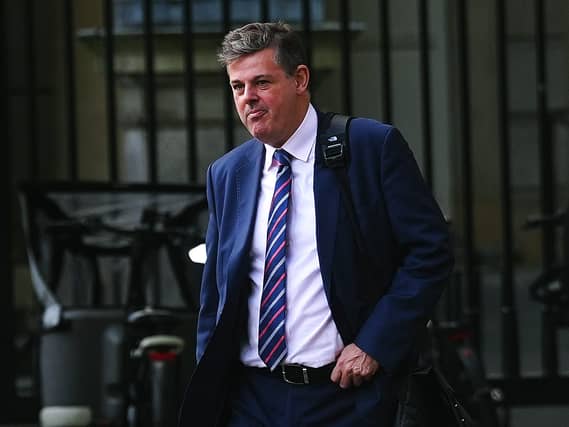

A number of the broadcaster’s executives appeared before the Arts, Media, Communications, Culture and Sport Committee on Wednesday.
RTÉ bosses were told funding to the national broadcaster would be cut just hours before Budget 2027 was announced, a committee has been told.
RTÉ executives and chairman Terence O’Rourke expressed their shock, anger and surprise at a phone call from officials at the Department of Culture, Communications and Sport.
However, department secretary-general Feargal Ó Coigligh said it was not the minister’s proposal to cut RTÉ’s funding.
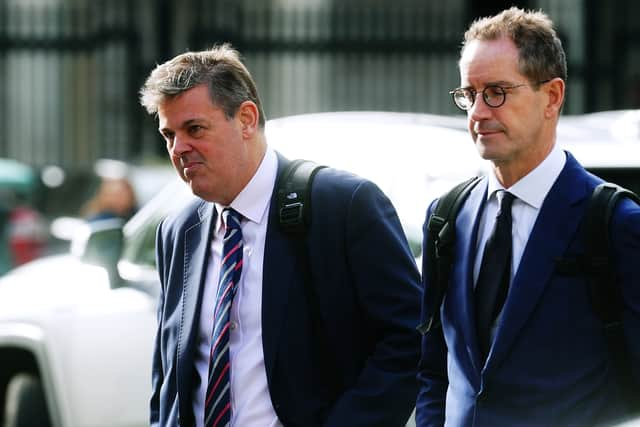
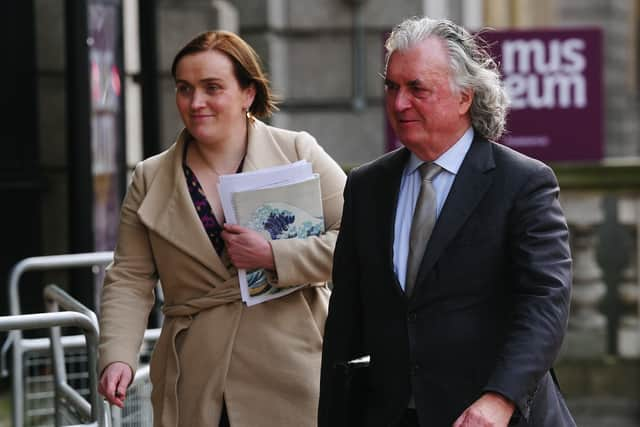
Mr O’Rourke, RTÉ director-general Kevin Bakhurst and other executives appeared before the Arts, Media, Communications, Culture and Sport Committee on Wednesday.
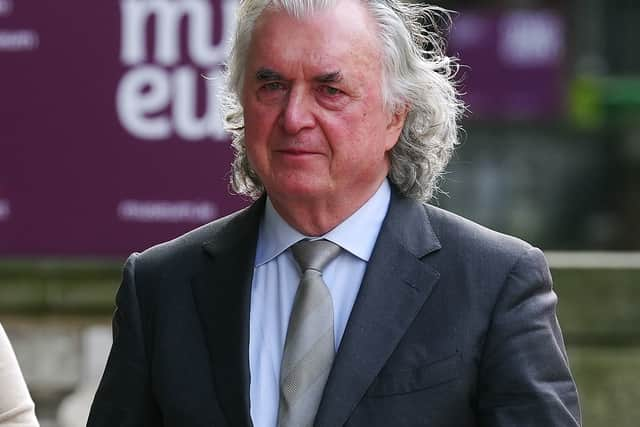
RTÉ was allocated 240 million euro in October’s Budget, a 20 million euro shortfall from what was agreed between the broadcaster and Government in a multi-year funding deal.
Media Minister Patrick O’Donovan said in the hours after the Budget was announced that he was not happy with the pace of reform at RTÉ, including the voluntary exit scheme.
Mr Ó Coigligh said: “It was not the minister’s proposal to cut the funding of RTÉ. That’s very clear from the budget discussions.”
He later rowed back on the comment and said it was “not the minister’s preference” to cut funding.
Asked how it ended up being cut, he replied: “Because that’s the total quantum of money that was available to the department at the end of the Government discussions.
“The minister received a total allocation for the department, right, which fell short of what was desired and what the minister sought.
“At the weekend of the Budget, when those decisions were being finalised, he had to make very difficult decisions as to how those resources were to be distributed across the full range of departmental functions and among our agencies.
“It was at that point, as the Budget was being decided, that the minister looked across and said, ‘can I increase the funding to RTÉ team from 240 million?’
“The minister spoke at his press conference and he said he was concerned about the pace of reform.
“It was particularly in relation to, you mentioned, the reduction in staff members.”
Mr Bakhurst was asked when he discovered that funding would be cut, and he replied: “Three hours before Budget.”
Mr Ó Coigligh described the phone call to RTÉ as “difficult”, while Mr O’Rourke said he was surprised by it.
Mr O’Rourke told the committee he needed to find out what happened as he “expected” the funding to be honoured. He said it would have been a “head scratching time” otherwise.
He added that within 48 hours, they had found a way that he believes will work.
When asked if Mr Bakhurst wanted to comment, the director-general said: “I would rather not.”
Mr Bakhurst said: “I just think when you have an agreement in black and white, we will honour our side, and I’d hope the other side would be honoured too.”
Deputy RTÉ director-general Adrian Lynch said department representatives meet with RTÉ officials every six weeks to discuss reform.
Mr Bakhurst said there was no mention of funding being cut in meetings, nor were there any concerns raised about the pace of reforms during the meetings before the Budget.
Mr Ó Coigligh said the minister looked at RTÉ as being an area where he said, “I think some of these reforms aren’t progressing at pace.” For example, the voluntary exit programme.
“The issues in relation to pace reform are highlighted at every meeting,” he said.
“We mentioned, for example, the pace of reform in reducing the size of the organisation. RTÉ mentioned, for example, the new presenter pay bands that need to be introduced. A lot of those issues, which RTÉ are working on, haven’t been delivered to date.”
Asked for his reaction to the phone call, Mr Bakhurst said: “There was shock, disappointment, anger in RTÉ given the decision at the last minute, the notice of it.
“But when we had the meeting with the minister and with the officials, there was an agreement that we set out exactly what we had done in terms of reform.”
Mr Bakhurst said there will be no mandatory redundancies to cut RTÉ staff.
Social Democrat TD Sinead Gibney asked whether mandatory redundancies will be needed in its reform process.
“Not while I’m in this job, no,” he replied.
The committee also heard that the RTÉ sports department were “actually not happy” with the appointment of broadcaster Ger Gilroy because of comments he made about RTÉ sport in the past.
The broadcaster also defended its recruitment process in his appointment, and rejected assertions by TD and Senators that he had been “head-hunted”.

Patricia Monahan, director of audio at RTÉ, said there was an internal expression of interest process.
She said that external candidates were identified and went through a similar process.
“There’s a process that we undertake with all expressions of interest, and there is a point in all of those processes, we’ll consider other candidates, and that’s what happens in this case,” Ms Monahan said.
“Ger wasn’t approached until the decision was made that he was the best person for the job, and then we have to ascertain his interest. That’s the point at which you contact (him).
“We assessed him against the criteria, the same criteria as everyone else, and then obviously we had to ascertain his interest.”
However, chairman of the committee Alan Kelly was critical of the explanation given around the decision to hire the former Newstalk presenter.
“It’s almost like you’re dancing around, not wanting to say we headhunted somebody.
“But it’s like if it walks like a duck, quacks like a duck, it is a duck,” he added.