
Nasa navigation tech trial paves the way for safer lunar landings


The advanced system will aid precise touchdowns and help detect and avoid potential hazards, which is critical for missions.
Nasa has successfully tested new technology that will help spacecraft autonomously find safe landing sites on the Moon and other planets.
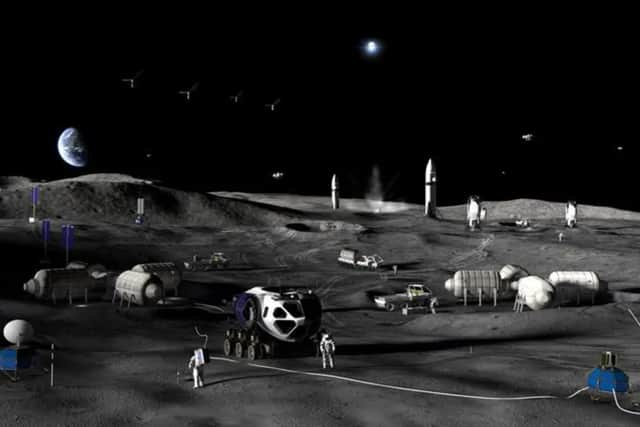
The US space agency is pressing ahead with ambitious plans for a permanent base on the surface of the natural satellite.
A drone fitted with the advanced navigation and guidance system completed simulated lunar descent and landing manoeuvres in the Mojave Desert, California.
The equipment generates high-resolution digital elevation maps from light-detection and sensor data to map the terrain to assess potential landing sites.
If the system judges the targeted area is hazardous, it diverts the drone to a safer location.
Researchers at Nasa’s Johnson Space Centre in Houston, Texas, developed the Safe and Precise Landing – Integrated Capabilities Evolution (Splice) system.
They worked with specialists at the agency’s Armstrong Flight Research Centre in Edwards, California, to fit it to the Alta-X drone and carry out test flights in August.
The trials checked communications, data collection and handling, and command-control performance between the Splice payload and the drone to prepare for a full-scale test later this month at Voyager Technologies, which are developing commercial lunar landers.
Nasa project manager Davis Adams said: “This flight test is the culmination of almost a decade of work for the Splice project.
“This flight raised the technology readiness level, priming it for integration into future robotic and crewed lunar flights.
“Validation of the guidance and navigation systems are applicable to terrestrial, lunar and Martian descent and landing missions.”
He said the agency was co-ordinating with industry regarding the use of the guidance system.
Separately, Nasa also recently announced plans with specialist firm to develop a simplified, lighter space suit for moonwalks.
The sortie suit is roughly half the weight of Axiom Space’s larger main suits, which will still be used for longer, more demanding future missions.
Nasa is looking to land people back on the Moon in 2028, with a view to having a lunar outpost up and running by 2032, providing a continual human presence with routine crew rotations.
The pioneering project aims to develop the technologies needed for future deep space missions, including to Mars.