
Expected UK-EU deal on agri-goods prompts familiar divisions

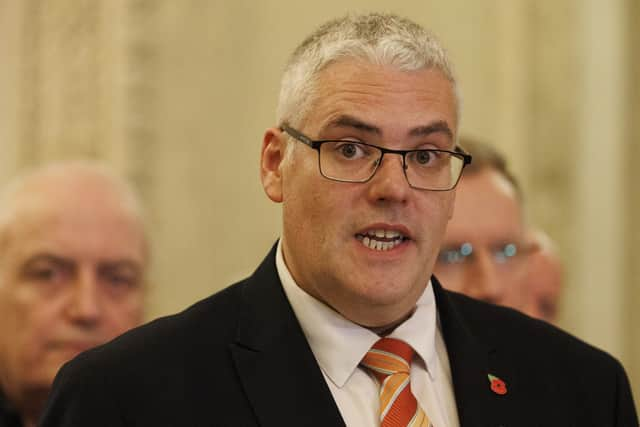
DUP leader Gavin Robinson criticised a ‘lack of ambition’ on the part of the UK Government over the proposed deal.
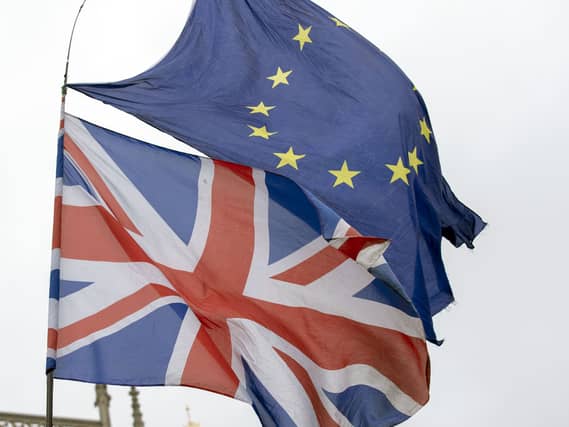
Reaction to an anticipated UK-EU deal on agri-goods divided down familiar lines in Northern Ireland as politicians on both sides of the Brexit debate responded to a move that could dismantle part of the “Irish Sea border”.
DUP leader Gavin Robinson said the mooted agreement does not go far enough and demonstrates a “lack of ambition” by the Government.
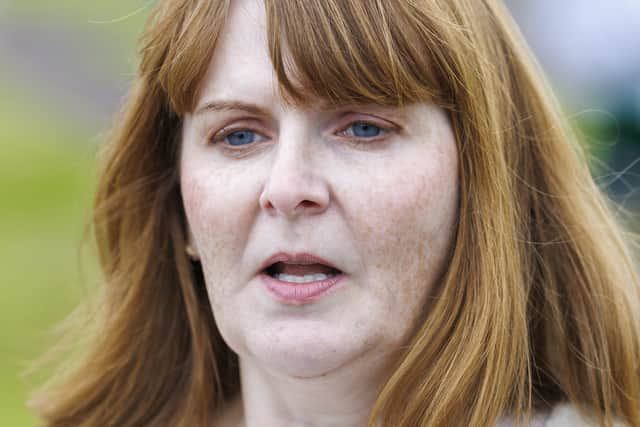
However, Sinn Féin Economy minister Caoimhe Archibald said the agreement was a welcome step towards reducing trade friction.
Their comments came in response to reports that a draft text has been agreed between London and Brussels that would see Great Britain and the European Union align on trade rules on SPS (sanitary and phytosanitary) goods, such as food and plants.
Under current post-Brexit rules, Northern Ireland already aligns with the bloc on SPS rules – an arrangement that led to the creation of the so-called Irish Sea border, with checks and controls required on goods being transported into Northern Ireland from the rest of the UK.
Many of these processes would be scrapped if a deal is finalised that sees Great Britain similarly align with the EU on SPS produce.
Responding to the prospect of an agreement, Mr Robinson highlighted that in many other aspects of post-Brexit rules, such as customs arrangements, Northern Ireland is still treated differently to the rest of the UK.
Northern Ireland operates under EU customs rules, meaning that customs declarations are required on many goods arriving in the region from Great Britain.
The DUP collapsed devolved powersharing in Northern Ireland for two years between 2022 and 2024 in protest at the barriers created between Northern Ireland and the rest of the UK by post-Brexit rules.
The rules were agreed by the UK and the EU to ensure a free-flowing Irish land border after Brexit.
That was achieved by introducing new regulatory and customs checks on the movement of goods from GB into Northern Ireland.
Many unionists are vehemently opposed to arrangements they contend have undermined Northern Ireland’s place within the UK.
Parties that campaigned for a Remain vote in the 2016 referendum, such as Sinn Féin, the Alliance Party and SDLP, have argued that the arrangements have shielded Northern Ireland from what they believe are the negative impacts of Brexit. They have also pointed to Northern Ireland’s ability sell into both the UK internal market and the EU single market without restriction as a benefit of the post-Brexit rules.
The DUP only agreed to return to Stormont in early 2024 after the last Conservative government agreed the Windsor Framework with the EU – a deal that aimed to reduce some of the red tape associated with the trading arrangements and give the Northern Ireland Assembly a role in scrutinising the European rules that apply in the region.
“I don’t agree with the Government’s approach to their engagement with the European Union. I take issue with it,” Mr Robinson told BBC Radio Ulster on Tuesday.
“But if this is the approach they want to go down, why do it in a whack-a-mole, single-issue, one-off approach, sector by sector, when, in actual fact, what they should and could be doing is ensuring that Northern Ireland is within the entirety of the United Kingdom when it comes to these negotiations? That we’re not in a separate and distinct structure?
“And if they are being serious about their approach, there’s no justification for keeping us separate and distinct.”
He added: “When I say this Government lacks ambition, my question to them is this: if they are willing to ignore 2016, ignore the referendum and agree alignment in so many areas of life, why do they continue to keep Northern Ireland separate from the rest of the United Kingdom?
“That is something that we will be talking to them about, have raised with them, and will continue to raise because it is not logistically or sensibly possible, and it’s a constitutional affront for them to keep us separate from the rest of our country when they are accepting alignment in so many facets of trade.”
Ms Archibald gave a differing reaction, telling reporters at Stormont: “Brexit was an act of gross economic self-harm, and we have seen the impact of that in the British economy to the point that we have the Labour Government now looking to reverse Brexit and considering how to go about that.
“Obviously, we have our own arrangements here, which mitigate the impact of Brexit and also give the north a unique competitive advantage, being able to sell into both the British and EU markets.
“And we are also seeing the impact of that in our own economic data, but we do welcome anything that is going to minimise the friction for trade for businesses.
“And we will obviously need to see the detail of what is being published later, to go through it and to understand exactly what the impact is. But, in general terms, we do welcome the steps that are being taken today.”
Alliance Agriculture minister Andrew Muir described the deal as “positive news”.
“I’ve been working hard, engaging with the UK Government on this,” he said.
“And whilst full details of the deal will be published at the summit on November 20 in Brussels, I am confident this will be good for consumers, good for businesses, and good for our farmers.
“It won’t resolve everything. I have always been clear that cleaning up the mess caused by Brexit is a big job, and I will continue to constructively represent Northern Ireland, ensuring further and deeper collaboration with the European Union as our trusted trading partners, so we can grow the economy and we can see a positive future for Northern Ireland.”
Ulster Unionist MLA Steve Aiken said reports of a deal on SPS should be “broadly, albeit cautiously, welcomed”.
He suggested the agreement could be “just tinkering around the margins” rather than moving to a place where Northern Ireland is no longer treated separately from the rest of the UK.
“Tellingly, according to informed sources, this agreement is a GB-only arrangement,” he told the Stormont Assembly on Tuesday.
“As we know, Northern Ireland remains and continues to be separate from the rest of our nation on a vast swathe of other EU regulations, tariffs and duties.
“None of these proposed SPS arrangements changes the fact that Northern Ireland remains within the European Customs Union, and that the implementation of the new Union Customs Code, the considerable divergence, disruption, with its resultant added extra bureaucracy, means that cost to do business with our largest market, our own country, will escalate.”
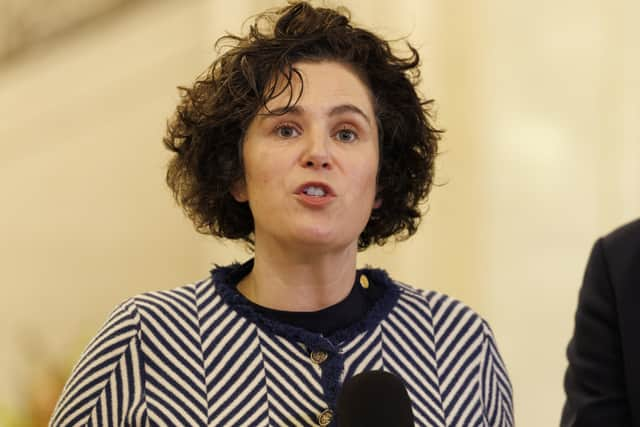
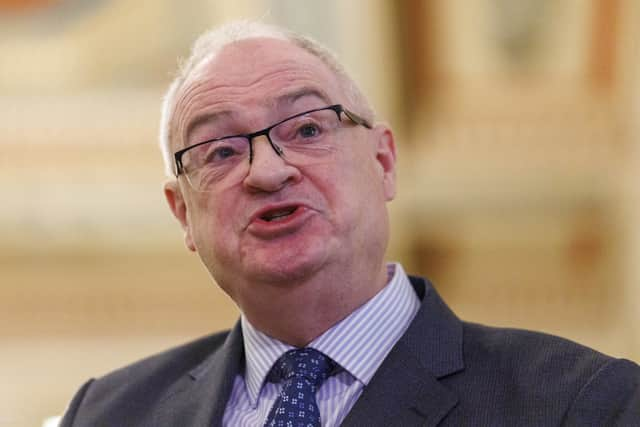
SDLP leader Claire Hanna said: “Brexit put barriers where none needed to exist, and businesses and families have been paying the price ever since. This agreement is a welcome opportunity to start repairing some of that damage.
“The SDLP has always argued for the closest possible relationship with the EU, which facilitates the removal of as much friction as possible in the Irish Sea.
“There is a certain irony in those who championed Brexit have complained most about the arrangements required to manage its consequences. The problems were entirely predictable, and no amount of political grievance mining can disguise that.
“We need to see the detail, but this is further proof that closer cooperation with the EU delivers practical benefits. Rather than endlessly rehearsing the arguments of the last decade, we should be focused on undoing the damage of Brexit, protecting our all-island economy and making life easier for businesses and families.”
Traditional Unionist Voice leader Jim Allister criticised the deal.
“This is not a UK-EU deal for the whole UK,” he told Radio Ulster.
“This is a deal with the EU for Great Britain. The United Kingdom should, in these negotiations, have taken back sovereignty over SPS matters in Northern Ireland. They chose not to.
“They’ve chosen to leave us under the sovereignty of the EU, and instead to align the rest of the United Kingdom with EU rules as a rule taker, for which then the United Kingdom will have to pay a significant contribution.”