
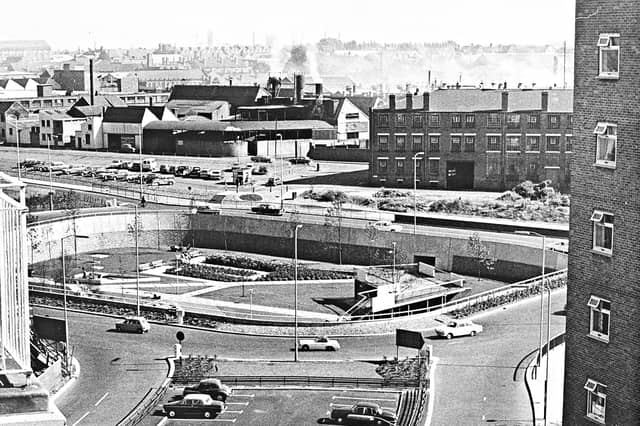

First mapped out in the mid-1950s and built in stages throughout the 1960s, 1970s and early 1980s, Wolverhampton's inner ring road transformed the town centre. Historic pubs, terraced streets and industrial sites gave way to multi-lane carriageways, concrete flyovers and sunken pedestrian subways.
Captured from high above the traffic and at ground level in its mosaic-lined underpasses and sunken gardens, these archive photographs offer a fascinating look at the changing landscape, the ambitious engineering behind the project and the everyday lives of the drivers and pedestrians who used it.
The photographs are presented in no particular order, but together they capture the changing face of Wolverhampton's ring road. Do you remember it being built, or have memories of using it over the years? Share your memories in the comments – we'd love to hear them.
- You can enjoy this and more with our weekly FREE Nostalgia Newsletter - with scores of archive pictures and exclusive features on the history of Wolverhampton, Staffordshire and the Black Country - all sent to your inbox every week. Sign up here
- For anyone curious about where their own family story leads, MyHeritage DNA kits are currently £19.90, excluding shipping. The test can help explore genetic origins and identify DNA matches who may share branches of your family tree. This is an affiliate link. We may earn a small commission on items purchased, but that does not affect our editorial judgement
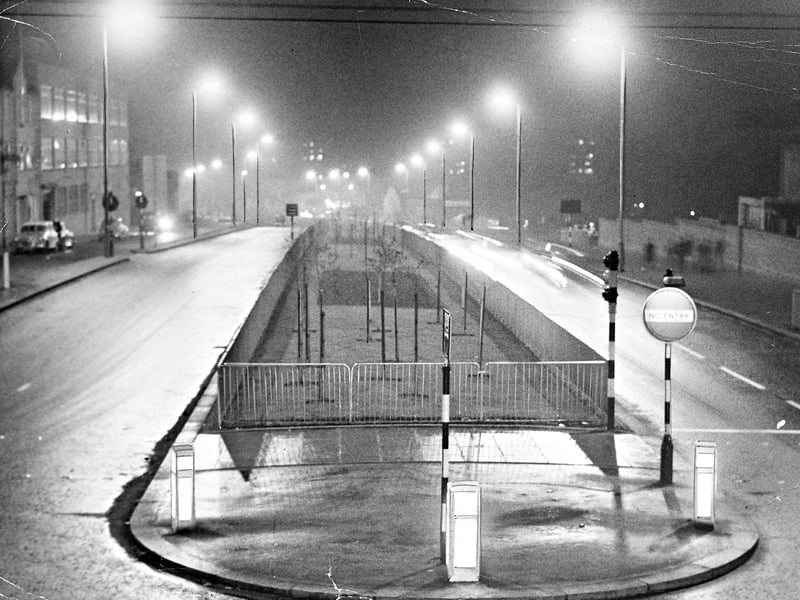
9. Sodium lamps light up the new dual carriageway
Piercing the autumn mist on a November night in 1962, glowing street lamps illuminate a newly completed stretch of Wolverhampton's inner ring road. Taken to showcase the modern sodium lighting, planted central reservation, and fresh asphalt, the scene marks an early milestone in the major post-war infrastructure project designed to bypass congestion and modernise motoring. | Express & Star archive
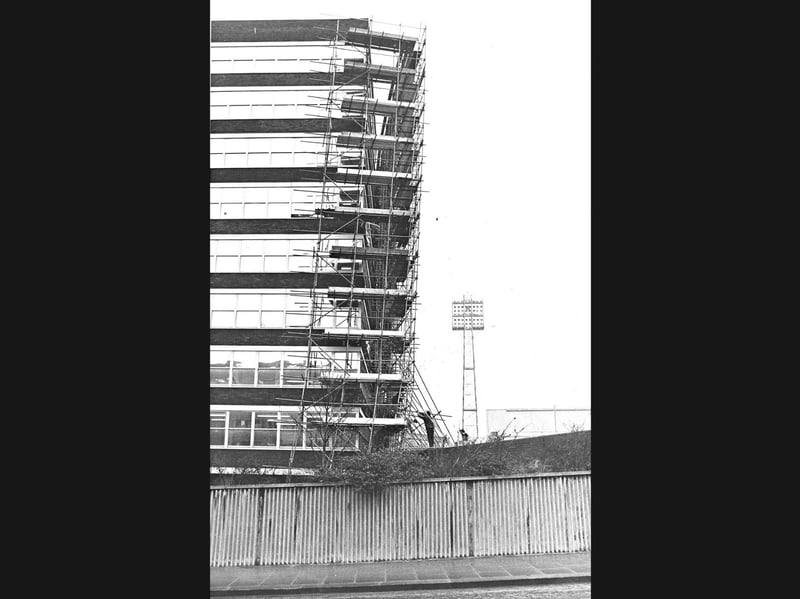
10. High winds leave scaffolding leaning dangerously over traffic
Leaning roughly 12ft away from the side of the nine-storey Tarmac Roadstone House, wind-battered scaffolding looms above the corrugated hoarding along Wolverhampton's ring road on January 24, 1983, with the Molineux floodlights visible in the background. With plastic sheeting acting like sails in the gale and straining the steel supports, police turned pedestrians back and diverted rush-hour traffic between the Waterloo Road junction and Stafford Street as crews worked to make the structure safe. | Express & Star archive
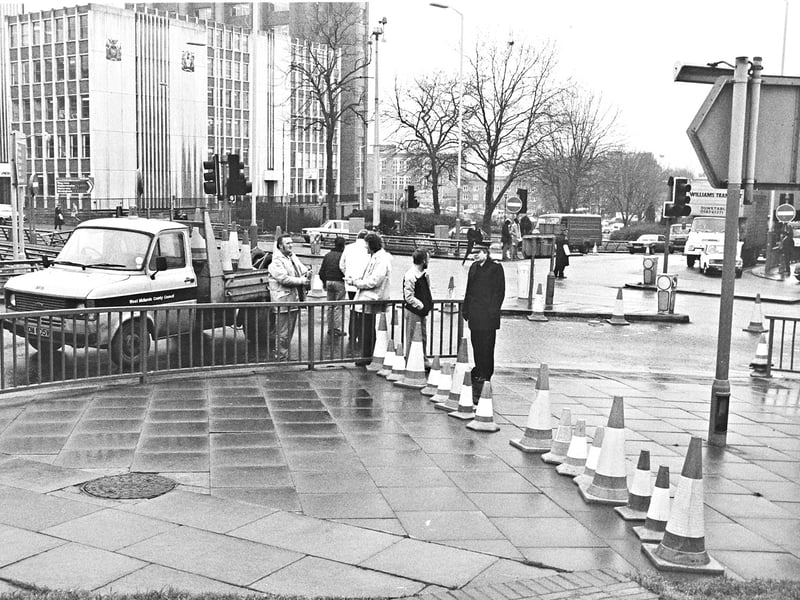
11. Scaffolding scare brings traffic to a standstill
Lined with traffic cones and guarded by police and West Midlands County Council crews, Wolverhampton's ring road sits closed between Waterloo Road and Stafford Street around 1983 after scaffolding on Tarmac Roadstone House was feared to be at risk of collapse. Framed by the imposing modernist offices in the background, the unexpected closure brought rush-hour traffic and the city centre to a sudden halt. | Express & Star archive
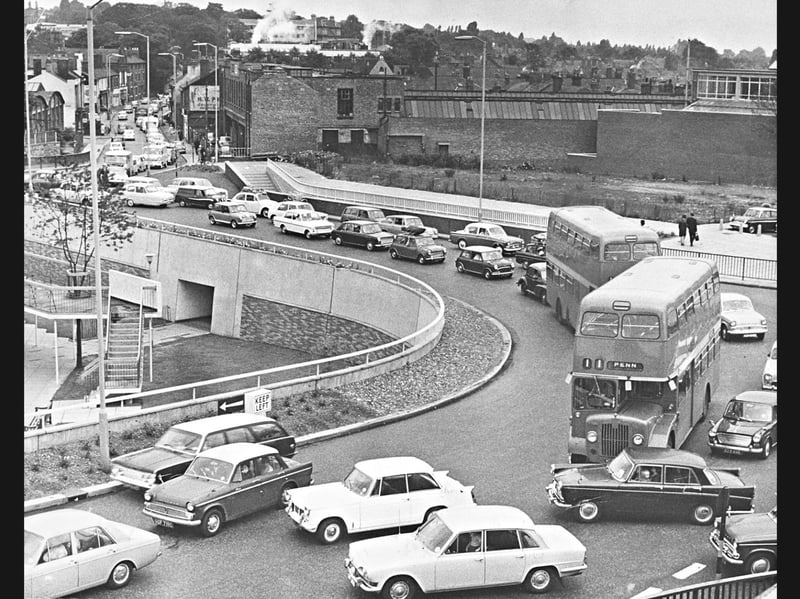
12. Double-deckers and saloons nose-to-tail at Penn Road
Crawling around the curve of the sunken garden island, a heavy jam of 1960s saloons, Minis, and twin double-decker buses brings the Penn Road roundabout junction of Wolverhampton's ring road to a standstill in July 1967. Framed by the concrete retaining walls, pedestrian subway entrance, and brick industrial works stretching back along Penn Road, the scene captures the growing teething troubles of post-war commuter traffic. | Express & Star archive