
Lock workers' happy memories
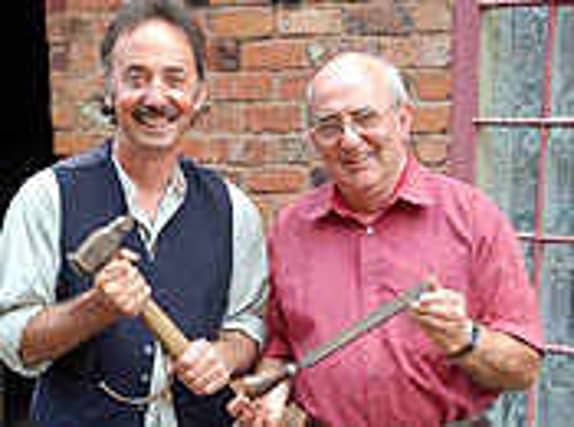

Ralph Jackson remembers a time when the streets of Willenhall were filled with lock makers.
"Willenhall used to be great at one time because it was such a busy town," says Ralph, aged 64, who still lives in the town.
"I remember when I first started work and you couldn't walk through the town at lunchtime.
"All the women lock makers would empty out of the factories and houses at the same time and come down into the town to all buy something for the family for tea. They would do their shopping and then head back to work for the afternoon.
"At that time almost everyone in Willenhall made locks. Yale employed around 3,000 people, Union Locks had 2,000 workers, Leggs had 1,500 and Enoch Tonks had 800. If people didn't work in factories they would be making locks in their back yard."
After Walsall Council axed an annual £12,000 grant to the Locksmith's House in Willenhall, plans have been put for-ward to move the property to the Black Country Living Museum in Dudley.
If given the go-ahead the Locksmith's House will form part of the New Birmingham Road development planned for the Black Country Living Museum, which will recreate life in the 1930s.
"When the company I was working for was taken over in 1982, I started my own business making padlocks – but I couldn't compete with the larger companies," says Ralph. "So I started doing reproduction work and repairs but I retired at Christmas last year."
John Booth, 67, from Wightwick joined the family business which was based at Cannon Street in Willenhall.
"I went to work for my dad at 16 but I had already been doing some work in holidays for him," says John.
"Firstly I worked in the tool room; in those days we used to make our own tools – you didn't buy things as easily as you do now. I left the family business in 1968 to work for Wilkinson Mitchells making presses, because they could pay more than my father did.
"I think the Locksmith's House is a fantastic museum because it takes you back to what it used to be like."
To celebrate the 20th anniversary of the Locksmith's House opening as a museum, lock makers and their families gathered for a special party. Lynne Jones, 59, from Finchfield says she remembers when her father Frank Hill used to be a locksmith. "My greatgrandmother owned a firm, and my father went to work for her," says Lynne.
"They were hard times, because I remember my grandmother owned a three-storey house and, while she had the bottom floor, one of her daughters and her nine children had one storey and her brother and his 13 children had another storey. We had cousins who worked at Parkes, Yale and Chubb but it was only my father who went to work for the family company.
"They used to make locks for the jails, and I remember when I was little seeing him set off to work in his bib and braces on his pushbike."
Also at the party was Howard Gault, 81, who was a fitter employed to turn the Locksmith's House into a museum. "When we first started, the place was a mess," says Howard, from Great Barr. "The building was knocked down, and we had old photographs showing us how to rebuild it using the old bricks.
"It will be a shame if the house has to go because I know a lot of local people are still very proud of the fact that this area is famous for its locks and keys – it is even in the coat of arms for Wolverhampton."
Ralph says former lock makers are keen to keep the museum in Willenhall: "It is better to move the Locksmith's House than to lose it but Willenhall is where it should be.
"The industry has gone but it doesn't mean our pride in our heritage has to go as well."