Which part of the West Midlands should be UK town of culture? It's hard to know where to start
Sir Phil Redmond is the man who faces the daunting task of overseeing the competition to choose the 2029 UK Town of Culture.
We won't need to look very far - as long as he focuses on the West Midlands. On the other hand, choosing which of the region's many culturally rich communities will be more difficult choice altogether, though.
Sign up to our free newsletter today
From prehistoric rock formations to 1970s glam rock, this is the region which has it all. And if anybody thinks the Tate Modern is the bee's knees, they need to take a trip to the New Art Gallery in Walsall which, let's not beat about the bush, knocks its London rival into a cocked hat. Or a flat cap, anyway.
Starting with the prehistoric rock, Wren's Nest National Nature Reserve in Dudley is known across the world for its unique geology, going back 420 million years. Going back some 420 million years, Wren's Nest is considered the most diverse and abundant fossil site in the British Isles, with more than 700 different types identified, 86 of which are unique to the location.
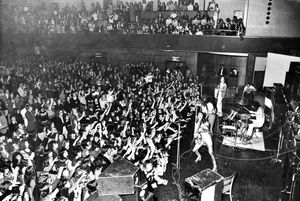
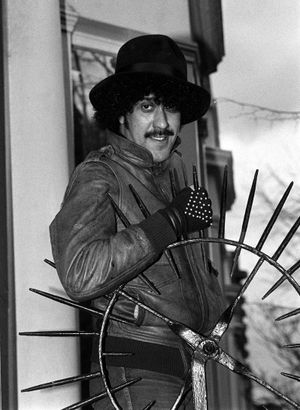
For rock of a very different kind, the Black Country and surrounding areas was the epicentre of some of Britain's most exciting music scenes during the early 1970s. Robert Plant was born in West Bromwich - although getting the diehard Wolves fan to back the town's bid may take a little persuasion - raised in Halesowen, and went to King Edward VI Grammar School for Boys in Stourbridge, so he might find a number of entrants calling on his support. Along with John Bonham, who lived in both Walsall and Dudley, he established Led Zeppelin as one of the biggest rock bands on earth. Bonham's son Jason continues his father's legacy, and would surely be a major player if Dudley was to receive the accolade. Flamboyant Thin Lizzy frontman Phil Lynott was also born in West Bromwich.
If you like your music a little lighter, Bilston may be your town of choice, as the birthplace of glam rockers Slade. Bilston-born Don Powell was playing drums for a band called The Vendors, which changed its name to The 'N Betweens after recruiting guitarist Dave Hill. The band practised at the Territorial Army drill hall in Bilston, later recruiting Noddy Holder and Jim Lea - although Walsall-born Noddy may prefer to back his home town.
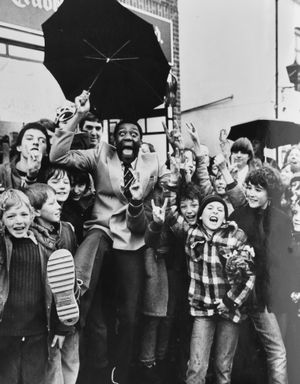
When it comes to comedy, it's hard to know where to start. Probably the best known face is Sir Lenny Henry, who was born at Burton Road Hospital and grew up in the Buffery Park area of Dudley. His big break came on the New Faces television talent show, and his profile grew with the anarchic children's television show Tiswas, which also featured Walsall funnyman Ian 'Sludge' Lees. Dudley was also the birthplace of madcap comedian Billy Dainty, one of the first music-hall comics to make the transition to television. Norman Pace, best known for his double act with Gareth Hale, was also born in Dudley, as was former Desert Island Discs presenter Sue Lawley. Whose Line is it Anyway? star Josie Lawrence is from Old Hill. The ever-popular Julie Walters puts Smethwick on the comedy map, and that's before we get to Oldbury-born Frank Skinner, who cut his teeth at the legendary Mad O'Rourke's Pie Factory in Tipton.
The West Midlands has produced no shortage of Hollywood legends, either, from West Bromwich-born actress Madeleine Carroll, Lye-born Sir Cedric Hardwicke, and Dudley's James Whale, best known for directing the Frankenstein movies.
The region has also produced some of Britain's towering literary figures, from Walsall's Jerome K Jerome, to the dictionary compiler Samuel Johnson who was born in Lichfield and educated in Stourbridge.
When it comes to industrial heritage, the area has few peers. The birthplace of the Industrial Revolution, the West Midlands' heritage is celebrated at the Black Country Living Museum, now known as the film- set for Peaky Blinders. The Red House glass cone in Wordsley is a reminder of how Brierley Hill, Kingswinford and Stourbridge were once the epicentre of Britain's glassmaking, while the leather museum in Walsall recalls a time when the area was the great centre for saddlery. Willenhall's lock-making history goes back to the 1640s, and by Victorian times, 90 per cent of the worlds' locks were made in the town.
The judges will be asked to pick three finalists, one small town, one mid-sized and one large town. It would be a travesty if any of these three came from outside the West Midlands.