The history of clocks changes explained - Date and time clocks go back this month
The history of clocks changes explained including Coldplay’s Chris Martin’s connection to daylight saving time and when the clocks will go back in October.
This Sunday (October 26) the clocks will jump back an hour, meaning we’ll get an extra hour in bed.
We’ve taken a look back at the history of the clocks changing, including the man who proposed daylight saving time, changes to daylight saving time since its introduction and its connection to Coldplay’s Chris Martin.
When did the clocks first change?
According to Royal Museums Greenwich, Benjamin Franklin, an American inventor, scientist and statesman, mentioned the idea of daylight saving time in 1784, but it was 1907 by the time it was seriously proposed in Britain by William Willett - the great-great-grandfather of Coldplay frontman Chris Martin. Willett did not like the waste of daylight during summer mornings and self-published a pamphlet called “The Waste of Daylight”. Willett continued to campaign for daylight saving time up until his death in 1915.
In 1916, Germany became the first country to bring in daylight saving time and the UK followed a few weeks later. Within a few years, many countries across the world had adopted daylight saving time.
Have there been changes to daylight saving time since its introduction?
During WWII (1939-1945), the clocks changed to two hours ahead of Greenwich Mean Time (GMT) instead of one. Clocks were kept one hour in advance of GMT during the winter.
Between 1968 and 1971, the clocks went forward but, as an experiment, they were not put back. The experiment was later discontinued.
Have there been more recent attempts to make changes to daylight saving time?
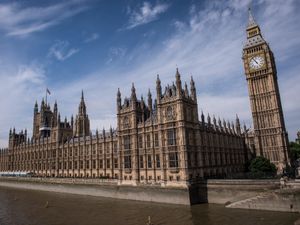
Conservative MP Rebecca Harris brought The Daylight Saving Bill before parliament in 2010 in an attempt to make changes to daylight saving time, however opposition from MPs meant the legislation ran out of time in the Commons.
According to The Guardian, Harris's bill would have commissioned a study into the costs and benefits of moving the clocks forward to Greenwich Mean Time plus one hour in the winter (GMT +1) and GMT +2 in the summer, with a possible three-year trial.
When do the clocks go back in 2025?
This year, the clocks will go back on October 26 at 2.00am. The next clock change after this will be on March 29 2026 when they’ll jump forward by one hour at 1.00am.