Wolverhampton City Council boss insists not a penny is being wasted
Wolverhampton council's finance chief has hit back over claims that the authority is battling a 'debt mountain'.
Writing exclusively for the Express & Star, Councillor Andrew Johnson explains why the council borrows money, and how new developments in the city are financed during the current period of austerity.
"I often get asked how the council can build new schools and council houses, modernise the Civic Hall, repair the car park under the Civic Centre and build a new office block when the council is so strapped for cash.
We raise the money to fund major assets like these from a number of different sources including grants and council borrowing which I will explain below.
It is the money that we use to pay for our day to day running costs such as emptying your bins, cleaning the streets, caring for vulnerable older people and children in care that has been cut by the Government.
We are not allowed to borrow to meet the cost of services like these.
Along with other councils, Wolverhampton council's borrowing is often referred to as a 'debt mountain', which is very far from the truth.
We have always borrowed money to invest in city assets such as schools, roads and buildings and to pay for our council houses.
Our borrowing on council houses is in effect like a collective mortgage. So the £249 million borrowing for our 22,836 council houses, which are valued at £665 million, represents just a 37 per cent mortgage.
The interest is paid for out of our tenants' rent.
All our other city assets are valued in the council's accounts at £777 million.
Against these we have £342 million borrowing or a 44 per cent 'mortgage'.
So our total assets are worth far more than our borrowing. Far from being 'in debt', every person living in the city has a share equivalent to £1,719 each in our schools, roads, vehicles, parks and public buildings.
Like all councils the amount we can borrow is controlled by law and stringent regulations. It is the job of the director of finance and our independent external auditors to ensure that our borrowing is both affordable and value for money.
Our strategy is to continue investing to grow the city economy and to create new jobs. We are also trying to help with the council's day to day running costs by bringing in extra income.
Examples include the Civic Halls, for which we have obtained £6 million grant and borrowed £4 million to modernise and increase capacity at this great entertainment venue.
Getting bigger audiences means that the Civic Halls should at least break even, reducing the cost to the Council by £400,000 each year.
The Civic Centre car park is undergoing repairs. We have to do this work for the car park to last another 25 years. If we didn't, not only would vital parking for the city's shops be lost but also £640,000 annual income to the council.
We have obtained £1.8 million grant and borrowed £6.2 million to build the i10 building, which is 'Grade A' office accommodation.
Located near to the station the development is the first of its kind in the city. As the building is already almost fully let the rent and business rates will give the council vital extra income after our borrowing costs have been met.
We are also building more primary school classrooms. Over the last two years we have had to borrow £10 million to top up Government grant of £8 million to fund the expansion or there would not be enough school places for our children.
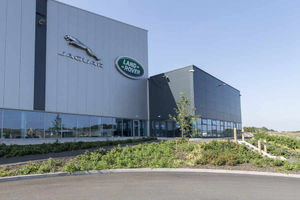
Together with Staffordshire County Council we have jointly borrowed £38 million to pay for a new motorway junction and put in essential infrastructure on the i54.
Without this Jaguar Land Rover and other investors would not have brought thousands of jobs to the site. The cost of this borrowing will be met entirely out of the business rates that this investment created."