
Comment: Backing Britain means backing entrepreneurs
Mo Chaudry says policies which support not hinder business growth are needed from the government
Britain has never had a shortage of ideas, ambition or people willing to work hard. What is lacking is a system that backs them. Across our towns, villages and high streets, you can feel the shift.

From rural enterprises in Shropshire trying to diversify to survive, to independent traders and manufacturers in the Black Country facing rising costs, the message is the same: people are willing to build but the environment is making it harder than ever to survive, let alone to grow.
I say that not as a political commentator but as someone who has built several businesses from nothing.
I arrived in this country from Pakistan unable to speak English. I was bullied, racially abused and told I didn't belong, that someone from my walk of life would never succeed.
But instead of accepting that, I used it as fuel. I worked harder, thought differently and refused to conform.
That mindset, resilience, ambition and self-belief, is what built modern Britain. It's what powered the Black Country and sustained generations of rural businesses in Shropshire.
But the dynamic and the landscape have changed, entrepreneurial spirit is being strangled.
The ambition and hunger are undoubtedly there - the number of start-ups shows that with more 313,000 last year. But too many fail.
Sometimes it's down to naivety or lack of financial management but often it's down to policies that feel disconnected from the realities of running a business whether that's a farm diversification project in Shropshire or a family-run firm in Wolverhampton.
Business owners today face rising costs, higher taxes and constant uncertainty. Recent surveys suggest 38 per cent of UK SME owners are considering leaving the country.
At the same time, thousands of wealthy individuals have already gone, taking investment, opportunity and unfortunately jobs with them.
But where does that leave the rest of us?
When the people who create jobs start to leave, the consequences aren't limited to the wealthy. They're felt in every community. It's the young person looking for their first opportunity.
The apprentice who can't get an apprenticeship or the independent shop in Shrewsbury fighting to stay open. We've got the balance wrong.
A strong welfare system should always be there for those who genuinely need it but it should never come at the expense of enterprise.
Right now, it feels like we are leaning too far towards dependency and not far enough towards ambition.
Imagine if even a fraction of welfare spending was redirected into supporting entrepreneurs, particularly in areas outside the major cities.
You wouldn't just reduce unemployment, you would grow the economy and create jobs locally.
Too many people are waiting - for the system to change, for the right moment, for someone to give them permission. Don't wait.
When I look back at my own journey, the very things that made me different became my greatest strengths.
Your background, your challenges, your experiences are not disadvantages. They are your superpowers.
The Government needs to back people in places that are too often overlooked and to show that success is possible, regardless of where you start.
Because ultimately, economic growth doesn't come from policy alone. It comes from individuals who take risks, who build, who create and who refuse to stand still.
Which brings me to a familiar line, one that still resonates today.
In 1961, John F. Kennedy told Americans: "Ask not what your country can do for you, ask what you can do for your country."
We need to challenge that thinking. This isn't about what you can do for your country. It's about what your country is doing for us.
The Government needs to back ambition and back entrepreneurs.
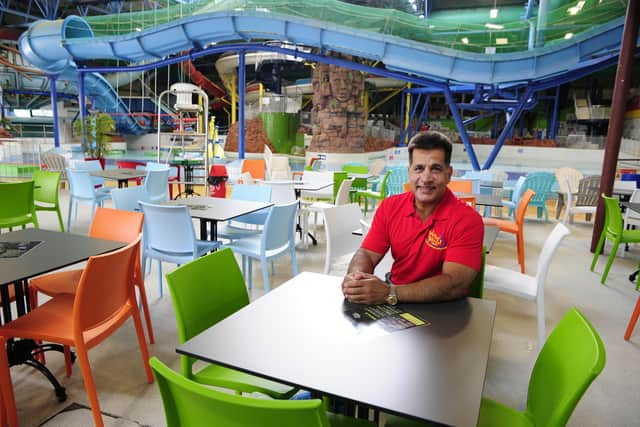
Mo Chaudry is an entrepreneur who previously owned Waterworld in Stoke and now runs investment vehicle MOmentum Capital
Comment Guidelines
Iconic Media encourages reader discussion on our stories. User feedback, insights and back-and-forth exchanges add a rich layer of context to reporting. Please review our Community Guidelines before commenting.