Hungarian writer Laszlo Krasznahorkai wins Nobel Prize in literature
The literature prize has been awarded by the Nobel committee of the Swedish Academy 117 times to a total of 121 winners.
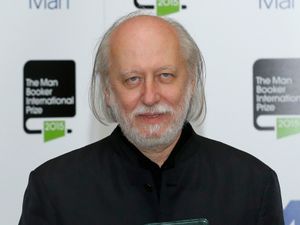
Hungarian writer Laszlo Krasznahorkai, whose surreal and anarchic novels combine a bleak world view with mordant humour, has won the Nobel Prize in literature for work the judges said upholds the power of art in the midst of “apocalyptic terror”.
The Nobel judges said the 71-year-old author, whose novels sometimes consist of just one long sentence, is “a great epic writer” whose work “is characterised by absurdism and grotesque excess”.
He is the first Nobel literature winner from Hungary since Imre Kertesz in 2002 and joins a list of laureates that includes Ernest Hemingway, Toni Morrison and Kazuo Ishiguro.
“I am calm and very nervous,” Krasznahorkai told Radio Sweden after getting news of the prize, which comes with an award of more than one million dollars.
“This is the first day in my life when I got a Nobel Prize. I don’t know what’s coming in the future.”
Zsuzsanna Varga, a Hungarian literature expert at the University of Glasgow, said Krasznahorkai’s novels probe the “utter hopelessness of the condition of human existence”, while also managing to be “incredibly funny”.
Ms Varga said Krasznahorkai’s near-endless sentences made his books the “Hotel California” of literature – once readers get into it, “you can never leave”.
She suggested readers new to Krasznahorkai’s work start with Satantango, his 1985 debut, which centred around the few remaining residents of a dying collective farm and set the tone for what was to follow.
“Satan who is dancing a tango – I mean, how surreal can you be?” Ms Varga said.
Krasznahorkai has since written more than 20 books, including The Melancholy Of Resistance, a surreal, disturbing tale involving a travelling circus and a stuffed whale, and Baron Wenckheim’s Homecoming, the sprawling saga of a gambling-addicted aristocrat.
Herscht 07769 from 2021 is set in a German town riven with unrest.

Written as a series of letters to then-German chancellor Angela Merkel, it has just one full stop in its 400 pages.
Several works, including Satantango and The Melancholy Of Resistance, were turned into films by Hungarian director Bela Tarr.
Krasznahorkai also wrote several books inspired by his travels to China and Japan, including A Mountain To The North, A Lake To The South, Paths To The West, A River To The East, published in Hungarian in 2003.
The author had been on the Nobel radar for some time, Nobel committee member Sem-Sandberg said, calling Krasznahorkai’s literary output “almost half a century of pure excellence”.
The writer was born in the south-eastern Hungarian city of Gyula, near the border with Romania, and studied law at universities in Szeged and Budapest before shifting his focus to literature.
Ms Varga said Krasznahorkai developed a cult following among young Hungarians during the last years of Communism in the 1980s, when “authors were pretty much like pop stars”.
Krasznahorkai has been a vocal critic of autocratic Hungarian Prime Minister Viktor Orban, especially his government’s lack of support for Ukraine after the Russian invasion.
In an interview with Swedish newspaper Svenska Dagbladet earlier this year, Krasznahorkai expressed criticism both of Mr Orban’s political system and the nationalism present in Hungarian society.
“There is no hope left in Hungary today and it is not only because of the Orban regime,” he told the paper.
“The problem is not only political, but also social.”
Mr Orban congratulated the writer in a Facebook post, saying: “The pride of Hungary, the first Nobel Prize winner from Gyula, Laszlo Krasznahorkai.”
Krasznahorkai received the 2015 Man Booker International Prize for his body of work and the National Book Award for Translated Literature in the US in 2019 for Baron Wenckheim’s Homecoming.
He said none of his career was planned.
“I wanted at first to write only one book. And I didn’t want to be a writer,” he told Swedish radio, but rereading his first novel he discovered it was not perfect.
“I started to write another one because I wanted to correct Satantango,” he said, and later: “I tried to write a new book to correct the first two. … My life is a permanent correction.”
Eva Redei, the longtime owner of one of Budapest’s oldest independent booksellers, said Krasznahorkai was “an exceptionally demanding and sophisticated author” and his Nobel Prize was “long overdue”.
“Better late than never,” said Ms Redei, who owns the Lang Teka bookstore.
The literature prize has been awarded by the Nobel Committee of the Swedish Academy 117 times to a total of 121 winners.
Last year’s winner was South Korean author Han Kang.
The 2023 winner was Norwegian writer Jon Fosse, whose work includes a seven-book epic made up of a single sentence.
The literature prize is the fourth to be announced this week, following the 2025 Nobels in medicine, physics and chemistry.

The winner of the Nobel Peace Prize will be announced on Friday.
The final Nobel, the Nobel Memorial Prize in Economic Sciences, will be announced on Monday.
Nobel Prize award ceremonies are held on December 10, the anniversary of Alfred Nobel’s death in 1896.
Nobel was a wealthy Swedish industrialist and the inventor of dynamite who founded the prizes.
Each prize carries an award of 11 million Swedish kronor (£870,000).
Winners also receive an 18-carat gold medal and a diploma.