Zelensky warns Russian drones endanger safety at nuclear power plants
Chernobyl and Zaporizhzhia are not working but still require a constant power supply to run crucial cooling systems.
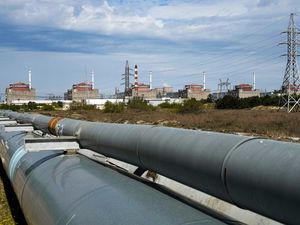
Russia’s sustained bombardment of Ukraine’s power grid is deepening concerns about the safety of the country’s nuclear facilities after a drone knocked out power for more than three hours to the site of the 1986 Chernobyl nuclear disaster.
While both Chernobyl and the Russian-occupied Zaporizhzhia nuclear power plant are not working, they still require a constant power supply to run crucial cooling systems for spent fuel rods in order to avoid a potential nuclear incident.
Zaporizhzhia is Europe’s biggest atomic power plant.
A blackout could also blind the radiation monitoring systems installed to boost security at Chernobyl and operated by the UN nuclear watchdog, the International Atomic Energy Agency.
“Russia is deliberately creating the threat of radiation incidents,” Ukraine President Volodymyr Zelensky said, criticising the UN watchdog and its chief Rafael Mariano Grossi for what he described as weak responses to the danger.
“Every day of Russia’s war, every strike on our energy facilities, including those connected to nuclear safety, is a global threat,” Mr Zelensky said.
“Weak and half-measures will not work. Strong action is needed.”
Russian President Vladimir Putin rejected Ukrainian claims that Russia has been shelling the power lines around the Zaporizhzhia plant as “nonsense” and blamed Ukraine for attacking the Moscow-controlled plant, warning that Russia could respond in kind.
The war that followed Russia’s all-out invasion of its neighbour more than three years ago appears no closer to ending, despite months of US-led peace efforts.
Mr Zelensky said in his nightly video address that Russia launched more than 20 Shahed drones against energy infrastructure in Slavutych, the city whose power supply services Chernobyl, the site of the world’s worst nuclear accident.
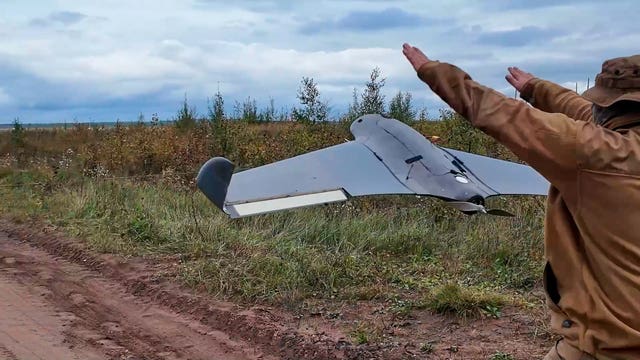
A wave of drones overwhelmed defences and caused a blackout, he said, affecting the sarcophagus that prevents radioactive dust from escaping the destroyed fourth reactor and storage housing more than 3,000 tonnes of spent fuel.
He did not provide details of how it was affected.
“The Russians could not have been unaware that a strike on Slavutych would have such consequences for Chernobyl,” Mr Zelensky said.
Last February, a drone armed with a warhead hit Chernobyl’s protective outer shell, briefly starting a fire. Radiation levels there did not increase, officials said.
Meanwhile, the Zaporizhzhia plant, which is one of the 10 biggest nuclear facilities in the world, has been disconnected from the grid for more than a week.
Zaporizhzhia has repeatedly been caught in the crossfire during the war.
Mr Zelensky blamed Russian artillery for cutting the power line to the plant, but Kremlin spokesman Dmitry Peskov said it was Ukrainian shelling.
The facility is using emergency diesel generators to run cooling systems for its six shutdown reactors and spent fuel.
The IAEA says the plant is not in immediate danger but wants it swiftly reconnected to the grid.