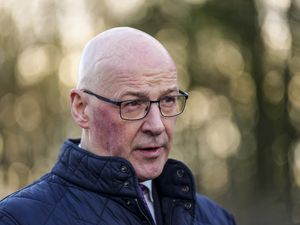
Who was Alexei Navalny and why would Russia poison him?
Mr Navalny campaigned against official corruption and organised major anti-government protests in Russia.
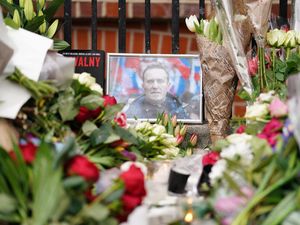
Alexei Navalny died in a Siberian penal colony after becoming the most prominent and persistent critic of Vladimir Putin.
Mr Navalny, who campaigned against official corruption and organised major anti-government protests, had been behind bars since January 2021 before his death in February 2024 aged 47.
He founded the Anti-Corruption Foundation in 2011, which published investigations detailing alleged corruption by high-ranking Russian officials and their associates, and was later awarded the Sakharov Prize for his work on human rights.
In a 2011 interview, Mr Navalny described Russia’s ruling party – United Russia – as a “party of crooks and thieves”.
He was subsequently the target of criminal prosecutions by the Russian state that were widely considered to be politically motivated in order to bar him from running in future elections.
When Mr Putin spoke about Mr Navalny, he made it a point not to mention the activist by name, referring to him only as “that person” or similar in an apparent effort to diminish his importance.
Mr Navalny was convicted in 2013 of embezzlement, but later the prosecutor’s office surprisingly demanded his release pending appeal, after which a higher court gave him a suspended sentence.
Many observers attributed his release to a desire by authorities to add a tinge of legitimacy to the mayoral election in Moscow, in which he had registered as a candidate.
Mr Navalny ultimately finished second in the contest, which was seen as an impressive outcome as the incumbent had the backing of Mr Putin’s political machine.
After being barred from running in the 2018 presidential election, Navalny was hospitalised after being poisoned with a Novichok nerve agent in August 2020 and medically evacuated to Berlin.
Mr Navalny accused Mr Putin of being responsible for his poisoning, and an investigation implicated agents from Russia’s Federal Security Service.
A documentary film, Navalny, about the poisoning won the Oscar for best documentary at the 2023 Academy Awards.
In the film, Mr Navalny says: “If they decided to kill me, it means we are incredibly strong. We need to utilise this power to not give up.”
The opposition leader was immediately arrested on his return from Germany in January 2021 on charges of violating parole conditions while hospitalised in Berlin.
Mass protests erupted in Russia following his arrest and, despite being jailed, Mr Navalny remained a thorn in the side of Mr Putin launching scathing attacks his associates posted to social media.
Recognised by Amnesty International as a prisoner of conscience, Mr Navalny rejected all charges against him as being part of a politically motivated vendetta, with his organisations also being designated as extremist and liquidated.
In March 2022, he was jailed for nine years after being found guilty in a fraud trial described as a sham by Amnesty International.
This jail term was then extended in August 2023 to 19 years on alleged extremism charges.
In December 2023, he was moved from his former prison in the Vladimir region of central Russia to a “special regime” penal colony, the highest security level of prisons in Russia, above the Arctic Circle.
His allies decried the transfer to the town of Kharp, in the remote Yamalo-Nenets region notorious for its long and severe winters, as yet another attempt to silence Mr Navalny before his death in February 2024.
Two years on, the UK and its allies have pinned the blame on the Russian state following analysis of poison developed from a dart frog toxin found on Mr Navalny’s body.