
'Why I lose my mind watching Wolves' - confessions of a long-suffering fan
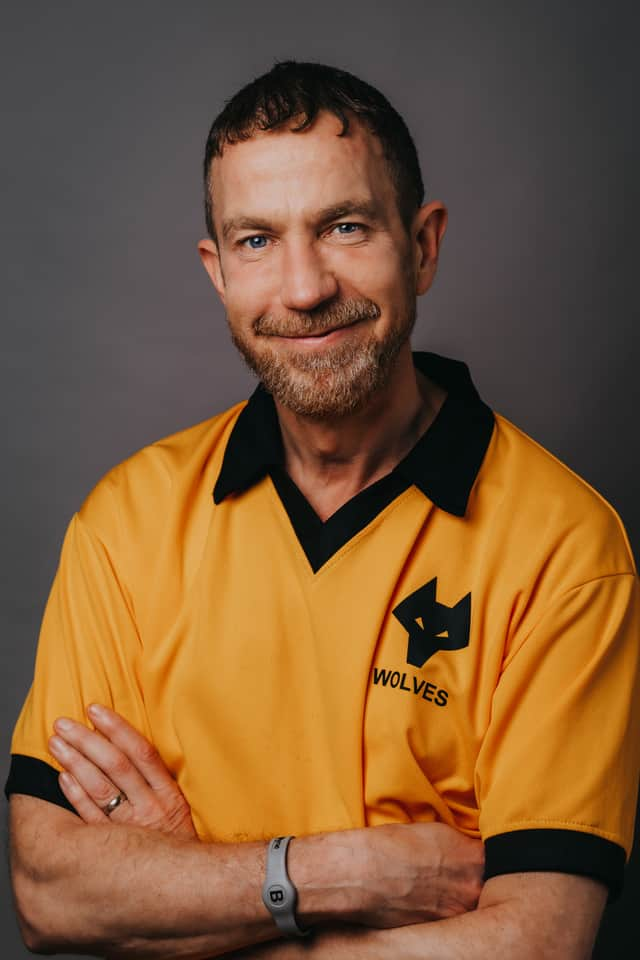
Psychologist and Wolves fan Damien has written a book Till I Die explaining ‘why football means everything’ – and why it removes all rational thought
It’s 16 September 2023, and Wolves are playing Liverpool at Molineux. I’m streaming the game in my upstairs office in Hastings.
I am a psychologist, someone who spends his days preaching mindfulness to patients who are frazzled, traumatised and overwhelmed.
‘Thoughts are just thoughts,’ I tell them, ‘like clouds – they come, they go.’ It’s a mantra I’ve recited so often at my clinic it ought to be true. ‘Emotions,’ I add, ‘are guests at a dinner party. Welcome them all, and they’ll leave when it’s time.’
But not today. Today, emotions are storming the gates.
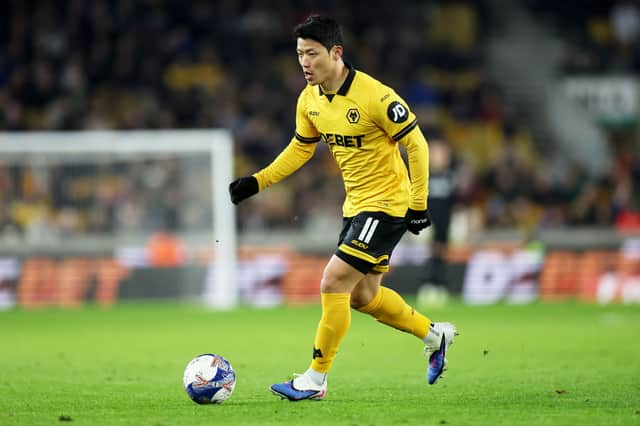
Against the odds, Wolves score first. The players explode, arms outstretched. They point skywards, then to each other – thump the badge on their chests. Some pretend they are cradling babies. These are strange, choreographed celebrations, both ridiculous and sublime.
I roar with joy, unsettling the little dog curled up on my lap. He yawns in a deeply exaggerated way. It is a yawn that I know from the puppy trainer means, ‘You’re making me anxious, you unstable lunatic.’
My wife calls up the two flights of stairs. ‘Are you OK, babe?’ ‘We scored!’ I bellow back. ‘That’s brilliant,’ she replies. But I barely register. I shout the goalscorer’s name – Hwang Hee-chan. Last week I hated him. He was useless and lazy; what is the actual point of him? But today, all is forgiven. His face looks familiar now – someone I might have known at school or worked with long ago.
A blurry figure from a half-remembered summer. They all seem like that – distant yet intimately known.
For a few seconds, it feels like they’re playing for me – as though years of loyalty and disappointment have finally accrued enough credit for this single, perfect moment. I forget that they’re at least half my age – some so alarmingly young they could conceivably be my grandsons. I also forget that none of them were born in Wolverhampton. Not even close. Right now, none of that matters. We’re bound by something deeper. The players belong to me, and I to them, as surely as if we’d grown up on the same rain-slick streets, Wolverhampton in our blood like soot in the lungs.
My sister-in-law and thirteen-year-old nephew are in the kitchen downstairs. Occasionally, I hear the pitter-patter of his feet on the stairs. Has he been sent as an emissary? A sacrificial lamb? No – he’s a human barometer, dispatched to gauge the developing weather system building ominously in the loft extension.
I spot his blond choirboy haircut and big brown eyes as he peeks around the door, observing me, rigid in my recently purchased away strip, vermilion red with a gold trim. He knows not to ask the score. Too risky. ‘Everything OK, Uncle Dame?’ he asks. ‘Yes, mate,’ I say, raising a thumb. ‘All good here, Barney.’

He’s obviously very concerned. Kids feel the atmosphere even if they don’t understand it. I’m looking back at the screen now but he lingers, studying me. There’s something touching and heartbreaking about his attentiveness. He knows this game means more than it should. I give him a cursory glance, a fake smile, as if to say, do you have anything else to say? – and, as his head recedes from the tiny crack in the door, I feel a flicker of guilt. And then relief to be able to return to the tangled web of pixels – red, old gold and black – shifting across my screen. The only remaining interruption is my laptop’s slowly buffering circle of doom.
Wolves are 1-0 up at half-time.
I know that the next forty-five or so minutes will determine my wife’s birthday. My post-match mood will bleed into everything. It will flavour the family meal, the cake, the film she’s picked out. It will infect how I carry myself on the errand she’s asked me to do.
My wife comes up the stairs with a cup of tea for me. She asks the score. ‘We’re winning 1-0,’ I say. ‘Great,’ she replies, knowing not to make the mistake of being too enthusiastic too soon. We’ve developed a sort of tacit understanding. I can tell she’s worried about how I’ll react if things unravel in the second half. There’s tension in the house: unspoken, oppressive.
‘You’re not alone,’ she says gently. ‘Your sister in Wolverhampton is watching too.’ She knows I bang on about connection all the time. That I tell patients to reach out, that isolation should be avoided where possible. But there’s a hint of trepidation in her voice, the kind that only develops when you’ve lived with someone long enough to know that yes, they may preach mindfulness for a living – but when it comes to football, their emotional stability is . . . flimsy.
And then she momentarily forgets that I’m actually really not okay. She wants to talk about picking up a clock from the DPD depot. And I want to shout, CAN’T YOU SEE I’M ABOUT TO LOSE MY ******* MIND OVER A GAME OF FOOTBALL? Instead, I grunt a vague acknowledgement. If we can just hold on for the next forty-five minutes, I might have the emotional strength to pick up a clock. If Wolves lose, I won’t. Simple as that.
The game ticks on. We concede a goal in the 55th minute – Cody Gakpo – but a draw is still a positive outcome. I can handle a draw. ‘Thoughts are just thoughts,’ I mutter to myself, staring at the ceiling. ‘Like clouds . . . they come, they go.’ But with fifteen minutes left, I notice my body is betraying me. I am shaking. My dog, Crackle, a little bundle of nerves himself, is still curled up in my lap, and his tiny, fluffy head starts rattling in rhythm with my jiggling thigh. I don’t even notice I’m doing it, at first. I’m locked in some sort of involuntary frenzy, and I can’t stop it. I’m supposed to be the calm one.
I try to breathe. I focus on my exhale – out-breaths fractionally longer than the in-breaths. This, I tell my patients, kick-starts the parasympathetic nervous system. Longer out-breaths should override the alarm bells going off in my amygdala. I shift my focus to the dog and the soft rise and fall of his chest, a black and furry metronome. There are five minutes to go before the ninety’s up. Everything depends on this. I imagine being able to watch *Match of the Day* tonight, maybe even the repeat tomorrow morning, coffee in hand, pain au raisin flaked on my dressing gown, legs crossed like a man who’s got his life together. If we draw, I can listen to talkSPORT on the radio during the week. I can enjoy the Sunday game on Sky Sports. I can listen to the two lads from the Express & Star dissecting the game on YouTube. The world remains open. I imagine the birthday dinner tonight with Barney and the gang – peaceful, pleasant even. The soft hum of domestic calm. It will all be okay . . . if we can just hold on to the draw.
As we tick into the final five minutes, it becomes unbearable. I’m sweating. And then there’s a voice – small and desperate. It’s a child I can hear inside me now, whimpering: Please. Please. Please. The ball hits the net with a thud, like a kick to the stomach. Andy Robertson. He wheels away, roars down the pitch, mouth agape, fists clenched, punching the air. Some bow before him, mock-serious. It’s preposterous, worse because of how effortless it seems, as though this is how life’s supposed to work: talent rewarded, adulation guaranteed.
I sit stiffly, fists clenched in my lap. Childish idiots. Show-offs. I hate them. I hate how easy they make it look. I hate their tanned, sculpted, muscular legs, their haircuts, their proficient cardiovascular systems. I hate how much they seem to be enjoying themselves. I storm out of the room, warning the dog: ‘Don’t you follow me!’ I mutter something about him being a selfish scavenger as I shut the door. It’s a petty, meaningless victory, but it’ll do. There’s something especially undignified about sulking without an audience, and my sense of guilt deepens when I acknowledge the truth: I’m in a face-off with a Cavapoo. It’s not even a proper face-off, because the gentle scratching on the door has stopped and I imagine he’s moved from my office chair to the more comfortable IKEA chair, the one I reserve for patients. He’s probably curled up there now, half-asleep, as if to prove his nonchalance.
I storm back in, seething. I know enough forensic psychology to understand that cruelty to animals is a red flag. So I tell myself that what happens next is an accident. I pretend I don’t notice as my thigh brushes against Crackle. He squeals, a perfectly reasonable response to being nudged by a fully-grown adult. But instead of apologising like a normal person, I snarl: ‘Stop being so pathetic.’ The words hang in the air. Normally, this room allows me to peel back the layers of the toxic shame felt by my patients, offering kindness where I can. Here I am now, shaming a dog, the only creature in the house too small and too loyal to fight back. It’s pitiful.
We lose 3-1. A deflected own goal from Hugo Bueno seals it. Within seconds, I’ve clicked off the stream – shutting it down like I’m cutting flow from a burst sewage pipe. This could ruin the rest of the weekend for everyone.
I grab my phone and head straight for the Wolves lads’ WhatsApp group.
Now, there are certain unspoken rules in these groups. Rule number one: if we lose, don’t start with any of that measured, diplomatic bunk. I’m not in the group to offer rational critiques or constructive feedback. I’m here to rant, to vent, to release my rage. The messages are already flying in. Some are balanced and encouraging – too encouraging. ‘We gave it a good go,’ someone writes, which is nonsense. Others are outright angry, but it’s not enough for me.
I ham out furious critiques of Gary O’Neil, our poor, beleaguered manager, who has been standing haplessly on the touchline, arms folded, looking like a man watching his car slowly slide into a canal.
‘Clueless,’ I type. ‘No tactics. No fight. What was that line-up? Was he picking players at random? Blindfolded?’ And it feels good – like slamming a door when you’re furious. And like sharks smelling blood, the others join in. We don’t just condemn; we eviscerate him – Gary, the human piñata. For some reason, I click back onto the stream. I can see Wolves fans in the stadium doing their bit too, serenading the manager with, ‘You’re getting sacked in the morning.’ It’s brutal. And I love it. I feel a slither of relief. The shame isn’t on me any more. It’s on Gary. And frankly, he deserves it. ‘Yes,’ I think. ‘This is it. This feels better.’ ‘
‘I don’t agree,’ my mate writes. He proceeds to lay out, in painstakingly measured tones, a defence of our makeshift team. Injuries, financial constraints, unfair expectations and so on. His message is so long, so unrelentingly compassionate and fair, that it makes me want to scream. I stare at the words, my jaw tightening, eyes narrowed so much I can barely see. I should say something conciliatory, perhaps. Maybe I should acknowledge his optimism. But I don’t want to. This is not the time for hope or perspective. This is the time for venom. I need him to join me in hating everything – the referee, the manager, the players, the rain, the concept of football itself.
What I really want to do is to tell him to **** off. Instead, I shove my phone on the desk and sit there, stewing. Rumination is the arch villain to mental health. It’s at the root of so much that causes us distress, especially depression and rage. I indulge it with abandon.
Surely, someone will validate me and voice their agreement, a thumbs up, anything? Nothing. I sit there, staring at the phone screen for a while, prodding it occasionally to keep the light on. I still haven’t mastered the timeout settings and how these interact with battery life.
Anyway, WhatsApp is no longer meeting my needs. I need something bigger. I head to one of the Wolves Facebook forums, where tens of thousands of fans await. There must be others in there, feeling as delirious as me. I scroll through, gauging the reactions. My body starts to relax. A grin widens on my face. It’s a coliseum of rage.
Fans are baying for blood; insults flying as effortlessly as forks in a prison canteen riot.
Ridicule, hyperbole – the uncensored cruelty is disturbingly soothing, and each post is a balm for my emotional pain.
One fan suggests replacing Gary O’Neil with a traffic cone, and I laugh. Someone else throws Stevie Wonder’s name into the mix, and I laugh harder.
By the time someone suggests Phillip Schofield, I’m practically giddy.
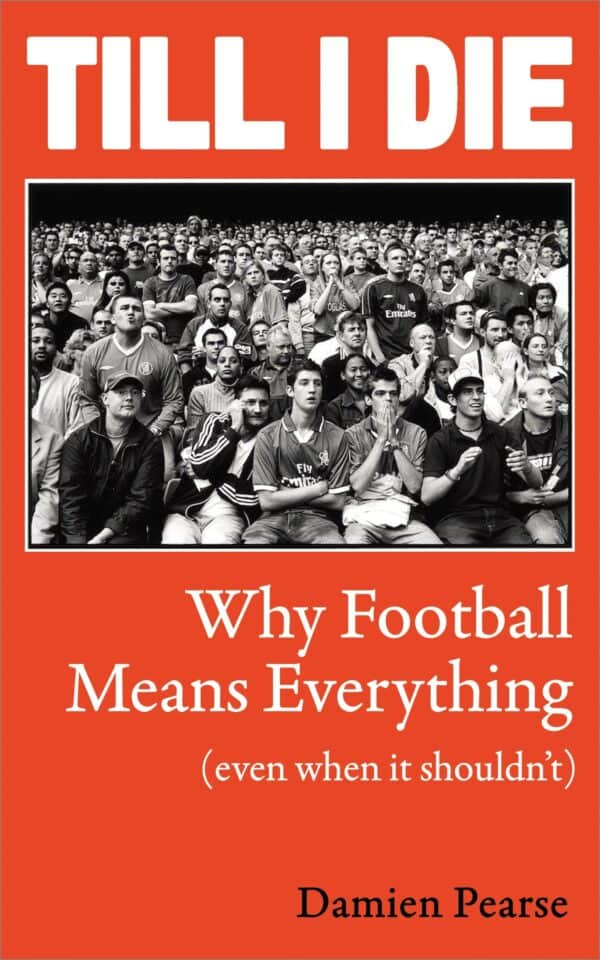
Till I Die: Why Football Means Everything (Even When It Shouldn’t) by Damien Pearse, is published today (September 4) by Oneworld.
Comment Guidelines
Iconic Media encourages reader discussion on our stories. User feedback, insights and back-and-forth exchanges add a rich layer of context to reporting. Please review our Community Guidelines before commenting.