
Why traditional steeplejacks have been clambering up and down iconic 100ft-tall Black Country glass cone
Work has been taking place to keep the Grade II-listed structure free of weeds
The maintenance of Wordsley’s landmark Red House Glass Cone has been taken to new heights with traditional steeplejacks commissioned to help keep weeds at bay.
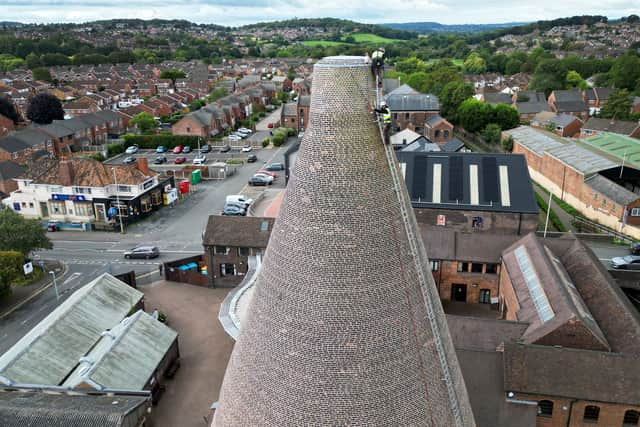

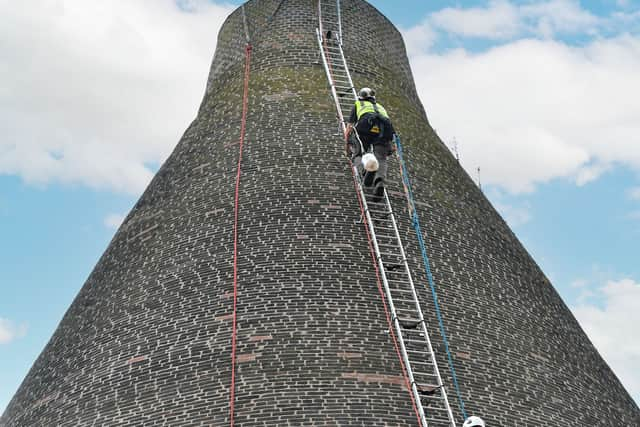
James Preston, a stone mason and heritage conservator, was pictured scaling the 100-foot structure on Friday (September 11) to help keep the recently repointed brickwork in good condition.
James, of JPConservation, is no stranger to heights and was drafted in with a colleague, Rufus Cox, to spray weeds protruding from the cone which underwent major repair work just under two years ago.
The pair were seen putting up a ladder and abseiling down the Grade II-listed building in Camp Hill, Wordsley, as they carried out spraying.
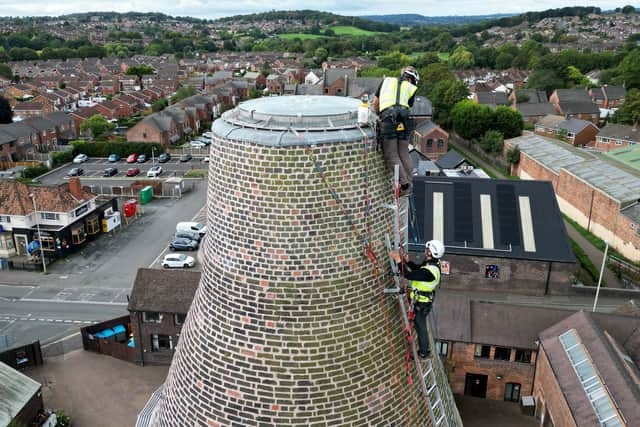
A return visit will then be arranged in three to four weeks to remove the weeds and as much of the roots from the killed off buddleia/broad leafed weeds as practically possible, and fill in any indents where weeds have been growing.
The work has been commissioned to keep the cone in tip-top condition and was recommended when the £1.5 million restoration work was completed in autumn 2024 as the most sensible and cost-effective way of maintaining and preserving the heritage building.
Kate Jones, museums manager at the Red House Glass Cone, said: “Following the recent restoration of the cone, experts recommended an ongoing programme of maintenance to ensure the historic building remains in the best possible condition.
“An important part of this work is tackling weeds and vegetation growth, which can cause significant damage to masonry over time if left unchecked.
“To carry out the task, a specialist steeplejack team were appointed, following a recommendation from the contractors who completed the restoration project.
“Using traditional skills and techniques, the steeplejacks have been able to safely access the full height of the cone, providing a traditional, practical and cost-effective way of maintaining this unique historic structure.
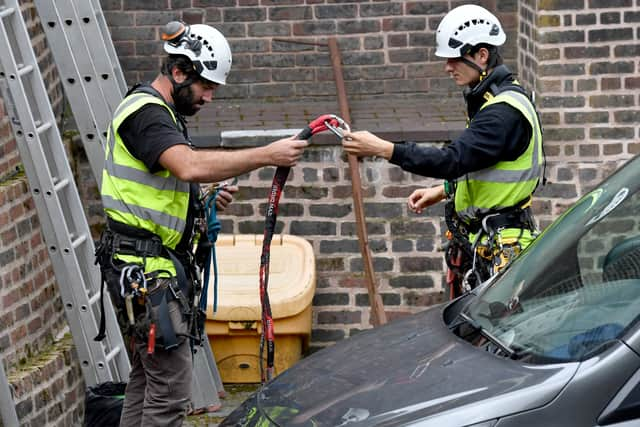
“The first stage of the work involved installing temporary access points within the mortar joints, allowing ladders to be secured without causing damage to the historic brickwork. Once at the top of the cone, the team tested existing safety points before abseiling down the structure to carefully treat weeds growing on the exterior.
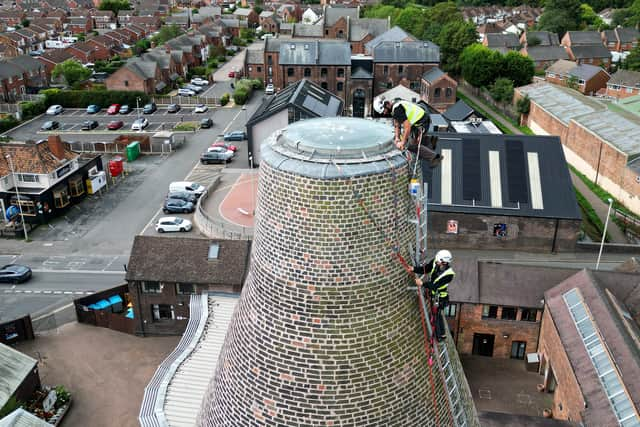
“Over the coming weeks, the steeplejacks will return to remove the dead vegetation and extract as much of the root system as possible. Any areas where weed growth has affected the brickwork will then be carefully repaired and re-mortared, helping to preserve the fabric of the building and prevent future deterioration.
“The work highlights the importance of regular conservation and preventative maintenance in protecting historic sites. While major restoration projects can secure a landmark's future, ongoing care is essential to safeguard heritage structures and ensure they can continue to be enjoyed and appreciated by future generations.
“It has been a fantastic opportunity to see traditional heritage skills in action. Watching steeplejacks James and Rufus expertly navigate the towering structure has been a fascinating experience and a reminder of the specialist craftsmanship often required to care for historic buildings.
“Their first visit has been a great success, and we look forward to welcoming them back soon to complete the next stage of this important preservation work.
“It's not every day you get to see steeplejacks at work on such a significant piece of Black Country heritage, making this a truly unique sight at one of the region's most treasured landmarks.”
Comment Guidelines
Iconic Media encourages reader discussion on our stories. User feedback, insights and back-and-forth exchanges add a rich layer of context to reporting. Please review our Community Guidelines before commenting.