The future is here as research shows amputees can control robotic arm with their minds
Electrodes implanted in the brain can help create new neural networks, a study found.
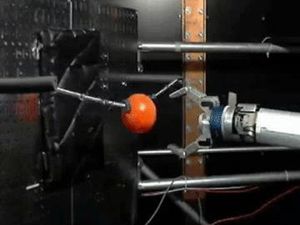
Amputees can learn to control a robotic arm with their mind, new research suggests.
The study on monkeys has shown that electrodes implanted in the brain allow the individual to move robotic limbs using only their thoughts.
The team from the University of Chicago chose three rhesus monkeys – all of whom had one of their arms amputated after suffering injuries at a young age.
Their limbs were not amputated for the purposes of the study, the researchers said.

Limbs are contralaterally controlled by different sides of the brain – that is, the right side of the brain controls the left limb and vice versa.
The monkeys were trained, with “generous helpings of juice” as reward for their performance, to move a robotic arm and grasp a ball by simply thinking about it.
Measuring activity in the neurons – nerve cells transmitting and receiving messages in the brain – the scientists found that for monkeys with contralateral implants, the connections between neurons on the contralateral side strengthened and became dense in certain areas.
Looking at the data from the monkey with implants on the ipsilateral side, scientists observed the neural networks thinned over the course of the experiments before re-configuring to form a new denser network.

“But after a few days it started rebuilding into a new network that can control both the intact limb and the neuroprosthetic.”
The team now plans to build on their work by collaborating with other research groups to develop more advanced neuroprosthetic limbs.
The study is published in Nature Communications.