
'Tech-led social care pilot has helped my mum to get her independence back after a fall - the Mayor of the West Midlands was very impressed'
It was in June 2023 that my mum Diane suffered a nasty fall in our back garden which left her lying in agony with a broken wrist and with no one to call to.

I had no idea what was happening, because at the time, I was at work, and it was only after a phone call from our neighbour that I realised what had happened.
It's a scary and very sobering thought that if I or my brother had both been far away at the time and no one had heard Mum's calls for help, she could have laid there for hours or even days in agony.
It's also a scenario that could happen to anyone across the region, from older people who are unsteady on their feet or suffering from age-related illnesses to people with limited mobility or who require extra care around their homes.
One solution which has been trialled across the West Midlands and fully launched in Wolverhampton is the West Midlands Technology Enabled Care (TEC) programme, which helps residents access innovative technology that provides everyday support.
Wolverhampton Council has commissioned tech supplier Alcove to deliver the service over the next two years, while a long term partnership offer for the city is developed.
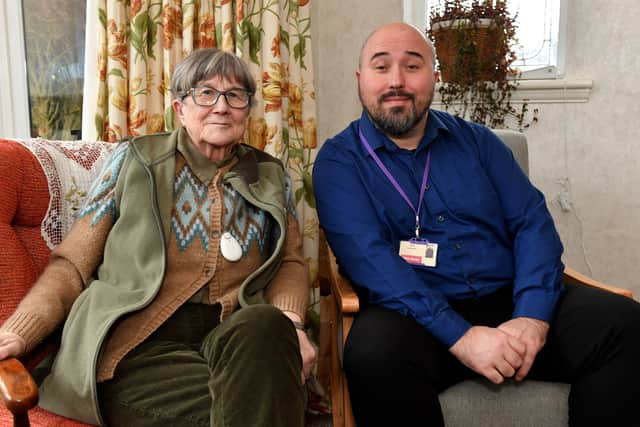

The service had been trialled over the last year by a number of people across the city, including my mum, with our house fitted with sensor devices and voice activated wireless technologies including fall detectors, heat sensors and remote monitoring sensors.
It was a way of giving mum her independence back after the fall, which left her in plaster for several months, as she found that she had been isolating herself more through not leaving the house.
As someone who had worked with older people through her working life, it also gave a chance to understand the possibility of a degeneration in her life, being in her seventies, but also evaluate the equipment and feedback to Wolverhampton Council of the usefulness of the system.
The West Midlands Technology Enabled Care programme is being delivered for Mayor Richard Parker and the West Midlands Combined Authority (WMCA) by WM5G in partnership with the adult social care teams at Wolverhampton, Coventry and Birmingham councils.
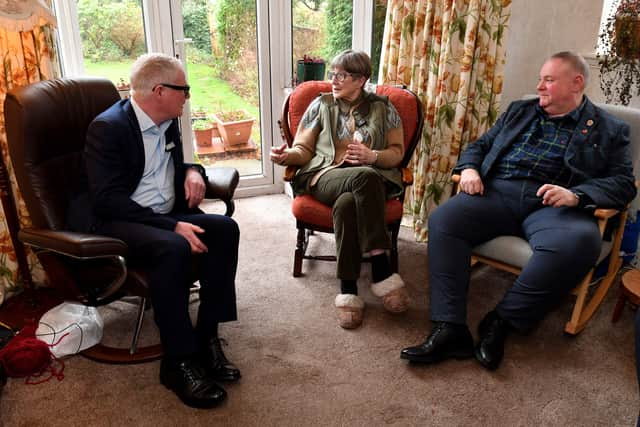
As part of the Mayor's work to understand more about it, he joined Wolverhampton Council leader Steven Simkins, Rachel Murphy (deputy director for adult social care for Wolverhampton Council), Suzanne Cash (Assistive Technologies development manager for Wolverhampton Council) and Robert Franks (Managing director of WM5G) to visit our home on Friday and talk to mum about the system and learn more from her about how it had changed her life.
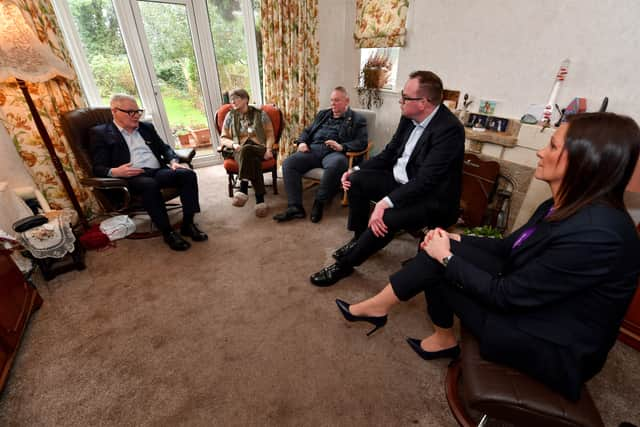
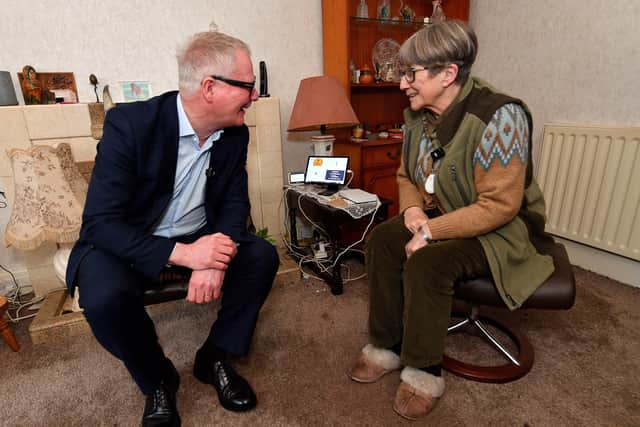
It was a full and engaging chat about the service, with mum able to explain how she could contact myself and my brother if we were out, as well as show what the sensors around the house do and talk about how it had changed her life for the better.
Mr Parker and Councillor Simkins both spent time talking about the power of the technology and what it could mean for people, while Rachel Murphy, Suzanne Cash and Robert Franks spoke about the funding and technology side from their respective positions.
Councillor Simkins said he felt it was a great way of assuring that people could stay in their homes and live better and more independent lives.
He said: "If we can get people accustomed to using this technology, then it gives them greater freedom and gives them their dignity as it comes back, but it's also a safety net as it makes sure that people are safe in their own homes.
"That, for me, is reassuring as it gives them that good quality of life as the evidence proves that people who stay in their own homes have a better recovery and a better quality of life, rather than being stuck in a hospital or on that journey to a care home.
"I do think it's a much more dignified way by allowing people to stay in their own homes and so if this allows you to do that, then why wouldn't we want to roll it out across the city?"
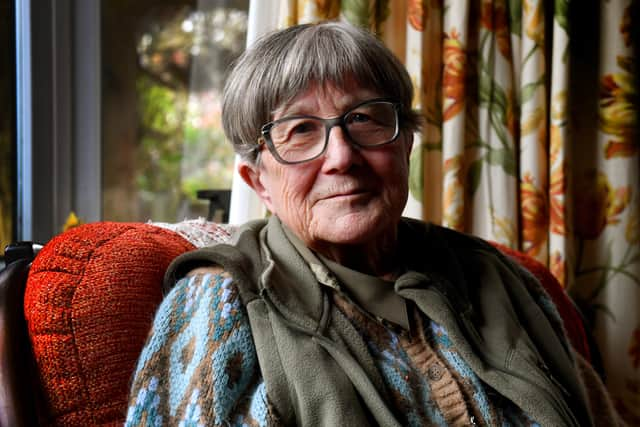
For my mum Diane, the visit was a chance to talk about her past managing care homes and proving care for older people and how it shaped her thoughts on the technology, as well as talk about how the different bits of technology had helped change her life.
She said: "I used to work for Wolverhampton Council managing older people's care and so I saw what Wolverhampton was doing and the provision has always been very good and very successful.
"I knew what was coming at the time and it happened to me and just blew me away for a bit, so not only have I embraced it, I'm now able to feed back to Wolverhampton Council about what works and what needs to change and it's just helped me to feel like I used to and feel independent within my life again.
"I've got the sensors all around the house and all the technology in my living room and that allows me to go around and it also reassures my sons as they know I'm alright and they can see that, so it's really been good."
Early results have shown the technology can cut the councils’ annual social care costs by as much as £3,500 per person, delay higher and more expensive levels of care, and reduce hospital admissions, as well as also freeing up stretched front-line workforces to support growing demand.
Mr Parker said the tech was very impressive and he said it had been great to see how it boosted mum's confidence and independence, as well as that of hundreds of other people taking part in the programme, and said he wanted to do more within his role.
He said: "I think it's great and one of the best things about this job is going out on visits and meeting people like Diane and understanding the impact on her.
"The human story is far more powerful than reading a briefing with technical stuff on it and I agree with the council leader and other about this fantastic programme.
"It will be good to know what we can do to promote this and we also need to let the Government know about this.
“The West Midlands has always been an innovator in healthcare, from X-rays in the late 19th century to the pacemaker in the 1960s, and our tech expertise is set to transform care services in the modern day.
“By applying everyday digital technologies in new ways, we’re helping vulnerable residents live more independent lives while easing pressure on our vital public services.”
The Technology Enabled Social Care programme is part of the West Midlands’ status as a 5G Innovation Region and national testbed for the use of AI, advanced connectivity, and digitally enabled infrastructure in public services to improve people’s lives.
Data from the pilot programme will help more councils explore how digital monitoring could be expanded to more residents and expand the types of care packages that could be offered.
Robert Franks, managing director at WM5G, said: “The learning from this programme is creating a clear blueprint for how technology-enabled care can be scaled across the West Midlands and beyond.
“By working closely with councils, partners and local citizens, we are demonstrating how digital approaches can enhance care, support independence and help services respond to rising demand.
"This collaborative model is already shaping the design of complementary initiatives, including Digital Discharge, and provides a strong foundation for long-term, sustainable transformation of health and social care across the region.”
This technology has helped improve the quality of my mum's life, helped myself and my brother to be more at ease and impressed the Mayor of the West Midlands, so let's see where it can go from here.
Comment Guidelines
Iconic Media encourages reader discussion on our stories. User feedback, insights and back-and-forth exchanges add a rich layer of context to reporting. Please review our Community Guidelines before commenting.