Scientists create artificial photosynthesis which can turn CO2 into fuel and clean air
Researchers used synthetic material to replicate the process mastered by plants.
Scientists have found a way to artificially recreate photosynthesis – a breakthrough which could be a boon in the fight against global warming.
Researchers from the University of Central Florida were able to use a synthetic material to turn greenhouse gas into clean air whilst producing energy at the same time – in a very similar energy-producing process as that used by plants.

Assistant professor Uribe-Romo and a team of students from the University of Central Florida used metal-organic frameworks (MOF) to break down carbon dioxide (CO2) into harmless organic material – in this case producing solar fuel.
The MOFs used were made of titanium, a common and non-toxic metal, with N-alkyl-2-aminoterephthalates – which are organic molecules designed to absorb specific colours of light when combined with the metal, honeycomb-like framework.
In this case the scientists tailored the MOF to harvest blue light. CO2 was fed into a blue LED photoreactor, mimicking the sun’s blue wavelength, and successfully transformed the greenhouse gas into formate and formamides – a reduced form of carbon which can be used as a fossil fuel alternative.
“The goal is to continue to fine-tune the approach so we can create greater amounts of reduced carbon so it is more efficient,” Uribe-Romo told the university’s website.
His next steps are to test if other wavelengths of light, other than blue, can be used to trigger the process.
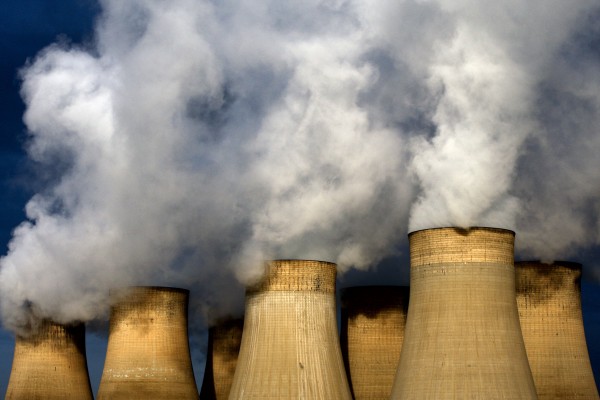
The work is published in the Journal of Materials Chemistry A, and the research lead suggests given some fine tuning, it could be used in tandem with CO2-producing power stations.
“The idea would be to set up stations that capture large amounts of CO2, like next to a power plant,” said Uribe-Romo. “The gas would be sucked into the station, go through the process and recycle the greenhouse gases while producing energy that would be put back into the power plant.”