Residents of 'forgotten' Birmingham estate issue election warning to planning bosses amid regeneration fears
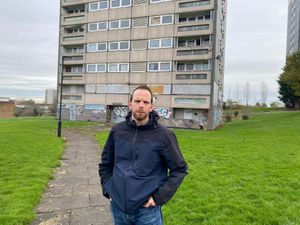
Residents in a ‘forgotten’ Birmingham estate have issued a warning to ‘decision-makers’ ahead of a critical election in May.
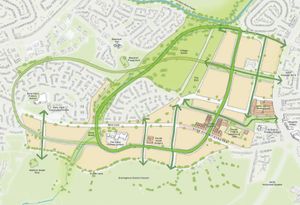
Birmingham City Council is still planning to push ahead with its proposed regeneration project for Druids Heath despite a legal challenge recently causing a setback.
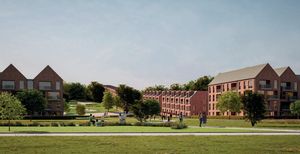
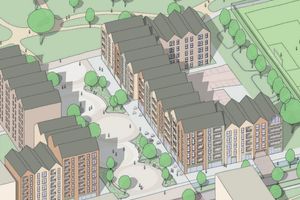
The Labour-run council has said the enormous scheme would provide thousands of new homes, revitalised community facilities, transport links, green spaces and more.
But the plans have also sparked concerns over the scheme’s potential impact on the community; the level of demolition and fears existing locals will be priced out of the area post-regeneration.
The project has suffered a delay however, with the legal challenge resulting in the decision to give planning permission to the regeneration scheme being quashed.
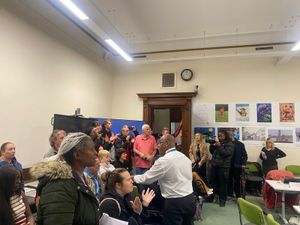
With the project set to be brought back to the council’s planning committee, a residents’ group has warned that councillors who “side with developers” could pay a heavy price in the local elections in May.
All 101 Birmingham City Council seats will be contested, which means the election will decide which party or coalition runs the authority over the next four years.
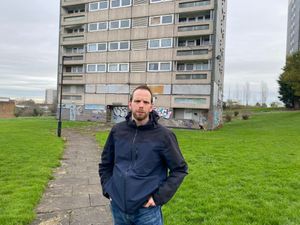
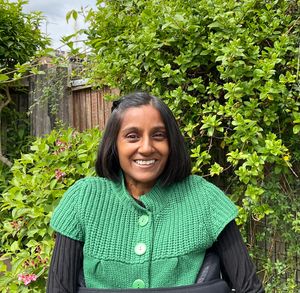
“We made it clear to the planning committee that if they voted ‘yes’ to these proposals, we would not quietly accept it,” Rita Patel, chair of the Druids Heath and Monyhull Forum (DHAMF), said.
“We promised we would organise and mobilise across the city. We promised to encourage communities to vote ‘no’ to those who do not stand with residents and we meant it.”
The residents group says it has been working with other campaign groups across Birmingham to ensure that elected representatives who “ignore residents and side with developers are held accountable in the local elections”.
“We will use our electoral power to hold decision-makers accountable,” Ms Patel said. “Councillors who disregard the voices of their constituents should not assume they can rely on their votes.
“Democracy does not end in the council chamber – it begins in our communities.”
Sandra Howes, a local resident who has lived on the estate for almost 60 years, added that she had never seen it in “such a rundown state”.
“The once lively family estate is now a shadow of the vibrant place it once was,” she said. “It’s very sad.”
Ahead of the regeneration proposals being brought back to the planning committee, the DHAMF renewed several demands including:
A “full halt” to the current redevelopment proposals
A “genuine, resident-led” masterplan, co-designed with the people who live here now
A guarantee of no net loss of social housing
Homeowners guaranteed like for like housing and not through shared ownership schemes
Earlier this year, Druids Heath councillor Julien Pritchard called on the council to be more open with residents.
“The outline planning application didn’t have anywhere near enough affordable homes,” the Green Party councillor said.
“The council said more would be added later but residents really need the certainty of what’s in a planning application.”
He went on to argue that the plans need to “look again at the amount of demolition” and “give any homeowners losing their homes a like-for-like replacement”.
“We need to see a plan that provides cast-iron guarantees that everyone here in a council property will get a genuinely affordable social home,” Coun Pritchard said.
“And that the 51 per cent of affordable homes that the council says it will build are guaranteed as genuinely affordable socially rented homes.
“When the council is putting through plans, it needs to be transparent and put all the information out there.”
‘I know how strongly residents feel’
After the Druids Heath plans were narrowly approved last October, a number of residents launched a legal challenge calling on the council to overturn the decision to grant outline planning permission.
Central England Law Centre (CELC) argued that the council had failed to disclose the full Financial Viability Assessment (FVA) when the plans were given the green light.
This assessment was used to justify why the planning application only detailed around 11 percent affordable housing (400 out of 3,500 homes), rather than the 51 per cent promised by the council.
Last month, Birmingham Council confirmed it had requested the court quash the original planning decision – and this was ultimately agreed.
“The basis of that challenge will be addressed by making the FVA for the scheme public,” a council spokesperson said. “We know the community is keen to see regeneration plans move forward.
“We regret the delays that this challenge causes, particularly the demolition of cleared tower blocks, which cannot be achieved without planning consent.”
The council previously said the FVA contained commercially sensitive information that could not be released while the council were in a procurement process to identify their preferred partner.
This meant that it was not available to the planning committee when they made their original decision.
Amid deep anxiety over the Druids Heath project, the Labour-run authority has also repeatedly insisted that it is committed to making just over half of the future homes “affordable”.
“For over two years, the council has worked with the community to create a plan for the regeneration of Druids Heath, holding discussions with more than 1,000 residents, of which 68 per cent support the scheme,” a council spokesperson said.
“The council’s commitment to delivery remains.”
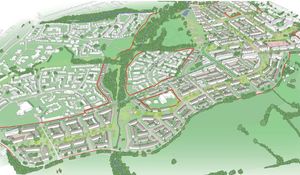
On concerns over homeowners being priced out of the area, they said: “The council has committed to delivering a shared equity scheme to prevent this from happening.”
October’s planning meeting heard that the levels of demolition were necessary as “most homes in Druids Heath require millions of pounds in investment to bring them up to only minimum standards”.
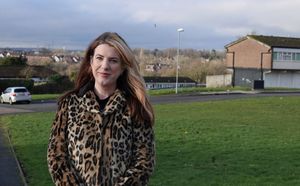
Earlier this year, Coun Nicky Brennan, the Labour cabinet member for housing, said: “As someone who grew up in Druids Heath, I know just how important it is to deliver a sustainable, greener, and more connected community for generations to come.
“I know how strongly residents feel about the regeneration, which is why we have worked with the community for over two years.”