
How your Black Country, Staffordshire and North Worcestershire constituency will shape up in the General Election - and how the votes may go for the results
The electoral map will see dramatic changes at the forthcoming General Election. Here we look at the constituencies that make up our region, and how they could play out on election night.
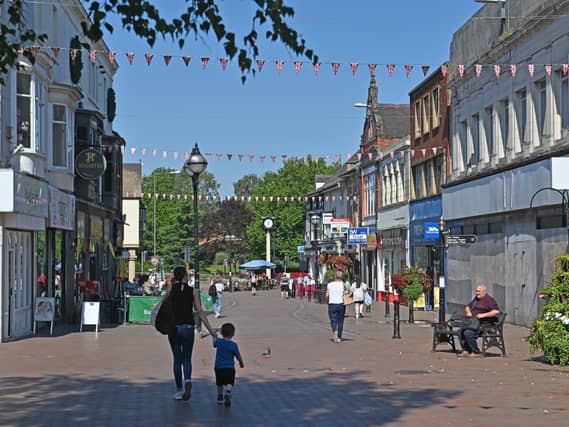


The Black Country and surrounding areas will see voters across 18 constituencies go to the polls on Thursday, July 4 for the General Election - with the Conservatives holding the most of the seats since the previous election.
Keir Starmer's Labour Party will be looking to make gains in most of these areas, while Rishi Sunak and the Conservatives will be hoping to hold on to some of the safer areas. Or will Reform UK, the Liberal Democrats and the Green Party make inroads. Let's take a look at each constituency in more depth.
Aldridge-Brownhills
A Conservative stronghold even through the Blair years, it would be a sensation if Labour managed to take this seat.
Held with a majority of nearly 20,000 at the last election, the seat has since been extended to include Pheasey and part of Paddock ward.
It is made up of the following wards: Aldridge Central and South, Aldridge North and Walsall Wood, Brownhills, part of Paddock ward, Pelsall, Pheasey Park Farm, Rushall-Shelfield and Streetly.
Bromsgrove
Covering Hagley, Romsley and Belbroughton, the seat is unchanged since 2019 when Sajid Javid won with a thumping majority of 21,306. Mr Javid is not standing this time, but it would take a remarkable swing of more than 21 per cent for Labour to take control.
Cannock Chase
Another seat unchanged since the last election, the Tories are defending a majority of almost 20,000, although the former mining community has been held by Labour in the past.
Prime Minister Rishi Sunak's recent visit suggests it is one the Conservatives will be fighting tooth-and-nail to hold onto.
Made up of the following wards: Brereton and Ravenhill, Cannock East, Cannock North, Cannock Chase, Cannock South, Cannock West, Etching Hill and The Heath, Hagley, Hawks Green, Heath Hayes East and Wimblebury, Hednesford Green Heath, Hednesford North, Hednesford South, Norton Canes, Rawnsley, and Western Springs.
Dudley
Essentially the former Dudley North seat, but with the addition of the Labour-leaning Brockmoor and Pensnett ward, this seat will be an interesting one to watch.
With a notional Tory majority of 13,609, it would take a swing of more than 16 per cent for Labour to win. On the other hand, it was held by Labour from 1997 to 2019, albeit with sometimes wafer-thin majorities. Strongly pro-Brexit, the size of the Reform UK vote will be crucial here.
Halesowen
A confusing seat, made even more complicated by the recent boundary changes.
It is made up of the Dudley borough wards of Belle Vale, Cradley and Wollescote, Halesowen North, Halesowen South, Hayley Green and Cradley South, and Quarry Bank and Dudley Wood, with Sandwell's Cradley Heath and Old Hill ward, and part of its Blackheath ward also added in.
The seat has a notional Conservative majority of just over 12,000, making it the most vulnerable of the Dudley borough seats, although it would still require a near-14 per cent swing to Labour. If Labour win here, it will be on course for a 100-plus majority.
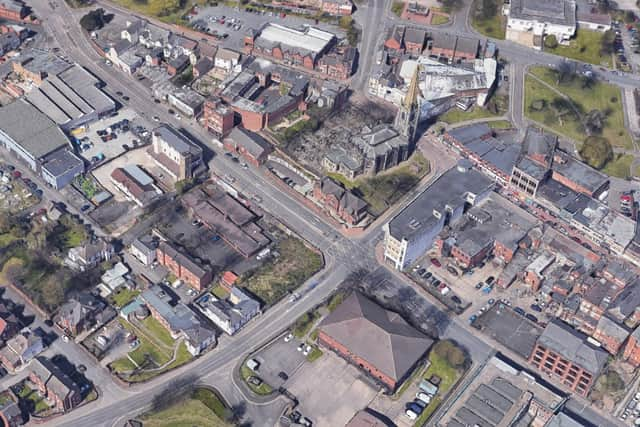
Kingswinford and South Staffordshire
There aren't many safe Conservative constituencies in this election, but this should be one of them.
Forming the bulk of the former South Staffordshire constituency, but taking in the Kingswinford, Wall Heath and Wordsley areas of the former Dudley South seat, it is unlikely to be a serious target for Labour.
It is made up of the following wards: : Kingswinford North and Wall Heath, Kingswinford South, Wordsley, Bilbrook, South Staffordshire, Codsall North, Codsall South, Himley and Swindon, Kinver, Pattingham and Patshull, Perton Dippons, Perton East, Perton Lakeside, Trysull and Seisdon, Wombourne North and Lower Penn, Wombourne South East and Wombourne South West.
Lichfield
Largely unchanged by the boundary review, the seat was held by the Conservatives with a huge majority of 23,638 in 2019.
A Labour stronghold in the first half of the 20th century, the seat has been Tory since it was recreated in 1997 – although that year the Conservatives managed only a 238-vote majority.
Smethwick
Another historic ward recreated under the boundary review, the current constituency is made up of the Sandwell Council wards of Abbey, Bristnall, Langley, Old Warley, Smethwick, Soho and Victoria, plus parts of Blackheath.
Should be a Labour shoo-in, but the war in Gaza could hit the party's vote in predominantly Muslim areas.
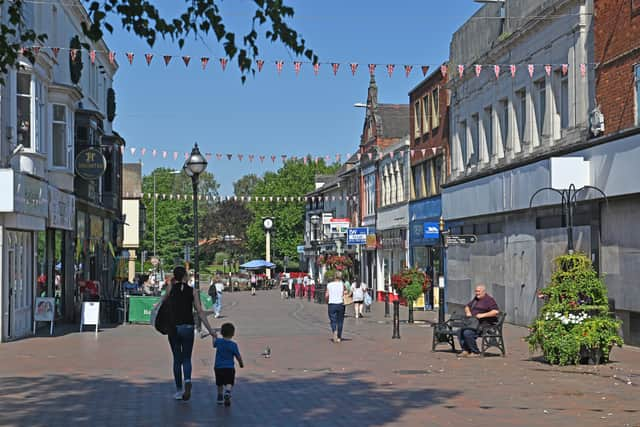
Stafford
This seat will see considerable change, losing Penkridge and the areas to the east of Stafford, while Eccleshall, Gnosall and two wards from Newcastle-under-Lyme wards are added.
The new seat has a notional Conservative majority of 13,720, which would normally make it safe territory. However, if the national polls are correct, it could be a major scalp for Labour.
Stone, Great Wyrley and Penkridge
Another mish-mash constituency, made up of the three eponymous towns, plus the rural areas in between.
Overwhelmingly Conservative, it is one constituency that Rishi Sunak should be able to rely on.
Stourbridge
Significant, and some would say questionable, boundary changes have seen this seat lose the areas of Cradley, Wollescote, Quarry Bank and Dudley Wood to the neighbouring Halesowen constituency, but gaining Brierley Hill and Netherton and Woodside from the abolished seat of Dudley South.
The effect has been to increase the Conservatives' notional majority to 15,133, requiring a swing of 16. 34 per cent for Labour to take it.
Another seat which could fall in the event of a Labour rout.
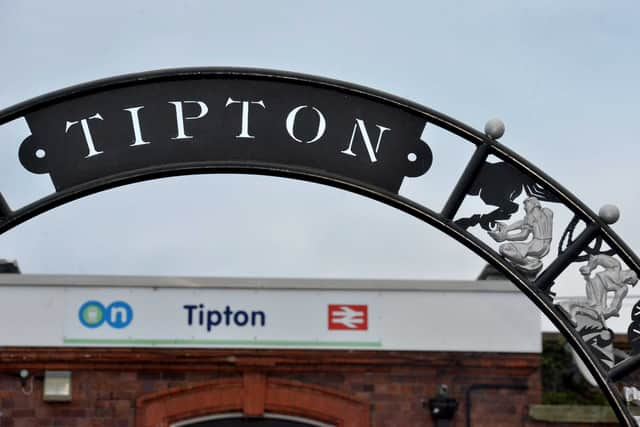
Tipton and Wednesbury
New for 2024, this seat is at least one that most of its residents will be able to relate to.
Made up of the Great Bridge, Princes End, Tipton Green, Wednesbury North and Wednesbury South from the previous West Bromwich West constituency, it also includes Friar Park and Hateley Heath from the former West Bromwich East seat. The one outlier is the Dudley borough ward of Coseley East, although confusingly this includes the Foxyards area of Tipton.
This is a classic 'red wall' seat, with very little history of Conservative support, but with a notional Conservative majority of 4,693.
Should be an interesting test of how the Conservatives have hung on to their first-time voters from 2019.
Walsall and Bloxwich
Extensive boundary changes give the Conservatives a notional majority of 2,186 in this seat. Logic suggests it should be a cert for Labour, but the Tories' surprising performance in the borough's local elections last month are a reminder that nothing can be taken for granted.
The seat is made of up the council wards for Birchills Leamore, Blakenall, Bloxwich East, Bloxwich West, part of Paddock ward, Palfrey, Pleck and St Matthew's.
West Bromwich
A former Labour stronghold which turned blue at the last election.
The Conservatives are defending a notional majority of 2,150, placing it firmly on Labour's must-win list.
Based largely on the former West Bromwich East seat, it is made up of the following Sandwell Council wards: Charlemont with Grove Vale, Great Barr with Yew Tree, Greets Green and Lyng, Newton, Oldbury, Rowley, Tividale and West Bromwich Central.
Wolverhampton North East
The Conservatives' best chance of retaining a presence in Wolverhampton, although the seat has now been expanded to include parts of Walsall borough.
Another 'red wall' seat, the Conservatives secured a 4,080 majority in 2019. But the addition of Short Heath and Willenhall North wards from the former Walsall North seat, including the New Invention area – plus the loss of Oxley ward – has almost doubled the Tories' notional majority to 7,847.
This could well prove to be a bellwether seat – if Labour win here, the party will be on course for a majority.
Wolverhampton South East
Something of a misnomer, boundary changes mean this seat would now more correctly be described as 'Bilston and Darlaston'.
The new seat is made up of the Walsall Council wards of Bentley and Darlaston North, Darlaston South, and Willenhall South, along with the Wolverhampton Council wards of Bilston East, Bilston North, East Park, Ettingshall and Spring Vale.
Should be a nailed-on Labour win.
Wolverhampton West
With a notional Conservative majority of 934, this is No. 5 on Labour's list of Tory marginals.
It approximates to the former Wolverhampton South West seat, but with the additional wards of Blakenhall and Oxley, which will make the already marginal seat more favourable to Labour.
A somewhat diverse constituency, in it encompasses leafy Tettenhall and Wightwick, inner-city Blakenhall, Whitmore Reans and Graiseley, as well as suburban Merry Hill, Oxley and Penn.
If the Tories hold on to this, we are going to be in for a very interesting night.
Wyre Forest
One of the safest Tory seats in the country, the seat which covers Kidderminster, Bewdley and Stourport is unlikely to change hands.
It was won by Labour in 1997 though, and from 2001 it was held by Dr Richard Taylor who stood as the independent Health Concern candidate. Nevertheless, with a 21.2 per cent swing needed for Labour to win, the Conservatives will be confident of holding on.
The seat is unaffected by the boundary changes.
Comment Guidelines
Iconic Media encourages reader discussion on our stories. User feedback, insights and back-and-forth exchanges add a rich layer of context to reporting. Please review our Community Guidelines before commenting.