Walsall deputy leader slams WHG over ‘phenomenal’ bill increase
A Walsall councillor said tower block tenants were given the choice of being ‘shot or hung’ at a consultation event which led to their bills quadrupling overnight.
Councillor Mark Statham made the comments in response to price increases at two Walsall Housing Group tower blocks in Bloxwich.
The deputy leader of Walsall Council lashed out at the social housing provider at a meeting of the prosperous places and investment scrutiny committee on November 20.
On October 1, 2025, tenants in Woodall House saw their prices go from 4p/kWh to 13.75p/kWh, while those in Hamilton House faced an even steeper jump from 4p/kWh to 17.67p/kWh.
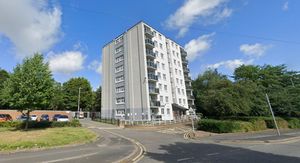
In 2021, a new system called a heat network was installed at the tower blocks, where individual boilers for each flat were removed and a central system was installed to service all flats within the block.
Throughout summer this year, residents were invited to take part in a consultation about new charges for their hot water.
But Councillor Statham said neither of the two options provided in the consultation were favourable.
He said: “There was a consultation, residents were given two options: one was to be hanged and one was to be shot. They didn’t like either of them but they were told they had to vote for one, which they did, and now that’s being used against them.”
Councillor Statham questioned how WHG could justify the new prices, saying commercial gas costs around 5.5p/kWh.
He said: “Gas on the open market is about 5.5p. For residents to get hot water in one block it’s now nearly 18p.
“The input fuel commodity price should be between 80 or 90 per cent of the system running cost. But here we’ve got a system commodity price input which is less than 30 per cent of the unit price charge.
“Even though you’re not recovering costs, the standing charge, metering charges and VAT must be a hell of a proportion of this bill.
“Had there been individual boilers in these flats, these people would have been significantly better off and have the opportunity to move suppliers should they not be happy with their gas supply.”
What did WHG say?
The spokesperson for WHG defended the charges and said data which informed the increase would be shared with Councillor Statham.
The spokesperson said: “When we installed some of these heat networks, there were a number of people on incredibly low unit cost, particularly for gas, of 4p per unit. Most of you know that is an incredibly low rate for gas.
“When we took that individual’s provision, in order to protect those residents on that unit, we said for the foreseeable future, until we could properly analyse the cost of provision of heat, we would protect that very, very low cost for every tenant.
“In fact what has been happening for a number of years, every tenant has seen significant subsidies from our rent to pay for their energy at very low charges.
“The charge that is set at the moment for those tenants is solely to recover the costs of the energy used to heat those homes. There are no additional costs for capital recovery or the administration of WHG or anything like that.”
Councillor Statham said: “You’ve implemented a system that is supposed to be cost-effective and efficient but the level of cost increase is phenomenal for them.
“What used to cost £120 a year now costs £530. But the key point for them is that there is nowhere for them to go. It’s ‘take it or leave it’. They are locked in and cannot change suppliers.
“They’ve contacted the energy ombudsman, but they have no legal oversight of it at the moment, so the housing provider or utility provider can charge whatever they want.
“The question still remains for these two identical blocks is one cost is significantly more than the other costs for an identical system.”
The WHG spokesperson said: “I totally take the point in terms of that we have a monopoly now, it’s not something we ever wanted to get into. We didn’t want to become an energy supplier, those are the regulations and we’re applying to them as fairly as we can.
“If these tenants are subsidised it will be other tenants that will be paying for that because our only income is rent.
“This is not a choice of WHG, the regulations have changed and every housing association that has a heat network has effectively become an energy provider, and therefore is regulated.”
WHG said it would continue to support tenants, including helping them access benefits and budgeting services.