Wetherspoon seeking alterations to former Walsall court and library building, including 'essential repairs'
A pub chain has been granted permission to make alterations to a landmark former court building in a town centre.
J D Wetherspoon had applied to make changes to the to the Grade II listed St Matthew's Hall in Walsall, including 'essential' repair work.
The pub chain wants to create a new opening in the external perimeter wall of the building in Lichfield Street, and install a cast-iron gate.
Get the latest headlines delivered straight to your inbox with the Express & Star’s free newsletter
The company also wants to move a disabled ramp, and repave part of the outside seating area, and replace the softwood timber panelling in the conservatory with hardwood.
A statement issued on behalf of the company said that the work to the conservatory constituted essential repairs.
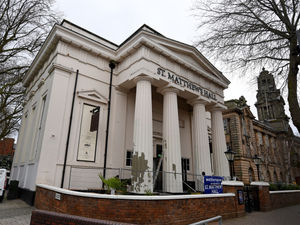
Originally a library, the building dates back to 1831, before being converted into the town's county court in the mid-19th century.
By 1847, it was in disrepair and later became a county court and a venue for a savings bank and Freemasons' hall. After its time as a county court, it was altered again to house the Walsall free library.
One of the town's most prominent buildings, it has a familiar Greek Doric portico.
A statement on behalf of the applicant also made reference to its 'pediment and entablature with triglyph frieze.
In 1998, following the closure of the court, the building was converted into a pub and nightclub, first known as The Old Court House and later as Martha's Vineyard.
It was taken over by J D Wetherspoon and reopened as St Matthew's Hall in 2011, having undergone an extensive refurbishment.
The planning statement said the new panelling in the conservatory represented 'essential' repair work.
"The proposed work has been carefully designed to ensure no adverse impact on the listed building," said the company's agent.
"The conservatory repairs are essential in nature, adhering to a like-for-like approach to preserve the historical integrity. "Additionally, the installation of an additional gate, coupled with the relocation of the ramp, aims to enhance the operational efficiency of the premises.
"These modifications are thoughtfully considered to both maintain the building's character and improve practical functionality."