'I'm losing my home because of this but I'm standing strong' says striking Birmingham bin worker
One of Birmingham’s striking bin workers has claimed she faces losing her home amid deep anger towards the Labour-run city council.
The bins strike, triggered by a dispute between Birmingham Council and Unite the union, is now in its second year and could continue into the autumn.
The dispute was initially sparked by the cutting of the Waste Recycling and Collection Officer role, with striking workers claiming they face a pay cut of £8,000 – a figure the council has disputed.
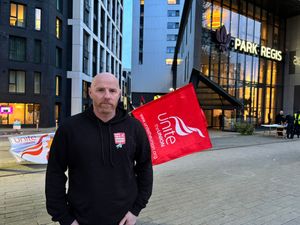
At a demonstration in Broad Street on Tuesday evening (February 17) striking workers and their supporters called on the council’s managing director Joanne Roney to restart negotiations.
But there was also frustration with the actions of both the Labour-run council and high-profile figures within the Labour government.
Speaking to the Local Democracy Reporting Service, bin worker Maxine Stanley said on Tuesday: “I’m losing my home.
“I’ve got to move in with my dad because of this, it’s ridiculous.

“We’ve got bills, we’ve got families, people have had mortgages on the money they were getting – now they’re going to lose that money, how can they afford it?”
The 54-year-old continued: “Even if it takes another two years, I’ll stand strong.
“I’m not taking my [voluntary redundancy], I’m going to stand strong with all the rest of them.
“We’re going to stay out until they get round the [negotiating] table.
“Rain, shine, snow – we don’t care, we’re staying out.”

With May's local elections fast approaching, the bin worker went on to voice anger towards Labour.
“I won’t vote Labour again,” she said. “No way will I vote Labour again, they’re done for me.
“They’re supposed to be for the working class.
“Keir Starmer [has said] he’s there for the working class – but if you are, sort this out.”
There was similar frustration from bin worker Matthew Reid, who described recent comments from Chancellor Rachel Reeves as “disgusting”.
During a visit to the West Midlands last Friday, the Chancellor of the Exchequer had said: “I would urge Unite the union to call off these strikes – it’s having a damaging impact on the reputation of the city of Birmingham and it’s a real nightmare for people living there.”
The Labour minister continued that the “ball is in [Unite’s] court”, adding: “I do not support the extension of strikes.
“They need to get back to work and deliver for local people.”

Reacting to those comments, Mr Reid said: “That’s shocking that a Labour cabinet member is speaking like that.
“Labour were a party built by workers, for workers.
“Start acting like a Labour council, start acting like a Labour government.”
The Chancellor also said on Friday that the Government works closely with the city council and argued the latter has “red lines because of equal pay”.
“It was equal pay challenges not addressed for years in Birmingham that led to the bankruptcy,” she said at the time.

“It’s really important we learn lessons from that and it’s also right that work women traditionally do is valued in the same way that work that is typically done by men is.
“I think Unite the union do and should understand that but they do need to bring these fights to an end.”
‘Nobody is blaming the workers’
Birmingham City Council has previously insisted that a fair offer had been made before negotiations came to an end last summer, saying at the time it had "reached the absolute limit of what we can offer" amid equal pay fears.
Unite claims that a “ballpark” deal had been agreed last year after hours of discussions but added this figure could not get past government-appointed commissioners.
The union also claimed a new offer was much lower compared to the “ballpark” figure and therefore couldn’t be accepted.
“I want the workforce to be able to come back to work and work with us on the journey of improvement,” Birmingham Council leader John Cotton said recently.
“But what we can’t do is settle this on the basis that Unite have been asking us to because that would literally upend all the work that’s been done to put this council back on an even keel.”
On the challenges in finding a resolution, Joanne Roney said earlier this year that settling the dispute “cannot worsen the equal pay implications” for Birmingham City Council.
She went on to say that there were also financial ‘best-value’ considerations that will be looked at by government-appointed commissioners.
“It is incredibly difficult to find a way through these various hurdles,” she said.
“Nobody is blaming the workers for this situation – this is a failure of Birmingham City Council for many years to not address its equal pay issues.”
She added there had to be a “reasonable amount of recognition for both parties”, particularly with the council’s equal pay and financial position.
“They are just parameters within which I have to operate,” she said. “[The council and Unite] are miles apart.”