Staffordshire hospital bosses quizzed on £62 million savings
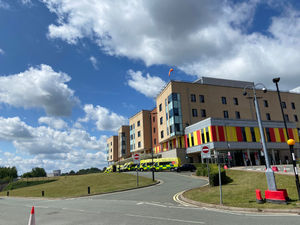
Councillors have quizzed hospital bosses on plans to save more than £60 million next year. University Hospitals of North Midlands (UHNM) has a ‘cost improvement’ requirement of £62.2 million in 2026/27, as the trust aims to eliminate its deficit within three years.
Key prorities for the trust include tightening control of ‘premium staff’ expenditure on agency and bank workers, increasing use of substantive staff, and optimising inpatient capacity. But members of the health and care scrutiny committee at Staffordshire County Council called for assurances that the savings would not impact on services for patients.
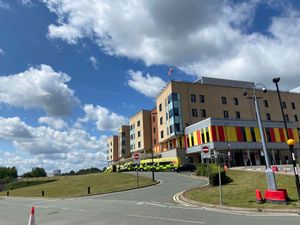
According to UHNM’s report to the committee, £48.1 million of cost improvements have so far been identified for 2026/27, with the remaining £14.1 million due to be approved soon. UHNM, which runs the Royal Stoke University Hospital and Stafford's County Hospital, has achieved £51.9 million of savings in the current year, through measures such as workforce controls and service efficiencies.
Committee members asked for further details on the savings and what their effect on services would be. Councillor Colin Greatorex said: “It’s obviously great that £52 million has been saved, but when you look at the pretty open-ended descriptions of the savings – things like ‘non-recurrent savings’ and ‘workforce controls – it’s difficult for us a critical friend to understand what that all means. We deal in terms of residents and patients and how they’re affected. I understand that you’re looking to do things like stop agency resources where possible, and digitisation.
“It’s great that it’s been achieved but have there been any repercussions? Have we got a need to be concerned?”
Chris Bird, deputy director of strategy at UHNM, told the committee the trust had to strike a balance between delivering financial efficiencies and providing responsive services. He acknowledged that UHNM had experienced some difficulties recently around meeting national standards, particularly in terms of emergency care.
Mr Bird said: “First and foremost, the design of all our cost improvement programmes and subsequently their delivery are underpinned by a quality impact assessment. They’re designed as a check and control mechanism to ensure any proposed change does not have a detrimental impact on patients or communities.
“At the same time we have to work with national requirements. All NHS trusts are required to manage their spend on agency or bank to within certain levels. So we do take those opportunities to look at our staff make-up, our rota, the use of agency spend, in reference to the QIAs and operational performance targets, so sometimes there is a difficult balance to strike.”
Committee vice-chair Charlotte Kelly asked whether there had been any ‘pushback’ on savings that had already been delivered. Mr Bird explained that there had been discussions over how to interpret national comparative data provided by the NHS.
He said: “Sometimes there are hearts and minds to convince. We use national comparative data that tells a story about how we compare to other organisations. We have to translate that data into our local context, and sometimes there are very good reasons why productivity measures are where they are. So there is some clinical curiosity on making sure we’ve interpreted that national data in a way that makes sense locally.”
Councillor Ann Edgeller said the committee would need to ‘keep an eye on’ the savings proposals.
She said: “At the end of the day, what impact will this have on people’s care? Some people are waiting 12 months to get an appointment at the hospital. I know you’ve got the save money, but at the end of the day it’s people’s health, and if you don’t have health, you don’t have anything.”
The committee agreed to receive a further update on UHNM’s cost improvement programme, as well as a report on urgent and emergency care, at a future meeting.