'We are seeing an increased demand for emergency care': Ambulances queue outside a West Midlands hospital as A&E demand rises amid winter pressures
A video captures the winter pressures on the NHS in the West Midlands in action as ambulances are filmed queuing outside a hospital.
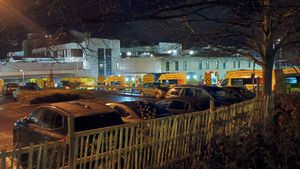
Numerous ambulances have been queuing outside Dudley's Russells Hall Hospital despite chiefs vowing to take fewer patients to hospital as winter pressures set in.
An outpatient visiting for an appointment on Tuesday (December 2) said there were about 20 ambulances parked outside the emergency department at the premises in Pensnett Road. Vehicles waiting to to hand over patients were filmed in the rammed bays at around 8pm.
This was the scene greeting patients despite West Midlands Ambulance Service launching a recruitment campaign in addition to taking on 158 more staff and working closely with hospital trusts and GPs on initiatives to free up its paramedics in a bid to better cope with the influenza season, described as a “perfect storm”.
The NHS said during one week in November flu-related hospital admissions in England increased by 60 per cent adding to concerns of rising pressures.
The Dudley Group NHS Foundation Trust did not comment on the number of waiting ambulances, but stated: "As we enter the winter period we are seeing an increase in demand for our urgent and emergency care services and we are seeing more people who are unwell and needing admission to our beds.
"Our staff are working tirelessly to provide the best possible care under these pressures, ensuring patients continue to receive safe and timely treatment and that people are discharged from hospital beds in a timely way too.
"As winter illnesses rise we strongly encourage local people to get vaccinated as the flu vaccine remains essential in helping reduce severe illness and prevent avoidable hospital admissions. We also ask the people to consider alternative healthcare options for non-urgent needs.
"Local pharmacies, NHS 111, and GP services can often provide faster and more appropriate care for minor injuries, common illnesses, and ongoing health concerns.We want to reassure local people that we are here for anyone who needs urgent or emergency care, and our teams are doing everything possible to prioritise and support our sickest patients."
A West Midlands Ambulance Service University NHS Foundation Trust spokesperson said: “We are working closely with the hospital to minimise any delays our crews experience outside A&E. As a rust, we are taking fewer patients to hospital than ever before to try and support our colleagues.
“Unfortunately, if our ambulances are held outside A&E departments there will inevitably be a delay in them responding to patients in the community.
“We would urge all those who are eligible to get a flu jab to get one as soon as possible due to the rise in cases in the area and across the West Midlands.”
 The region's health chiefs have mounted a major vaccination campaign to urge as many people as possible to get jabs and avoid taking ill after the flu season began a month earlier than usual, resulting in severe sickness affecting mainly older adults, but with school pupils and young adults becoming unwell due to the dominant strain called A(H3N2) which has undergone new mutations in the population.
In Birmingham last week there were over 135 inpatients with flu across the University Hospital Trust with five patients in critical care. Health bosses there are expecting the viruses to have a larger impact in the east of the city resulting in a spread in the coming weeks.
Birmingham NHS Foundation Trust director of nursing at Heartlands Hospital, Lucy Binns, said: "NHS hospitals are under significant pressure, with emergency departments seeing increased attendances for flu-like illnesses and intensive care unit admissions rising.
"The convergence of flu, Covid-19, RSV, and other contagious winter illnesses such as norovirus is a “perfect storm” alongside usual pressures.This is impacting A&E waiting times and will impact ambulance handover times – though we are working very hard to minimise this.
"We must cohort patients - keep those with infections in separate areas - which reduces flexibility and capacity. The flow of patients slows in both the emergency department and created longer stays for patients causing delays elsewhere in the system. A&E care must be available for the sickest and most seriously injured patients. We are asking the public to think carefully before attending A&E and to choose an alternative when it’s safe to do so."
Meanwhile, Health Secretary Wes Streeting said the planned resident doctors' strike ahead of Christmas was "irresponsible" and "unnecessary".
He added: “Just in the last week we’ve seen 999 call volumes and A&E demand of a kind we normally only ever see on New Year’s Eve, which is the busiest night of the year for the NHS.
“So the NHS is running hot at the moment and industrial action is the last thing that patients or indeed other NHS staff need.”