Decision delayed on new children’s home plan for £1m landmark house in Wednesbury
A decision over whether a £1m landmark house in Wednesbury can be converted into a new children’s home has been delayed.
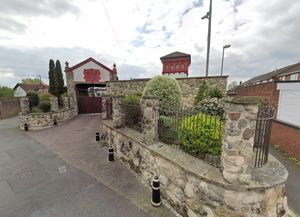
The four-bed Round House in Reservoir Passage, a stone’s throw from Wednesbury town centre, which comes with a tennis court, swimming pool and its own windmill, would be converted into a residential home for up to four children.
Sandwell Council’s planning committee voted on November 26 to defer a decision to allow councillors to visit the site after concerns were raised over the accessibility of the hilltop home.
Cllr Luke Giles, who represents Wednesbury North, objected to the plans at the meeting say the narrow roads around the home were already posing congestion problems – particularly around drop-off times at the nearby Wonder Years nursery.
Cllr Giles, who asked the committee to delay ruling on the application, added that bins were often left uncollected as refuse workers struggled to drive along the tight road during busy times.
The committee then voted to put off a decision until councillors visited the site.
In a report published ahead of the meeting, the local authority’s planning officers had recommended the move was approved.
Earlier plans to convert the hilltop home into a school for 30 children with social, emotional, and mental health issues and learning difficulties was scrapped earlier this year after Sandwell Council said surrounding roads were unsuitable to cope with demand and not enough parking spaces had been provided.
A handful of objections were made against the plan when they were resubmitted in the summer.
Concerns were raised over the impact the children’s home would have on the area – particularly over traffic and parking.
No objections were made by the council’s highways department.
The report by the council recommending the residential home’s approval said: “The proposed change of use would be acceptable in this location and would not harm the living conditions of neighbouring occupiers, with particular regard to traffic movements, noise [or] disturbance and highway safety.
“The proposed home will be registered with Ofsted and the applicant states that the company currently operates six Ofsted registered homes, and they state that all of which have achieved a ‘good’ rating across all inspection areas.
“The applicant states that the new home will work closely with Sandwell Council to prioritise placements for young people within the borough.
“This approach will help reduce the need for out-of-area placements, which can often create additional pressures for families and professionals and disrupt family contact.”
The striking home, which took more than 25 years to build using salvaged materials, was sold to Birmingham-based Spring Hill High School but its plans to convert the building into a school were met with scepticism by Sandwell Council over how parents and carers would access and park at the school and whether it would cause traffic problems for the area.
The application by Gracebridge Care Ltd comes from director Lee Baillie who is also a director of Spring Hill High School.
Before the plans were withdrawn in June, Sandwell Council’s highways department said it was concerned over the lack of information in Gracebridge Care’s plans – noting a big difference between a four-bed family home and a school serving 30 pupils and 20 staff with the ‘extremely narrow’ Reservoir Passage also unsuitable for two-way traffic.
Work on the striking home began in the 1980s, and it was constructed using salvaged and recycled materials from old houses, schools, factories and churches across the West Midlands including bricks, steel joints, iron pillars and heavy stone lifted in by crane.
The site was sold last year by owner Matthew Humphries following the death of his parents David and Elizabeth who were part of four generations to run the family demolition business beginning in 1919.