'The consequences could be devastating for small businesses,' Bilston manufacturing boss says of EU steel tariffs plan
A Black Country manufacturing boss has said “the consequences could be devastating for small businesses” if the EU goes ahead with plans to impose 50 per cent tariffs on imported steel.
Prime Minister Sir Keir Starmer recently confirmed the government was in talks with the European Union over a proposal to double the current 25 per cent tariff level as well as cutting tariff-free import volumes by 47 per cent to 18.3 million tons a year.
Industry figures have said the proposed changes represent an “existential threat” as around 80 per cent of the UK’s steel exports go to Europe.
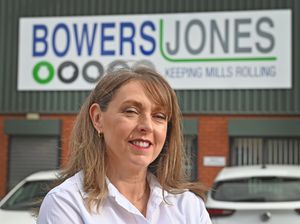
Locally, Jane Sommerville, managing director at Bilston-based manufacturing firm Bowers & Jones, remains hopeful a deal can be reached between the UK and the EU but if it can’t then it could be catastrophic for firms in Black Country that are trying to pivot after President Donald Trump hiked tariffs on steel and aluminium entering the US to 25 per cent in March.
Award-winning Bowers & Jones, which was recently presented with the King’s Award for Enterprise in the international trade category for its significant growth in exports - particularly to North America - is now having to focus on other markets as the tariffs have made it "just impossible" to do business with the US in the same way as before.
Managing director Jane Sommerville said the 70-year-old firm, which specialises in the design, manufacture and refurbishment of roll tooling and rolling mill products, has had a strong trading relationship with companies in Europe and that it would look to expand on this, and seek out other markets, in light of the Trump tariffs situation.
However, if the EU presses ahead with proposed new measures, which are also intended to strengthen the traceability of steel, it could have a huge impact on successful small firms in the UK such as Bowers & Jones.
MD Jane Sommerville said: "Protectionism is never beneficial for any economy. The EU does not need to shield itself from high-quality UK steel.
“The real issue lies with commodity imports from third countries such as India and China, which have severely disrupted the European steel market.
"With the United States imposing tariffs on imported steel, these countries are likely to redirect their exports to other markets, including the UK and EU. To prevent further dumping, protective measures are becoming inevitable.
"At this stage, the measures are only proposed and, to my understanding, are planned to come into effect next year. This stands in contrast to the Trump-era tariffs, which were implemented immediately and caused near-instant disruption.
"I firmly believe that the EU and the UK will negotiate a side agreement. However, if such a deal is not reached, the consequences could be devastating for small businesses like Bowers & Jones."

The UK Metals Council has also shared concerns about the proposed changes.
Rachel Eade, chairperson of the UK Metals Council, said the proposed 25 per cent tariff feels like a “tit for tat response and an obvious attempt to redress any trade imbalance brought upon by the US tariffs”.
She added: “The UK produces four million tonnes of steel per annum, with 78 per cent exported to the EU, eight per cent to USA and 14 per cent elsewhere. With these figures firmly in mind, it is glaringly obvious that the European Union is not only our closet market but also our largest one.

“Companies are immediately worrying about rules of origin checks, delays at customs and administrative burdens, not forgetting the additional cost this will put on their customers and the possibility they may look elsewhere.
“We need the Government to support the downward metals supply chain as much as they are the main producers and we need them to work with the EU to create the right conditions that equate to a level playing field.”
She urged any firms needing advice and clarity on the changes to “speak to some of the fantastic metal trade associations out there, who are working tirelessly to lobby and understand what the tariffs mean for their members” as well as Business Growth West Midlands for support “around diversification into new markets”.
The comments come after Alasdair McDiarmid, assistant general secretary at the Community trade union, said the new measures proposed by the EU “represent an existential threat to our industry, as well as the thousands of jobs and communities it supports right across the country”.
He warned of “grave risks” and urged the Government to move “swiftly to negotiate preferential treatment for the UK”.
Industry minister Chris McDonald said the government was pushing the European Commission for “urgent clarification” of the impact of the changes on the UK and said it was vital that trade flows between the UK and EU were protected.