Work progresses at pace to turn former British Steel site into £150m canalside development
Wavensmere Homes has reached the six-month milestone of its five-year programme to redevelop 17.5-acres of former industrial land in Wolverhampton city centre into the £150 million Canalside South scheme.
More than £20 million has already been invested on land assembly and remediation, site enabling and groundworks.
Having lain derelict for 15 years, the former British Steel site and Crane Foundry is being transformed into a development comprising more than 530 energy-efficient homes, complemented by a range of new business and community amenities.
The regional distribution and stockholding centre had stood empty since the collapse of British Steel in 2019 but the site, located off Qualcast Road, is being ambitiously repurposed through a partnership between Wolverhampton Council and the Canal and River Trust.
Benefiting from a prime waterside position, it fronts onto the Wyrley and Essington Canal and the Wolverhampton Branch of the Birmingham Main Line Canal.
Wavensmere Homes began remediation, demolition, levelling, site enabling and groundworks in February 2025.
Phase one of Canalside South comprises 153 contemporary two and three-bedroom houses, with the first home handovers scheduled for the second quarter of 2026.
Access to the first two phases will be provided via Qualcast Road, which will function as the primary spine road.
The development is being delivered in three phases – progressing sequentially from east to west – to minimise disruption to the surrounding community.
The full regeneration and build programme is expected to be completed in 2030.
James Dickens, managing director of Wavensmere Homes, said: “We are immensely proud of the rapid progress our specialist groundworks contractors have made during spring and summer. Seeing the footings of the first houses in place is fantastic, especially with all the remediation work we’ve carried out below the ground. Train passengers travelling between Birmingham and Wolverhampton get an elevated view from the arches that transect the site, so it’s great to receive their excited feedback.
"Former industrial sites like this require colossal upfront investment. We have spent £20 million so far, with our ongoing build programme expenditure in the region of a million pounds per month. In time, this £150 million development will enable Wolverhampton residents to benefit from superb connectivity, new amenities, and health and wellbeing opportunities at this wonderful heritage location.”
Pat McFadden, MP for Wolverhampton South East said: “This redevelopment will revitalise our city centre, while creating hundreds of jobs and giving a major boost to the local economy, now and in the future."
Richard Parker, Mayor of the West Midlands, said: “Wolverhampton desperately needs more homes and getting spades in the ground on Canalside South is part of the solution to that. But it's more than just bricks and mortar, it's about creating a thriving new community and shaping a bright future for the city. And it will provide more than a hundred affordable homes for local people, a key priority for me in tackling the region's housing crisis."
Canalside South is one of the biggest regeneration projects of its kind in the region. The overall vision for the Wolverhampton Canalside masterplan is the delivery of around 1,000 homes to meet the city and wider region’s housing needs, with sustainability and place-making at its heart.
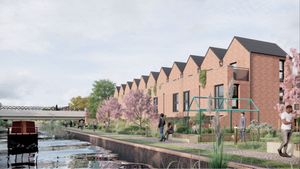
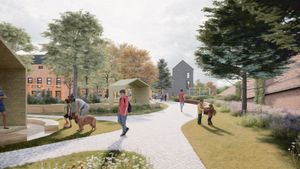
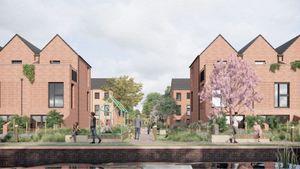
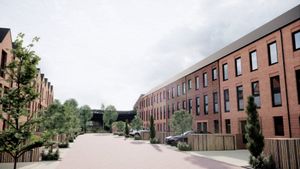
Designed by Glancy Nicholls Architects, the low-rise development will emulate the surrounding conservation area and maximise the canalside setting.
On completion, the scheme will include seven acres of vibrant green space and open up a new pedestrian route to the city core – reducing the previous walk time by 20 minutes – and igniting new investment into a commercial corridor. A total of 378 two-and three-bedroom townhouses are being constructed to target an EPC-A rated specification, together with 145 one-and two-bedroom apartments.
A building of 10 co-living units – each containing six bedrooms – will deliver affordable living for young professionals.
Meanwhile, 54 houses together with 80 apartment and co-living bedrooms will benefit from waterside views.
All homes will be future-proofed with electric only heating systems. A range of technologies will be utilised across the development, consisting of air source heat pumps, solar panels and mechanical ventilation with heat recovery (MVHR).
There will also be EV charging to each house or parking space, plus an array of EV chargers for visitors.
Birmingham-headquartered Wavensmere is also reanimating the disused railway arches on the site into 14,400 sq ft of lettable commercial space.