Plan seeks to extend Tipton foundry onto land earmarked for new homes as historic firm looks to modernise and create jobs
Plans have been submitted to extend an existing foundry building in Tipton onto land earmarked for new housing as part of a job-creating business modernisation drive.
A planning application, made on behalf of Thomas Dudley Foundry Limited, seeks permission to extend the historic manufacturing firm’s foundry to support and enhance the business and improve parking facilities within the site at Vaughan Trading Estate off Tipton Road.
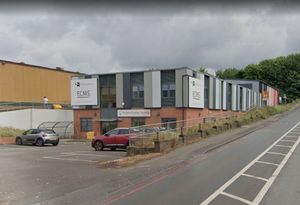
The foundry extension would accommodate three electric powered furnaces and materials handling, storage and workshop space and an extraction system with a maximum height of 12.6m, according to planning documents submitted to Sandwell Council planners.
The plan also seeks permission to create 73 extra car parking spaces on the northern portion of the site and formalise an existing staff parking area creating 46 spaces to create a total of 119 parking spaces on the site.
Associated works also include the installation of a weighbridge, plus the creation of replacement HGV turning facilities, replacement waste management facilities and replacement covered cycle parking for 12 bicycles.
A planning, heritage, design and access statement submitted as part of the application says the plan, if approved, would result in the creation of five new jobs and it states: “The proposed development, as a whole, will operate to the same working hours as the existing foundry.”
It adds that the application site forms part of a larger 21.74ha site allocated for residential development, which is expected to deliver more than 400 new homes, so therefore the plan is “contrary to this policy” and goes against the local development plan.
But it adds: “It is evident the council has granted planning permission for extensive employment development with Vaughan Trading Estate on land that also forms part of the residential allocation. Indeed, all of the land that has been allocated for residential development continues to accommodate historic and modern employment accommodation.
“The prevalence of existing industrial and employment uses within Vaughan Trading Estate means residential development on the application site, which can only be accessed through the existing foundry complex, is not feasible.
“As a result, the application site cannot be developed for residential uses in isolation. It is highly unlikely that additional adjoining land will become available to assemble a larger residential development opportunity.
“The application site, therefore, has no residential development potential, and this is a direct result of the council supporting employment uses instead.
“The proposed development will facilitate the expansion of an existing longstanding manufacturing business that has operated from the application site for many years.”
It says there are “clear and compelling grounds” to accept the proposed development as a departure to the development plan and adds that past approvals for employment development proposals on the land indicate “residential development aspirations for the site have now been abandoned”.
It says no exhaust fumes would be produced from the burning of fuels to heat the furnaces which would be powered by electric.
And it adds that the site is currently accessed by vehicle and on foot through the existing foundry site which is accessed directly from Tipton Road or through Vaughan Trading Estate and the proposed alterations would not change access arrangements.
Existing car parking arrangements across the foundry site include 56 formal and 30 informal parking spaces at present, the documents say - adding: “It is proposed to formalise all parking provision across the site and to create an additional 33 parking spaces. The proposed car parking provision will comprise 46 spaces along the north west boundary and adjacent to the waste management area, together with a car park extension on the northern part of the site comprising 73-spaces.”
The statement stresses the proposed extension to the foundry, located next to Dudley Canal, would not harm the local character of the area - adding: “The existing foundry has occupied the application site and an extensive area of adjoining land since the early 20th century, and provided evidential value of the local manufacturing expertise in iron casting that was originally founded in the canal-building heyday. Therefore, the proposed development will not be discordant with the local character or its historic value.”
And it concludes: “The proposed development will facilitate the expansion of an existing longstanding manufacturing business that has operated from the application site for many years.”
Thomas Dudley was founded in 1920 by Thomas Dudley as an iron foundry making municipal and construction castings, notably cast-iron toilet cisterns. It now makes the largest range of plastic plumbing products anywhere in the UK.
Now in its 105th year, the family-run firm employs 420 people in Dudley, designing, manufacturing and selling plastic plumbing products with 120 of those working in its plastics division.
Earlier in July it was announced that the company had been awarded £100,000 from West Midlands' Mayor Richard Parker's multi-million-pound business support programme to enable it to pursue a green growth strategy - to cut its energy usage, cut carbon emissions and slash its fuel bills.
The decarbonisation plan is also expected to boost productivity, help to win new orders and futureproof the businesses with customers looking for greener supply chains.