Takeover as work goes on
For nearly a year the staff of Black Country brick-makers Baggeridge have been labouring under the shadow of a takeover.
Austrian brick giant Wienerberger – the biggest force in the European industry – has been trying to buy the business since last August, backed by the board, but has struggled to gain shareholder support.
In the meantime Baggeridge and its 550-strong workforce has had to ignore the takeover saga and get on with the day-to-day business of making bricks.
As a result, bosses and shareholders alike were impressed with the most recent set of figures, released in May, that showed Baggeridge's half year profits holding steady despite the impact of the takeover costs.
The pre-tax profit figure for the six months to the end of March was £330,000, against £340,000 a year before, but the figures showed an improvement in both sales and underlying profit.
At the time chairman Alexander Ward said: "The result is particularly creditable in the context of the continuing weak market for bricks."
Baggeridge sales director Mark Morris points out that it is even more remarkable given the tough market for bricks at present.
"Demand for house bricks has fallen dramatically, and flats and apartments now make up more than 50 per cent of the homes being built. Demand for bricks has collapsed from around 3 billion a year down to 2.4 billion last year," said Mr Morris, who started out at Baggeridge as a teaboy 28 years ago.
"At the same time the industry has been badly affected by the soaring price of energy, particularly gas, which is only just starting to fall back.
"It affects profitability and no-one has escaped unscathed. But we are still doing well, partly due to our investment in new technology in recent years, our work on reducing our use of energy across the business where we can, and continuing to develop new products. It is why Wienerberger wants us and has been prepared to keep raising its offer: we are a very profitable business."
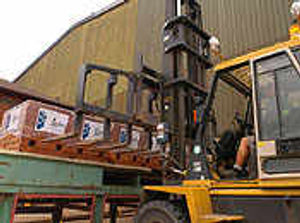
Baggeridge currently produces around 300 million bricks a year, with its most modern plant at Waresley, near Kidderminster, a highly automated facility capable of producing up to 2.25 million bricks a week.
It also runs two factories at Hartlebury, near Kidderminster, another at Tamworth, one at Sedgley and another at Rudgwick in West Sussex.
Mr Morris said:"We are currently doing well across all our market sectors, but particularly in housing – despite the general fall in demand – and in the maintenance sector.
"More and more people are deciding not to move to a new house but to extend or improve their existing home, and for that they need bricks."
Also, at a time of heightening environmental awareness across the construction industry, Baggeridge has put itself ahead of the market with a string of "green" initiatives.
Nearly all of its bricks are made with a proportion of recycled materials – some are 100 per cent recycled – such as the fireclay extracted during coalmining.
"It's just good business, and it makes us more attractive to our customers," said Mr Morris.