
Birmingham flag injunction would have ‘chilling effect’ on rights, court told
Ryan Bridge opposes the injunction on the basis it would breach his right to freedom of expression and his right to protest.
A legal bid to stop the co-founder of Raise the Colours and its members from attaching flags to street furniture in Birmingham would have a “chilling effect” on human rights, a court has heard.
Birmingham City Council is seeking an injunction against Ryan Bridge, who set up the group, and other members after thousands of Union and St George’s flags were put up in the city.
Bridge, who attended the Birmingham Civil and Family Justice Centre on Monday, opposes the injunction on the basis it would breach his right to freedom of expression and his right to protest under the European Convention on Human Rights (ECHR).
His lawyer, Liam Wells, told the court the activist admits attaching flags to street furniture but has only encouraged people to “express their views”.
A statement written by Bridge, which was read aloud to the court, said: “For me, the Union flag represents home, identity, belonging, national identity, British culture and patriotism.
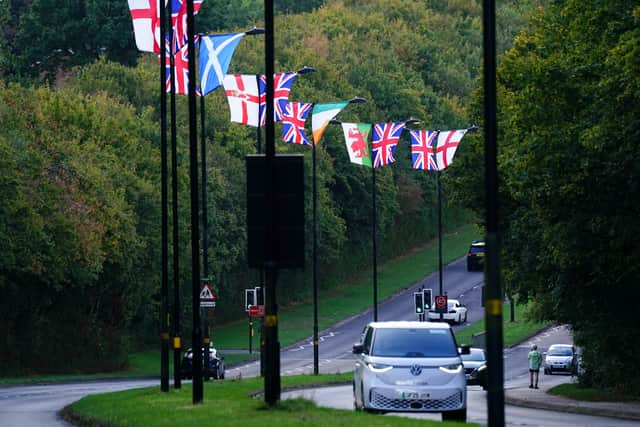

“It’s not merely a piece of material or a street decoration.”
The statement continued: “The campaign was not originally perceived by me as party political.
“It later acquired an unavoidable political dimension.”
Bridge said this was because of the “wider debate” about national identity, immigration and government policy.
The court heard the flags were put in public because “the message is intended for ordinary people in shared spaces rather than people who already follow Raise the Colours online”.
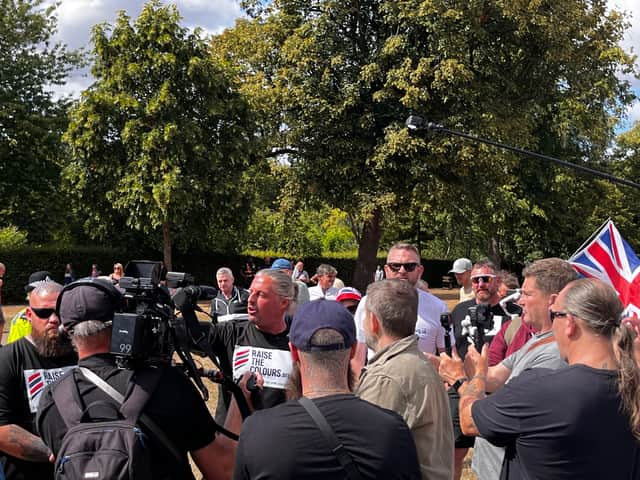
A group of about 20 Raise the Colours members attended the hearing, including some who wore T-shirts and hoodies bearing the organisation’s name, while three Union flags were flown outside the court by a small group of protesters.
Mr Wells told the court “any flagging activity” by Bridge is an expression of his views, which are protected by articles 10 and 11 of the ECHR.
Article 10 protects the right to freedom of expression while article 11 protects the right to protest.
Mr Wells argued against an injunction with a power of arrest, meaning the police could arrest Bridge immediately without a warrant if they reasonably suspect the order has been breached.
He said there is “no need” for this injunction, adding: “It would have a chilling effect upon expression of article 10 and article 11 rights.”
The council argued the flags have caused disruption, but Mr Wells said Bridge’s rights “outweigh that disruption”.
Mr Wells told the court “an expression of article 11 will inevitably involve some disruption”, adding: “The authorities do have to tolerate that to some extent.”
Mr Wells said Bridge does not intend to break the law or breach any court order made.
The lawyer said: “He simply wants to continue expressing his particular beliefs.
“He’s encouraged people to express their views and opinions, but he’s never encouraged anyone to break the law.”
Mr Wells told the court: “The activities of my client which he has admitted to, in our submission, are not activities to create trouble.
“They are genuine political activities not limited to flagging activities or (social media) livestreams.”
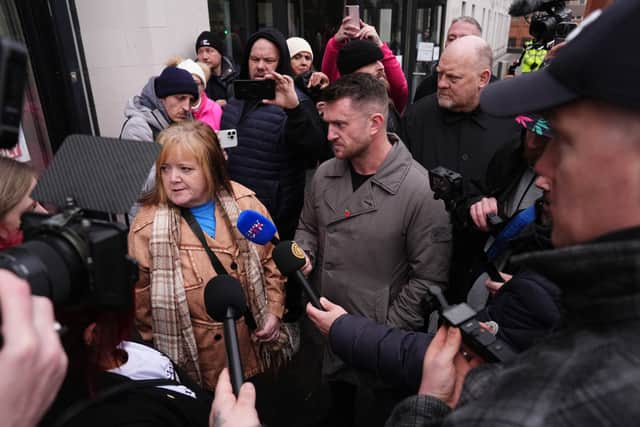
The court heard Bridge helped the bereaved mother of Rhiannon Whyte, who was murdered by an asylum seeker, by advising her.
Oxfordshire County Council was granted a similar High Court injunction in July to stop people placing flags near highways, which it said involved safety risks, as well as trespass and obstruction.
Mr Wells said there are “important distinctions” between the Oxfordshire case and the Birmingham one.
He said: “In this case, my client has spelled out the importance of these protests being expressed on the public highway.”