
Birmingham Council’s leaders hail recovery despite forecast £88m black hole

The council declared itself effectively bankrupt back in 2023
Birmingham City Council’s leadership has said the authority’s finances are much improved despite warnings over future budget gaps.
The council – often described as the largest of its kind in Europe – declared itself effectively bankrupt back in 2023 after being engulfed in financial crisis.
What followed was an unprecedented wave of cuts to local services, hundreds of asset sales and council tax hikes.
Amid huge savings being made and plans to transform services, the council’s previous Labour leadership set a balanced council budget earlier this year before a minority coalition took over in the summer.
This alliance – which includes the Liberal Democrats, Greens and various independents – acknowledged this week that positive progress had been made when it came to the council’s recovery.
Councillor Roger Harmer, leader of the council, told cabinet members on Tuesday (October 20) that the council is close to a balanced budget, not just for this year but also the following two years.
“I cannot stress enough […] how much of an improvement that is on the challenges faced in recent years,” the Lib Dem councillor said.
But despite the encouraging steps the council has taken, a new report has warned councillors that financial pressures have not disappeared.
“It costs around £120 million each year simply to meet inflation, pay costs and the needs of a growing population,” it revealed.
The report went on to warn that a forecast shows budget gaps of £4.9 million in 2027/28, £13.7 million in 2028/29 and £88.2 million in 2029/30 if action is not taken.
“Demand and complexity in adults’ and children’s social care, homelessness and temporary accommodation remain major pressures,” it said. “The right response is therefore neither complacency nor a return to short-term cuts.
“It requires disciplined investment, sustained transformation and a relentless focus on prevention, productivity and value for money.”
Councillor Harmer acknowledged the forecast of a possible £88m black hole on the horizon, saying: “The deficit in 2029/30 is largely mapping for the extra annual cost of running services less the extra annual revenue we generate.
“Work now needs to be done to deliver savings to balance that year.
“But we have time to do that – we need to use that time well.”
Councillor Chris Garghan, the cabinet member for finance, said the authority’s leadership is not proposing to return to a “system of short-term cuts and salami slicing which has previously taken place” despite the forecast budget gaps.
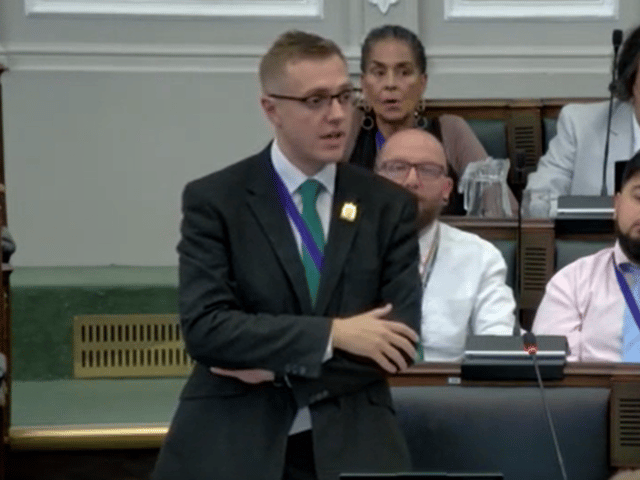

The Green Party councillor also clarified that these forecasts are for if action is not taken by the council’s leadership.
“Financial recovery is the beginning of the journey, not the end,” he told Tuesday’s meeting. “The reality is it costs around £120m every year simply to stand still, to meet inflation, pay costs and growing service demands.
“Our approach is centred on clearer transformation, prevention, getting increased productivity and value for money.”
He added: “[The council] is planning ahead, being realistic about its challenges and taking a disciplined approach to securing long-term financial sustainability.
“Whilst risks remain, there’s still significant work ahead.”
Councillor Julien Pritchard, deputy leader at the council, also said the authority’s financial position “is better than it has been for years” but stressed the administration will not be complacent.
Reacting to the report, Conservative group leader Councillor Robert Alden said: “It’s really important the council doesn’t treat the budget as a one-yearly thing and worry about 2029/30 when it gets to 2029.
“That will lead to the mistakes this council has made in the past where you salami slice everything and you don’t actually protect the frontline services residents rely on.”
‘Birmingham still faces difficult choices’
The recent report said there was a “renewed sense of purpose and cautious optimism” at Birmingham Council.
It acknowledged several pressing challenges facing the city, such as stark inequality, child poverty, youth unemployment, housing pressures, unmet transport need and reputational damage from both the bins strike and financial crisis.
But it also highlighted several strengths, such as being the youngest major city in Europe and “exceptionally” diverse, a strong business base, a major cultural offer, devolution and investment opportunities, HS2 and the city’s “regeneration pipeline”.
“The overall story is one of recovery becoming renewal,” the council report argued. “Birmingham still faces difficult choices, and the council must maintain financial discipline, deliver savings and demonstrate that improvement is sustained.”
But it continued that the authority now has “stronger foundations” and a “clearer political mandate”.
“With disciplined delivery and genuine partnership with residents, the council can move beyond managing crisis and towards shaping a fairer, greener and more prosperous city,” the report said.
Issues such as the equal pay debacle helped trigger the financial woes at Birmingham Council while Labour councillors also pointed the finger at funding cuts during the Tories’ time in government.
The new report pointed out however that work to tackle significant issues was now “showing results”, adding that historic equal pay liabilities are close to resolution.
Comment Guidelines
Iconic Media encourages reader discussion on our stories. User feedback, insights and back-and-forth exchanges add a rich layer of context to reporting. Please review our Community Guidelines before commenting.