'Diversity for us is to be celebrated': Saturday school offers chance for youngsters to learn about Romanian language and heritage
It's a school with a specialist aim and focus, helping to teach and inform youngsters about the culture, heritage and language of their parents and grandparents.
The “Nicolae Iorga” Romanian Supplementary School has been working over the past five years to offer community support, using an integrated method of teaching the Romanian language to children aged between four and 16 years old.
Based at Langley Primary School and run by Mariana Plamadeala and Laura Suna, the school provides a mixture of holistic education, following the principles of the British school system, but also looks to Romanian core values from the teachings of Nicolae Iorga, a Romanian historian and former prime minister.
It all began in 2017, when Mariana Plamadeala, founder of Romani Uniti din Anglia (RUDA), while attending church, noticed something that she said deeply concerned her, that more and more children from Romanian families were speaking only English among themselves, leaving their grandparents unable to communicate with them.
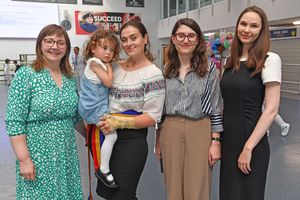
Determined to preserve the Romanian language and cultural connection between generations, she began searching for a local school that taught Romanian and, finding none in the area, she expanded her search across the UK and came across the “Nicolae Iorga” Romanian supplementary school model.
In 2019, following the establishment of RUDA, she visited the Liverpool branch of “Nicolae Iorga” for inspiration.
Just a year later, in October 2020, she and Laura Suna, founded the “Nicolae Iorga” Romanian Supplementary School in Birmingham, under RUDA.
Held every Saturday between 10am and 1pm, the school is funded primarily through parental contributions, with occasional support from the Governments of Romania and Moldova.
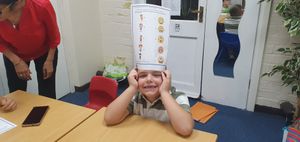
Romanian children’s traditional costumes, Christmas masks, and books have been provided through a grant from the Departamentul Românilor de Pretutindeni in Romania, while Moldovan costumes and books used during cultural exhibitions were provided through a grant by the Biroul Relații cu Diaspora in Moldova.
Laura Suna, in her role as head of curriculum, said the school's aims were for lessons to go hand-in-hand with what the children learned in school during the week.
She said: "We are proud of this school, but we're also sad that some people might not understand the role of the school as the children are encouraged to go to their usual British school Monday to Friday.
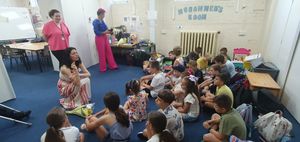
"Not only that, but we are trying to build the curriculum so that it goes hand-in-hand with the British system, meaning that there are no shocks, because if I only followed the Romanian curriculum, it would be too difficult and might cause some misunderstandings and discourage them.
"We are encouraging them to build their personalities in a round way and to grow up as informed people who know a little bit about everything and in a building which is a proper school and which I think we are really lucky to have and to be able to function in."
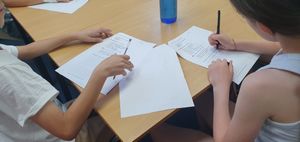
The school has around 35 to 40 pupils at any one time, split into four different groups based on age and ability, with part of it based on the child's ability to learn to speak and write Romanian, all taught by volunteers.
Ms Suna said the majority of the children at the school were not born in Romania, but were born to Romanian parents, so the lessons could help them to learn conversational Romanian, something she said would benefit them with speaking to relatives, as well as understand their culture.
She said: "The curriculum was built around the children and being in our fifth year, we have been able to see some of them progress and go to the next level, so it's all been about growing things progressively up to a point where they can not only communicate in Romanian, but also be able to read a poem or piece of fiction and comment on it.
"Romanian grammar is much more difficult than English and we try to keep that very academic because we felt it was important for them to be able to rely on something to be able to communicate confidently.
"Mariana and I have a common vision that they need to know about their roots and their heritage and to be able to communicate with grandparents and uncles and aunts.
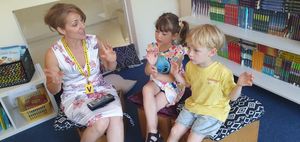
"They also need to be able to understand their family's culture and be proud of it and apply it and wear the costumes and know about the national cuisine and every lesson has an aspect of that."
Ms Suna said she was honoured to have been part of the school since it opened and said the diversity of it was something that should be celebrated.
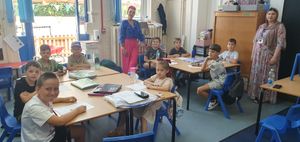
She said: "I am very proud of the school and I think we are all proud, not only Mariana, who is the founder and administrator and provides everything we need, but also the volunteers and the parents, who are really grateful.
"I know that we have been embraced in this country and accepted and, in many places, I think diversity is celebrated, rather than discriminated, so to be part of this makes me and them proud as well."