
Long-term report: Time with the BYD Seal 6 DM-i Touring comes to an end
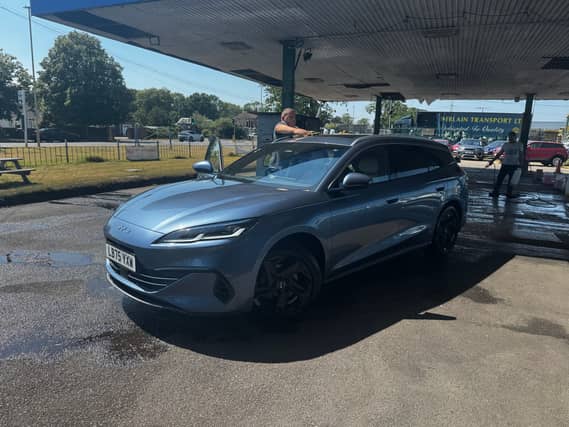

Nigel Swan has spent countless hours with BYD’s practical Seal 6, but what has he discovered?
Every long-term test eventually reaches the same point. The mileage stops climbing, the keys are handed back and you’re left asking one simple question: would I actually miss it?
After six months and over 16,000 miles – comfortably exceeding what the average UK driver covers in an entire year, and probably a few more than BYD might have liked – that’s exactly the question I’m asking as our time with the BYD Seal 6 M-i Touring Comfort Lite comes to an end.
Unlike a week-long road test or a brief launch event, covering this sort of mileage leaves very few places for a car to hide. The novelty disappears quickly and what you’re left with is something far more valuable: an honest picture of what it’s like to live with day in, day out.
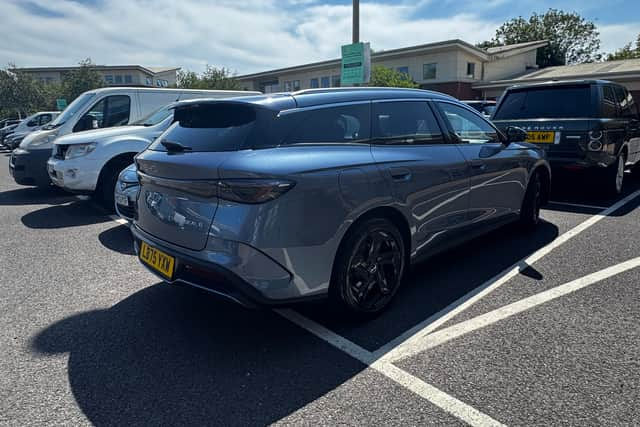
Over the past six months, the Seal has become less of a test car and more of a colleague. It travelled the length of the country on countless occasions, carrying camera equipment to shoots from the North West to the South Coast. It tackled city traffic, sat for hours on Britain’s increasingly congested motorway network, cruised through the Welsh countryside, popped to the shops, ferried the dogs around and quietly got on with whatever was asked of it.
That, perhaps, is the first thing I’ve learnt about the BYD. It’s incredibly easy to live with.
When the Seal first arrived, I wasn’t entirely sure what to expect.
Chinese manufacturers have rolled out in Britain at an astonishing rate over the past few years, and brands such as BYD, Jaecoo and Omoda have gone from relative unknowns to increasingly familiar sights on our roads.
Having spent much of my long career driving cars from Europe’s established manufacturers, I was curious to see whether the Chinese newcomers really were ready to compete.
Six months later, I’d say the answer is an emphatic yes.
Not because they’ve reinvented the family car, but because they’ve worked out exactly what the majority of buyers actually want.
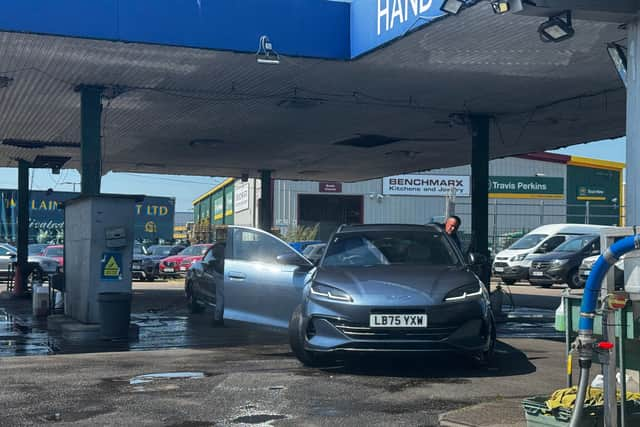
Most people aren’t chasing lap times or dreaming about clipping apexes on their daily commute.They want something comfortable, practical and inexpensive to run. And, above all else, they want something dependable.
The BYD delivers all of those things exceptionally well.
Without doubt, the standout feature throughout our time together has been the plug-in hybrid powertrain.
Coming directly from an electric car, I’d become accustomed to planning longer journeys around charging stops. It wasn’t necessarily difficult, but it did require a degree of forward planning that simply doesn’t exist with a conventional petrol or diesel car. The BYD removed that entirely.
A full tank consistently offered around 777 miles of petrol range, while the battery contributed a further 70 miles or so of electric-only driving.
For somebody who regularly drives from Lancashire to Hampshire and back, that’s a massive game changer.
Long motorway journeys suddenly became wonderfully uncomplicated again.
No searching for chargers.No wondering whether the next rapid charger would actually be working. No altering the route because charging infrastructure was better somewhere else.
Just fill the tank, charge the battery when convenient and drive. It’s such a simple thing, yet after over 16,000 miles it’s become one of the aspects I’ll miss most.
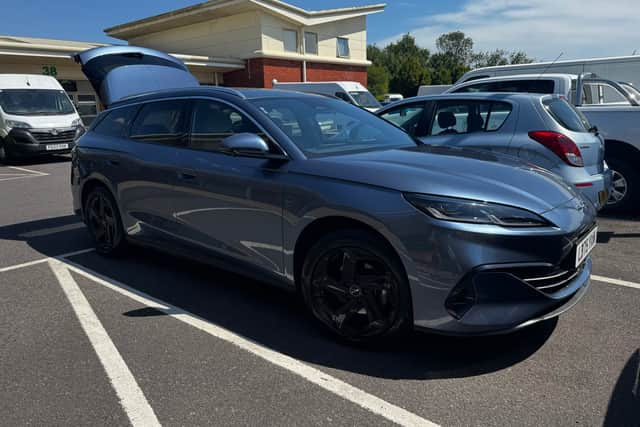
Equally impressive has been the flexibility.
Those 70 electric miles meant local journeys could often be completed without using a drop of petrol, while longer motorway drives were dispatched with barely a second thought, plus I feel a little bit better knowing I’m doing my bit for the environment. It genuinely feels like a powertrain designed for real life rather than laboratory testing.
Another area where the Seal has consistently impressed is practicality. Opting for the Touring version proved to be the right decision.
As someone who spends much of his working life carrying cameras, tripods, lighting equipment and assorted filming kit around the country, a generous boot isn’t a luxury—it’s a necessity.
The BYD never once struggled.
Even with several cases of equipment loaded in, there was still room for overnight bags or shopping, and the wide opening made loading awkward items refreshingly straightforward.
Outside of work, it slotted just as comfortably into everyday family life. Our ageing large Staffordshire Bull Terrier quickly became a fan thanks to the low loading lip. It made climbing into the boot considerably easier than many SUVs, and that’s something you don’t necessarily appreciate until you’re helping an older dog in and out several times a week. However, the teacup Chihuahua still needed lifting in. To be fair, I’m not entirely convinced there’s a car on sale capable of solving that particular problem.
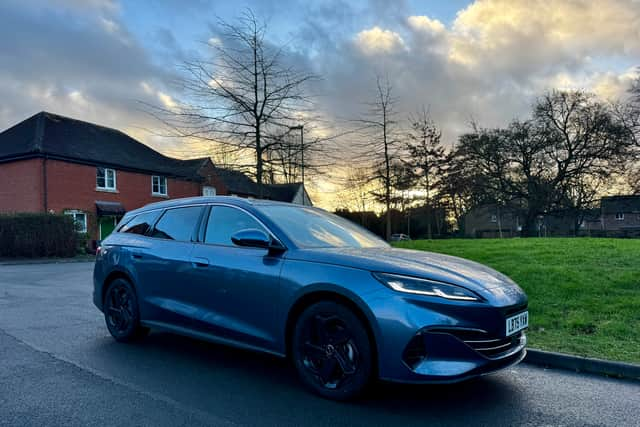
Perhaps the biggest surprise over the past six months has been just how much car BYD offers for the money. At around £38,000, the Seal undercuts many of its European rivals while offering an equipment list that leaves very little to be desired. Compare it with something like the Volkswagen Passat eHybrid, BMW 330e Touring or Peugeot 508 SW Plug-in Hybrid and you’ll quickly find yourself spending several thousand pounds more before you’ve even started adding optional extras.
BYD, on the other hand, bundles almost everything into the standard specification. It’s a refreshing approach, and one that makes the Seal feel like exceptional value.
Of course, no car is perfect.
If there’s one criticism that’s remained consistent throughout the test, it’s that the Seal has never really managed to involve me as a driver. The steering is light but doesn’t communicate a great deal. The suspension prioritises comfort, which is welcome on the motorway, but allows the car to lean more than I’d like on twisting roads.
Then there’s the transmission. Like many CVT-based systems, ask for rapid acceleration and the engine races ahead before the road speed catches up. It’s undeniably effective from an efficiency perspective, but it never feels particularly satisfying.
The infotainment system has also remained something of a mixed blessing.
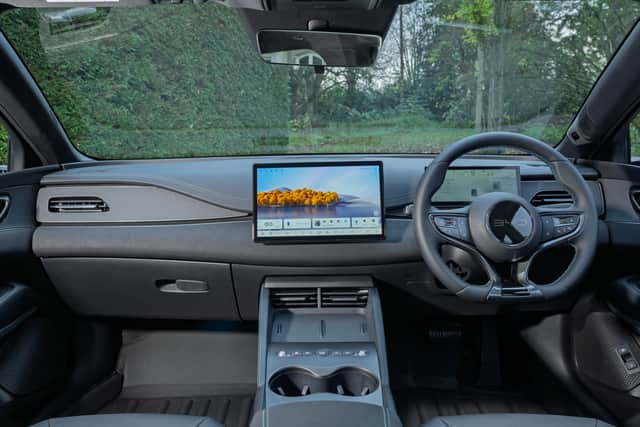
The screen itself is excellent—bright, responsive and logically laid out—but relying on it for almost every vehicle function can become tiresome.
After six months I was still finding myself tapping through menus to disable driver assistance systems before setting off, and the driver monitoring camera remained just a little too eager to tell me where I should be looking. These aren’t major faults, but they are the kind of everyday irritations that only become apparent after living with a car for months rather than days.
It’s a question I’ve been asked several times during the test.
The honest answer is… It depends what I wanted from my next car. If my priority was covering huge distances cheaply, comfortably and with the minimum amount of fuss, I’d have absolutely no hesitation recommending the BYD.
After more than 16,000 miles, it has proved itself reliable, practical, economical and astonishingly easy to live with.
It has never left me stranded, never caused concern and never felt overwhelmed by the workload.
That’s a pretty impressive achievement considering just how hard it’s been worked. However, if I were spending my own money and wanted something that made every journey feel a little bit special, I’d probably still gravitate towards one of the established European brands.
Not because they’re necessarily more practical or more efficient, but because they still tend to understand something that’s difficult to quantify on a specification sheet – how a car makes you feel.
The biggest compliment I can pay the BYD is that it has fundamentally changed my perception of Chinese cars. Gone are the days when manufacturers from the region were simply trying to imitate European brands, today they’re confidently doing their own thing, producing cars that are well engineered, thoughtfully equipped and competitively priced.
The Seal may not be perfect. It won’t thrill enthusiastic drivers and it won’t make you take the long route home just for the fun of it, but perhaps that’s missing the point.
This isn’t a car built for the minority who still relish every opportunity to drive, it’s built for the millions of motorists who simply need a dependable family car that can cope with whatever modern life throws at it. Viewed through that lens, it’s a tremendous success.
After six months and more than 16,000 miles – far more than many motorists cover in an entire year – my opinion hasn’t really changed from the day it arrived.
The BYD Seal 6 DM-i Touring Comfort Lite hasn’t been a car that’s made me look for excuses to go for a drive, but it has been one that’s quietly, efficiently and competently got on with every task I’ve ever asked of it.
Whether transporting filming equipment across the country, taking the dogs out for the day, carrying luggage for a weekend away or simply tackling another motorway journey, it has never once let me down.