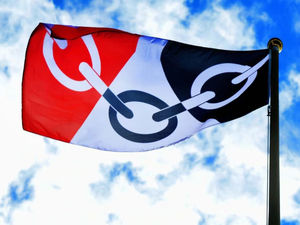
Having a Black Country accent doesn't make me stupid - there are enough other things that do that
Had I been raised in one of the grim tower blocks of Oxford's much-maligned Blackbird Leys estate, I would probably speak with an accent that would be perceived as the epitome of quiet authority.
Had I gone to a school in multicultural East London, I would be celebrated by the BBC as the authentic voice of diverse, modern Britain. And let's face it, even a Liverpool accent would mark me down as a streetwise, sharp-witted raconteur who must have something interesting to say.
But because I'm the son of an accountant and a schoolteacher from the not-particularly gritty suburbia on the outskirts of Dudley, I have become reconciled to the fact that the moment I open my mouth in polite society, the first reaction is usually one of mild ridicule.
They might not say it. They might convince themselves that they do not think it. But all too often, at the back of the mind is the perception that anybody who speaks with a Black Country accent is a bit, well, stupid.
Growing up, it never really occurred to me that I had a notable accent, I suppose at that age you just assume that it is everyone else who is different. I remember getting a light scolding from my father for shouting 'bash 'em in' at a football match, to the amusement of a Manchester City fan sat directly behind us. And I remember fervently disagreeing with my Welsh maths teacher when he said he couldn't understand my accent. But these were the exceptions to the rule, and I just thought it was people being saft.
And then at university all was laid bare.
https://www.expressandstar.com/newsletters/
"I speak the Queen's English, not Lenny Henry's" was one of the wittier retorts, most of them much less erudite.
"If we ever 'ave a quayne from Tipton, 'er 'll spake like wot I do," was my rebuttal.
It was all usually good natured, but I never really understood why Irish, Scottish or southern accents went unremarked - or were seen as interesting and desirable - but anything vaguely Midland-ish meant you were regarded like a performing sea-lion.
I suppose I could have followed Sue Lawley's lead, and tried to 'soften' my accent as they call it. But the truculent side of my character thought why, if I use correct grammar and pronunciation, should I have to modify my voice to sound like somebody from a different part of the country?
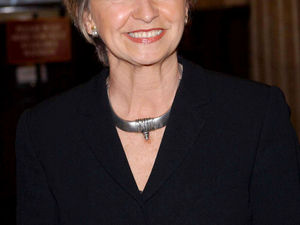
It was also at university that the broadcaster Sue Lawley, who grew up a couple of miles from me, found her Black Country accent the source of much amusement. Again, it was generally good -natured, but unlike me she made the conscious decision to lose her Dudley brogue in order to be taken seriously. And it obviously worked.
Esther Asprey, a lecturer at Wolverhampton University who specialises in West Midland accents, says the Black Country accents is stereotyped as indicative of low intelligence.
"Urban accents across the UK are associated with a lack of education," she says. "Which isn't true - there's not a causal link."
This perception stemmed back to the Industrial Revolution, which of course began in the Black Country, when people moved to cities for jobs in factories, she says.
She says she has witnessed students being 'laughed at' in seminars for the way they speak, and that teachers from the Black Country have told her anecdotes about being asked to get elocution lessons.
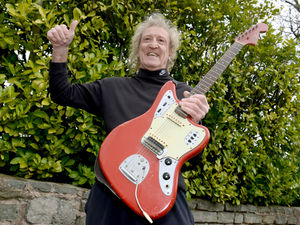
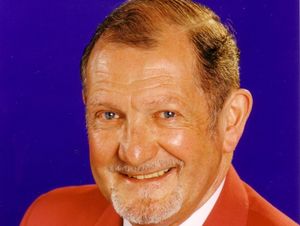
The late broadcaster Tony Butler recalled being sent to elocution lessons by the BBC, which he recalled only served to make him pronounce his 'a's as 'e's, and talking about the football club West Bromwich Elbion. He eventually gave up, and his accent became part of his broadcasting persona. But he was always pigeon-holed as something of a Black Country novelty act, recording sections for the regional news about narrowboats or presenting fiery phone-ins. You could never have envisaged him fronting the News at Ten.
Then of course the portrayal of slow-witted characters in television programmes - Benny the handyman in Crossroads, Barry from Auf Wiedersehen Pet - hardly helped. And don't get me started on The Grimleys, that cringe-makingly bad sitcom set in Dudley in the 1970s.
The irony of all this is that it is generally acknowledged that the main reason that the Black Country has such a distinct dialect is that the area largely stood firm in the face of the Norman invasion - hence the prevalence of Anglo-Saxon -ton or -ley suffixes on place names. It was also most resistant during the 'great vowel shift' in the 13th-17th centuries. So while the rest of the country allowed its rules of grammar and pronunciation to become corrupted by the incoming migrants from across the Channel, it was the people of the Black Country who stood firm to preserve their linguistic purity. If there really is such a thing as 'standard English', then Black Country is about as close to it as you can get.
As for a lack of education, it is worth bearing in mind that Samuel Johnson, surely one of the greatest all-time contributors to the English language, went to school in Stourbridge.
Mary Prior KC, chairman of the Criminal Bar Association, made headlines this year when she suggested that regional accents, along with social deprivation should be declared 'protected characteristics', and discrimination against them outlawed. Personally, I find that rather silly.
First of all, I'm pretty sure that if you asked the average Black Country 'mon', he would say that there is more than enough of this 'protected characteristic' nonsense around at the moment, without adding any more. And by conflating regional accents with social deprivation, Prior is just as guilty of promoting stereotypes as the people she has in her sights.
A regional accent is not a signifier of class, education or social standing. It is simply one of geography.
Having a Black Country accent does not make me stupid. There are enough other things that do that.