Tiswas creator still drumming at 82 to support cancer research breakthroughs
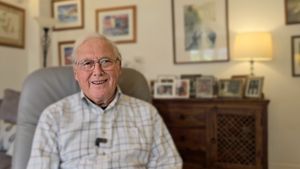
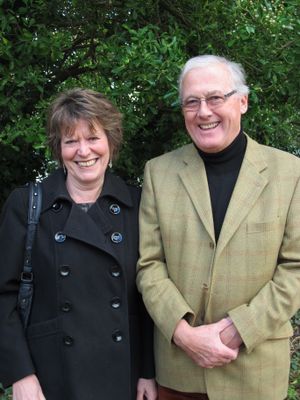
An 82-year-old former TV presenter who still plays the drums in the West Midlands after successful cancer treatment is calling on people to help him raise another million pounds for life-saving research.
Peter Tomlinson from Ombersley in Worcestershire was one of the first to benefit from a clinical trial that halved the number of radiotherapy sessions for prostate cancer patients.
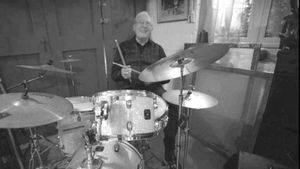
Since then, the creator and early presenter of 70s children’s TV series Tiswas, has been a driving force behind the Wyre Forest Fundraising Committee’s bid to reach £1 million for Cancer Research UK - often playing drums in a jazz band to support fundraising concerts.
Despite stepping down as chairman Peter, who lost his wife Ali to pancreatic cancer in 2020, says he’s determined to support the next million-pound drive to enable more people to benefit from clinical trials and research.
He said: “The breakthroughs in treatment have been enormous over what is a relatively short space of time and they’ve only come from the fact that money has been raised to pay for these incredibly brilliant researchers. We can’t stop there. In my case, if I’d been diagnosed 20 years before, I would probably have died from prostate cancer.
Following his own diagnosis in 2009, Peter was was offered the chance to join Cancer Research UK’s CHHiP trial – a project that compared different ways of applying radiotherapy to prostate cancer cells.
The aim was to test whether doctors could effectively halve the number of radiotherapy sessions needed by delivering stronger radiation doses. The trial compared 37 days of radiotherapy with either 19 or 20 days.
“I was lucky,” said Peter. “I drew the long straw and got 19.”
CHHiP also introduced intensity-modulated radiotherapy (IMRT) to prostate cancer treatment, which Peter received alongside hormone therapy. IMRT sculpts radiation beams to more closely match the shape of each patient’s tumour, lowering the risk of side effects by sparing healthy cells.
“It was my wife Ali who saved my life initially because, as a doctor, she insisted I saw a consultant about my PSA which she’d noticed was slightly higher than normal,” said Peter. “Our GP said it was a perfectly normal level for a man of my age, but it was Ali who insisted I had a biopsy.
“I’ll never forget going back for the results. The consultant looked ashen-faced and said, ‘I have to tell you that you have prostate cancer, and you have it quite seriously.’ I asked how long I had left and he said ‘80 per cent of my patients live for five years.’ I didn’t ask the obvious question which was ‘what happens to the other 20 per cent?’
“After that Ali and I went to a pub called The Old Cock Inn which we thought was extraordinarily appropriate for what was going on!
“I went every day to the QE for radiotherapy treatment. The biggest problem was that you had to drink three pints of water before treatment. If it was delayed, with three pints inside you, you can imagine what you wouldn’t be able to resist doing. And if that happened, you had to start all over again. But the interesting thing was that we laughed: I knew it was going to work.”
Cancer Research UK was a key player in the development of radiotherapy which now benefits millions of people with cancer worldwide. Today, its researchers continue to innovate. From making radiotherapy more targeted to combining it with other treatments and reducing the number of doses needed, they’ve helped change clinical practice and made radiotherapy kinder and more effective. Now, Peter wants to see more patients benefit from life-saving advances like this.
Although Peter’s trial was successful, his wife Ali’s death from pancreatic cancer in 2020 gave him even more incentive to press ahead with his fundraising efforts.
“Cancer survival rates have doubled since the days when Chris and I and John Asher were fooling about with buckets of water and custard pies on Tiswas,” said Peter.
“I remember visiting my nephew in hospital in about 1975. There was a boy there suffering from leukaemia who died. Since then, leukaemia has been one of the great success stories. I know there will come a time when people diagnosed with pancreatic cancer will be either managed or cured. That’s why research needs to continue to be funded.”
722,000 new cancer cases will be diagnosed in the West Midlands
With an ageing population, and cancer cases on the rise, Peter is urging people to donate monthly to Cancer Research UK to help fund more big breakthroughs.
Latest figures reveal around an estimated 722,000 new cancer cases will be diagnosed in the West Midlands region over the next 15 years and, by 2040, it’s projected one person in the UK will be diagnosed with the disease every two minutes.** In the 1970s, it was every four minutes.
Peter added: “The statistics say it all and that’s why I’m asking people to act now.
“One of the aspects of Cancer Research UK that many people aren’t aware of is their campaigning side - persuading government to do things they should be doing is such an important aspect. If cancer is diagnosed earlier and treatment follows as quickly as it should do, then that will be a huge step forward in survival rates – it’s as simple as that.”
Thanks to the generosity of its supporters, Cancer Research UK has helped double cancer survival in the UK over the past 50 years.
The charity’s spokesperson for the West Midlands, Paula Young, said: “We’re so grateful to Peter for all he’s done to raise funds and raise awareness. With new technologies opening doors to new discoveries, we’re living in a golden age of research. But with nearly 1 in 2 people set to be diagnosed with cancer in their lifetime, there’s so much more to do.
“Cancer Research UK is the world’s largest charitable funder of cancer research. More support right now could fuel faster progress than ever before and help more people like Peter live longer, better lives free from the fear of cancer. Together, we can power the next wave of breakthroughs.”
To find out more or donate to life-saving research visit cruk.org/breakthroughs