The Black Country schools that are top of the class as climate is put on the curriculum
Schools in the Black Country have been leading on initiatives to take action on climate and protect nature, as the Government announces that climate and sustainability education will be embedded in the curriculum.
The Building a world-class curriculum for all report, following the Curriculum and Assessment Review chaired by Professor Becky Francis, identifies the “significance of climate change for our society and the planet,” and says that schools have a vital role in helping pupils understand “the climate crisis’s causes, consequences and possible solutions.”
Reforms will be introduced at both primary and secondary level to address gaps in young people’s understanding, with focus given to sustainable living, media literacy, and green skills.
Across the WMCA area and wider West Midlands region, advisors with sustainable energy and development charity Ashden’s Let's Go Zero project have supported nearly 900 schools to draft climate action plans, sharing tips and best practice.

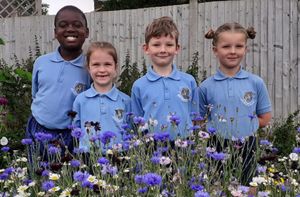
Guided by Sustainability Lead Phil Thomas, staff and students at Pennyhill Primary School in West Bromwich have taken steps to reduce energy usage by making sure equipment is fully switched off not left on standby, to recycle scrap paper and plastic, and cut food waste, with the school signed up to ReFood which converts leftovers into renewable energy and biofertilizer.
West Bromwich Collegiate Academy (WBCA) has a 240 panel, 105kW rooftop solar system installed by not-for-profit Solar for Schools, which is estimated will save the school £315,000 in bills over the installation’s lifetime. Solar for Schools has installed panels on 15 other schools in the Black Country, and regularly visits member schools to deliver workshops on how solar panels work and on careers in renewables.
Further examples across the region, says Jo Pettifer, Climate Action Team Leader for Let’s Go Zero in the Midlands, range from student-led energy saving assemblies to schools replacing old boiler systems with efficient heat pumps. On the nature front, schools are installing bird and bat boxes, sowing mini-wildflower meadows and digging ponds.
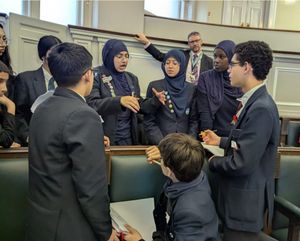
Meanwhile as COP30 took place in Brazil in November, climate education charity InterClimate Network facilitated Model COP conferences in Dudley, Birmingham and Solihull at which secondary students took the parts of different countries in mock UN-style negotiations.
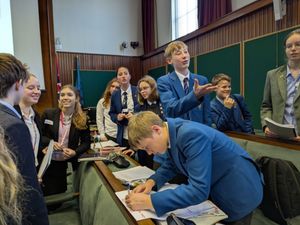
At Dudley’s Sustainability Conference, eco-conscious pupils from Dormston School were allocated the role of the United States. Year 11 student Matilda Hyde said: "We didn't know we'd be defending them! We found ways to help developing countries while also making a profit".
Classmate Tessa Gobourn said: "We had to think what we could do and phrase it in a way that sounded like the US is doing something".
Students at Dormston School’s Eco Club have come in during their holidays to redo the school's eco pond and create a bio-dome, with the help of a £4,000 grant from Severn Trent and support from Dudley Council’s nature wardens.
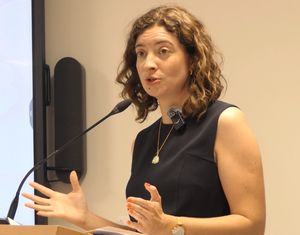
Scarlett Westbrook, co-founder of student-led climate and nature education campaign Teach the Future, welcomed the government’s announcement on climate in the curriculum as “great news, a massive win,” though she would like to see clearer language and climate learning integrated in all subjects, at all key stages. “We want to make sure everyone is prepared for the drastically changed world they are going into,” Westbrook says.
“The NHS is at breaking point and we know climate change is causing health problems. We don't have the systems in place to give us the resilience we need”.
Currently there is no statutory requirement to teach about climate and sustainability for children aged five to eleven. The Curriculum and Assessment Review report recommends increasing the presence of climate education and sustainability in science and geography lessons, and emphasising sustainability in design and technology classes.
The Department for Education is planning to publish its final curriculum by spring 2027, to be introduced in schools from September 2028.
Sarah Coombes, MP for West Bromwich, said she had been proud to attend the COP climate conference in Brazil as part of a cross-party delegation of MPs, to learn about connecting up global initiatives to reduce climate threat.
“I know young people in particular care about this in West Brom, with many local schools doing important work around climate with their students,” Coombes said. “It's important to take these big global conversations and translate them into local action”.